
Buying an electric radiator: The complete guide for 2026
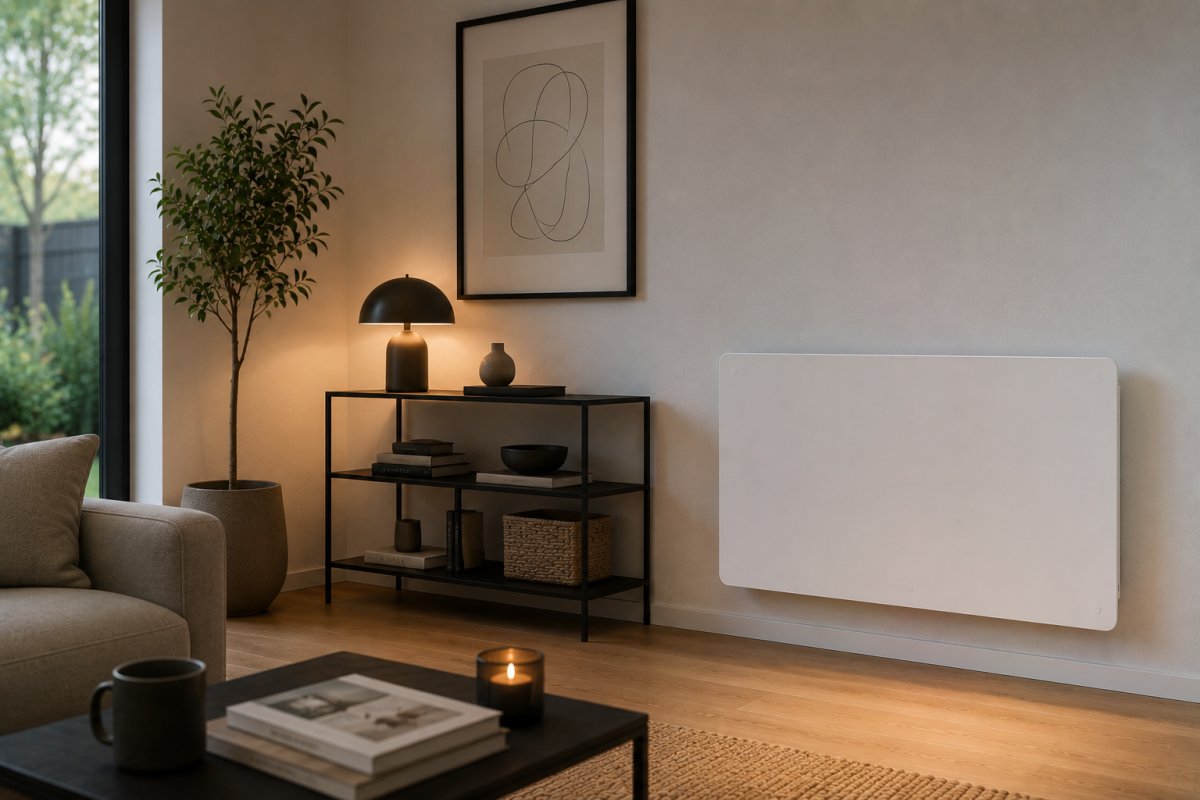
Imagine this: you turn off the gas tap, but your house remains just as warm and comfortable as always. Sounds like a distant dream? For more and more Dutch households, it is already a reality, thanks to a new generation of smart electric radiators that have moved far beyond the image of the bulky, power-guzzling stove of the past.
The frustration is understandable. Gas prices that keep fluctuating, uncertainty about what electric heating costs you monthly, and radiators that look like they were ripped from a hospital corridor. You just want a warm home, a clear energy bill, and a solution that fits neatly into your interior.
In this complete guide for 2026, you will read exactly what you need to know before buying an electric radiator. We discuss the different types, how to manage your consumption smartly via Wi-Fi control, and what to look out for if design is just as important to you as performance. This way, you make a choice that will make you happy not only now, but also for years to come.
Key Points
- A modern electric radiator is no longer an energy guzzler: you will learn exactly how to calculate the correct power for each room, so that you never heat too much or too little.
- From steel to glass fronts: discover which type of electric radiator best suits your interior and heating needs.
- Wi-Fi control enables smarter energy management — read how to keep your consumption under control via an app without compromising on comfort.
- Norwegian quality standards and more than 100 years of craftsmanship determine why not every electric radiator offers the same reliability in cold winters.
- Paintable fronts, sleek glass variants, and compact dimensions prove that heating and stylish living do not have to be mutually exclusive.
Why an electric radiator is the smart choice for your home in 2026
A modern electric radiator is fundamentally different from the device you might remember from an old holiday home or student room. Whereas a simple heating coil used to produce heat without any intelligence, a contemporary convector combines precise temperature sensors, digital thermostats, and wireless connectivity in one compact device. The result is a heat source that responds to your behavior, not the other way around. For extensive technical background on the principles behind electric heating, Wikipedia offers a solid starting point.
Smart sensors play a crucial role in this. If the device detects a sudden drop in temperature caused by an open window, it automatically switches back to a lower power output. This way, you do not unnecessarily heat the outside air, and that difference is noticeable on your energy bill.
Gas-free living and the role of electric heating
The Netherlands is setting a clear course towards a gas-free built environment. For those who want to take that step but do not immediately want to install a heat pump, an electric convector offers a logical and accessible alternative. No pipework is required, no central heating boiler needs to be replaced, and no major renovation is needed. You mount the device on the wall, plug it into a standard socket, and you are done. This makes electric heating particularly suitable for specific spaces such as a conservatory, a home office, or an extension that falls outside the reach of central heating.
Comfort and ease of use in every room
One of the greatest practical advantages is the direct heat output. You do not have to wait for an entire central heating system to reach temperature; a convector reaches its set temperature quickly and maintains it accurately. That is precisely why zone heating works so effectively: you only heat the rooms you are in at that moment, and the rest remain at a lower standby power.
For bedrooms and home offices, the quiet operation of a modern convector is an added benefit. No clicking radiators, no circulation pump switching on at night. Safety features such as automatic overheating protection and adjustable child locks make the device suitable for every type of household, from families with young children to elderly people living independently.
Anyone who thinks that electric heating is by definition more expensive forgets the savings that zone heating and smart thermostats provide. Total energy costs are determined by how much heat you produce and when, not just by the rate per kilowatt-hour. That distinction makes all the difference.
However, a comfortable home is about more than just the temperature; the right atmosphere and scents also play a major role. For those who want to make their kitchen just as warm and inviting as the living room, we recommend visiting Spice Rebels for a wide range of exclusive herbs and spices.
How does a modern electric radiator actually work?
Behind the sleek front of a modern convector lies a surprisingly well-thought-out system. The basic principle is elegant in its simplicity: cold air is drawn in through the bottom of the device, flows past a heating element, and exits the radiator at the top as warm air. That warm air rises, gradually cools down, and sinks back down, after which the cycle begins again. We call this natural convection, and it ensures an even temperature distribution throughout the entire room without the need for a fan.
The heating element itself, typically a resistance wire or a ceramic element, converts electrical energy directly into heat. No energy is lost to transport through pipes or to heating water. What goes in comes out as heat. The design of the front then determines how that heat flows into the room: a well-designed front distributes the heat flow widely and evenly, so that no cold corners are created.
The difference between convection heat and radiant heat
A convector primarily heats the air in the room. This is ideal for rooms where you want a stable background temperature, such as a living room or bedroom. A radiator, on the other hand, which emits more radiant heat, heats objects and people directly, similar to the heat from the sun. This variant works well in spaces where you want quick, localized heat, such as a bathroom or a workshop. For a constant, comfortable room temperature, convectors, such as those from BEHA, are the most efficient choice.
The role of smart thermostats and sensors
This is where the real difference lies between a cheap heater and a high-quality electric radiator. An accurate electronic thermostat continuously measures the room temperature and switches the heating element on and off at exactly the right moment. A deviation of even half a degree can be noticeable in your consumption over the course of an year.
Modern devices go further with functionalities such as:
- Open window detection: a sudden drop in temperature is recognized as an open window, after which the heating automatically temporarily switches back.
- Programmable weekly schedules: you set the desired temperature per day and per time block, so you never heat an empty room.
- Wi-Fi integration: adjust settings via an app from any location, whether you are sitting on the couch or on the go.
That combination of smart sensors and wireless control makes it possible to let your heating adapt to your daily rhythm, without you having to constantly think about it yourself. Want to see what that looks like in practice? View the smart convectors from BEHA and discover which Wi-Fi features are included as standard.
Different types of electric radiators and their benefits
Not every room requires the same solution. A bathroom has different requirements than a living room, and an authentically renovated townhouse calls for a different aesthetic approach than a sleek modern apartment. Fortunately, the range of electric radiators is wide enough to find a suitable choice for every situation, both functionally and visually.
Steel convectors for a timeless look
Steel is one of the most proven materials in the heating industry, and not without reason. High-quality powder-coated steel conducts heat quickly and efficiently, withstands daily use, and requires virtually no maintenance. In most cases, a dry cloth is sufficient to keep the front in good condition for years. Steel convectors fit effortlessly into both classic and contemporary interiors: the clean lines and neutral color scheme make them versatile, suitable for use from a country-style dining room to a minimalist home office.
Glass designer radiators for a luxurious look
Those who do not want to hide heating but rather integrate it as a design element choose a convector with a tempered glass front. The polished surface, available in white or black, reflects light in a way that makes a room feel larger and brighter. A practical additional benefit: glass is extremely easy to clean and does not attract dust like textiles or rough surfaces sometimes can. Moreover, a flat glass front contributes to an even heat flow, as air can move upwards along the surface unimpeded.
The aesthetic impact of such a radiator on a living space should not be underestimated. Where a standard white unit blends into the wall, a black glass convector becomes a deliberate choice that enhances the rest of the interior. It is the difference between heating you tolerate and heating you choose.
Paintable fronts for a seamless interior
For those who truly do not want to compromise on style, a paintable radiator the most extreme form of personalization. You paint the front in exactly the same color as the wall, so that the radiator visually disappears into the room. Or you can choose a contrasting color as a deliberate accent. This makes this type particularly suitable for those who have built an interior with specific color palettes and do not want to deviate from them for something functional.
Specific solutions for damp rooms
A bathroom requires an electric radiator that is certified for use in damp environments. When purchasing, always pay attention to the IP rating of the device: this indicates the degree to which it is protected against water and dust. A model suitable for the bathroom typically has a higher protection class than a standard living room device. Combine that with a compact size, and you have a heating solution that fits the limited space of most Dutch bathrooms, without compromising on safety or comfort.
What should you look out for when buying an electric radiator?
A good choice starts with the right questions. What power output do you need? Does the device physically fit on the available wall space? And does the accompanying app work on your phone? These questions sound simple, but the answers determine whether you will be satisfied for years or regret your purchase after just one winter.
Calculating the correct power for your space
The rule of thumb you encounter everywhere, namely 100 watts per square meter, is an oversimplification. It does not take into account ceiling height or insulation quality, and those are precisely the factors that are most decisive. A more realistic approach works with the volume of the room in cubic meters, combined with the degree of insulation.
Use as a starting point:
- Well-insulated room (double glazing, insulated walls): count on approximately 20 to 25 watts per cubic meter.
- Moderately insulated space (single glazing or uninsulated cavity wall): count on approximately 30 to 40 watts per cubic meter.
- Poorly insulated space (older home without significant insulation): count on 45 watts or more per cubic meter.
A room measuring 4 by 5 meters with a ceiling height of 2.5 meters has a volume of 50 m³. In a well-insulated home, this results in a required capacity of 1,000 to 1,250 watts. In that case, it is preferable to choose a 1,500-watt model rather than a 1,000-watt one. A slightly oversized radiator does not have to work as hard to reach and maintain the set temperature, which benefits the lifespan of the device and keeps energy consumption stable.
Dimensions, IP certification and safety
Measure the available wall space before ordering. Take into account power outlets, door hinges, and furniture that may block heat circulation. For use in the bathroom, the IP rating of the device is non-negotiable: a higher protection class guarantees that the device is resistant to splashes and humid air. Always check this in the product specifications before completing a purchase.
Smart features and control via the BEHA app
Wi-Fi control adds a dimension that manual programming cannot match. Via the BEHA app, you group multiple convectors into zones, allowing you to give the living room, bedroom, and home office each their own schedule. That is exactly how zone heating pays off in practice: you heat what you use, when you use it.
What further sets the system apart is the ability to monitor your energy consumption in real-time via your phone. You can see immediately how much each room consumes, and adjust settings without having to be at home. Leaving work early? Turn on the heating in advance. Staying away longer? Switch everything back to a lower standby power with a single tap.
Check in advance whether the app is compatible with your smartphone's operating system. That sounds like a detail, but it is a practical point that can cause frustration later on. For a comprehensive overview of all the possibilities, read our guide on electric convectors with Wi-Fi, or range BEHA and discover which models come standard with Wi-Fi control.
Why BEHA sets the standard for electric heating
There is a difference between a brand that claims to be reliable and a brand that has been proving that reliability for more than a century. BEHA was founded in 1917 in Norway, a country where harsh winters are not an abstract threat but an annual reality. That geographical context is not a marketing story; it is the breeding ground from which every design choice and every technical decision stems. Anyone wishing to sell heating equipment in Scandinavia has no room for compromise.
That foundation translates directly into the way BEHA develops its products. Every model undergoes rigorous safety testing before reaching the market, and the entire product line complies with European ECODESIGN requirements. That standard sets minimum requirements for energy performance and environmental impact, and meeting them is not a given for every manufacturer. For you as a buyer, this means purchasing an electric radiator that not only performs today but will also still meet applicable standards ten years from now.
While generic brands focus on low entry prices and mass production, BEHA chooses a different approach: products designed to last for decades, with a focus on sustainable materials and climate-friendly production processes. That is an investment, not an expense.
Norwegian expertise and 100 years of innovation
More than a century of experience in one of the coldest climates in the world has compelled BEHA to continuously improve. What began as simple electric heating solutions for Norwegian households has grown into a complete ecosystem of smart convectors with Wi-Fi control, paintable fronts, and glass design variants. This evolution is no accident; it is the result of listening to users in circumstances where heating is not a luxury but a necessity.
The rigorous safety tests that every product undergoes are a direct legacy of those Norwegian roots. Overheating protection, precise thermostat deviations, and long-term load tests are a standard part of the development process, not an optional extra.
Simple installation and maintenance-free use
One of the most practical advantages of a BEHAconvector is the installation. Each unit comes with included wall brackets and a clear manual. You mark the mounting points, drill two holes, hang the unit on the brackets, and plug it into a standard outlet. No plumber, no technician, no scheduling an appointment.
After that, there is little left to do. No annual maintenance like with a central heating boiler, no filter replacements, no checking water pressure. In most cases, wiping the front with a dry cloth is the only maintenance you will ever need. This makes total ownership of a BEHAconvector significantly simpler than traditional heating systems.
Would you like to see which model best suits your situation? range BEHA and discover which smart convectors are available with Wi-Fi control, glass fronts, or paintable options.
Ready to heat smarter in 2026?
a good electric radiator starts with the right knowledge: the output that suits your space, the type that complements your interior, and the smart features that truly keep your consumption under control. Together, these three elements determine whether you will be satisfied with your choice for years to come.
What sets BEHA apart is the combination of over 100 years of Norwegian craftsmanship, full compliance with European ECODESIGN standards, and a Wi-Fi app that allows you to effortlessly manage your heating, even when you are not at home. That is not a marketing promise, but the result of a long tradition in a climate that leaves no room for half-baked solutions.
You now have the knowledge to make an informed choice. The next step is simple: discover the full range of BEHA radiators and save immediately. A warmer, smarter home starts with one good decision.
Frequently asked questions about electric radiators
How much does an electric radiator consume on average?
Consumption depends directly on the wattage of the device and the time it is actively heating. A 1,500-watt convector running at full power for two hours a day consumes 3 kilowatt-hours. In practice, actual consumption is lower, because a properly set thermostat regularly switches the element on and off to maintain the desired temperature.
With a programmable weekly schedule and Wi-Fi control, you can precisely adjust when the device is active. This prevents you from heating an empty room, which is one of the most common causes of unnecessarily high consumption.
Is an electric radiator cheaper than heating with gas?
A direct comparison is difficult because gas and electricity rates fluctuate constantly. What does matter, however, is that an electric convector does not lose heat through pipes or a central heating boiler: every kilowatt-hour that goes in enters the room as heat. With zone heating, where you only heat the rooms you use, the total costs can turn out to be more favorable than with a central gas system that keeps the entire house at temperature.
Can I install an electric radiator in the bathroom?
Yes, but you must choose a model that is certified for use in damp areas. Always pay attention to the IP rating in the product specifications: this indicates how well the device is protected against water and moisture. A standard living room device is not suitable for the bathroom. Check this before ordering, as the safety requirements for wet areas are stricter than for dry environments.
What is the difference between an electric convector and a radiator?
The term “radiator” is widely used colloquially, but technically there is a difference. A convector primarily heats the air in the room via natural airflow: cold air flows in at the bottom, is heated, and exits the device at the top as warm air. A classic radiator emits relatively more radiant heat, thereby directly heating objects and people. For a stable room temperature in the long term, a convector is generally the most efficient choice.
How many watts do I need per square meter?
The well-known rule of thumb of 100 watts per square meter does not take ceiling height or insulation quality into account. A more realistic calculation uses the volume of the room in cubic meters. For a well-insulated room, count on 20 to 25 watts per cubic meter; for a moderately insulated room, on 30 to 40 watts. If in doubt, choose a slightly higher power output: a slightly oversized electric radiator does not have to work as hard and lasts longer.
Can I paint over a BEHAradiator?
Yes, BEHA offers convectors with a special paintable front. You can paint the front the same color as the wall for a seamless result, or choose a contrasting shade as a deliberate design element. The front is prepared for this: the surface structure is suitable for regular wall paint. This makes this type particularly suitable for interiors with a specific color palette where a standard white or black unit would not fit.
Do I need to hire an electrician for the installation?
For most BEHAconvectors, this is not necessary. The device comes with included wall brackets and a clear instruction manual. You attach the brackets to the wall, hang the device on them, and plug it into a standard socket. No plumbing, no central heating technician, and no major renovation are required. If in doubt about the electrical situation in your home, always consult a certified electrician.
Does the Wi-Fi control also work when I am not at home?
Yes, the BEHA Wi-Fi app works via an internet connection, not a local network. As long as your smartphone is connected to the internet, you can adjust your convector settings, change schedules, or turn off the device, regardless of your location. That is precisely the practical advantage of Wi-Fi control: you adjust your heating to your actual day, not to a pre-programmed schedule that isn't always accurate.