
Choose an electric heater with a weekly timer, quiet operation, and safety features
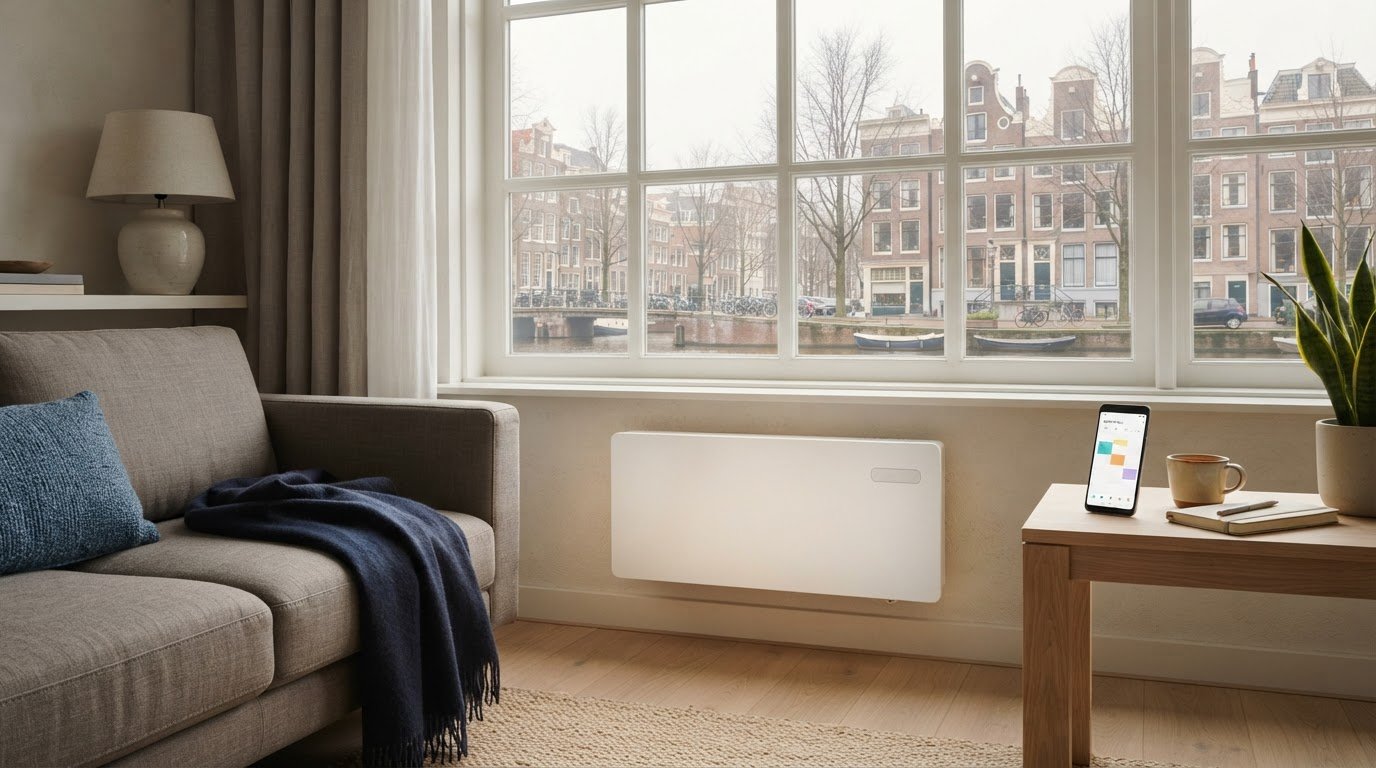
An electric heater with a weekly timer setting is particularly useful if you want the heating to align with your fixed daily routine. Note the difference between a weekly program and a simple timer: on some heaters, the latter can automatically switch off the device after 1 to 4 hours, but it does not start automatically at a set time. For ease of use and efficient heating, the controls, thermostat, and timer function are therefore at least as important as the power output.
A weekly timer is only useful if the scheduling aligns with the time you use the room. The noise level and placement also determine daily comfort. If you are looking for quiet heating for a bedroom or office, a convector without a fan may be more suitable than a fan heater.
In this article, you will learn how to compare electric heaters based on timer control, power, noise, placement, and safety features. This will help you determine which features suit your space and routine, and what to look for when making your choice.
Key points
- Choose a timer that fits your daily routine and check whether it only switches off or also switches on automatically.
- Match the type of heater and its placement to the room, especially if you are looking for quiet heat.
- With control via Wi-Fi and an app, you can adjust the heating to suit your usage moments.
- Compare safety features, such as overheat protection, before making a choice.
What is the best energy-efficient electric heater if you prioritize ease of use?
Heating more consciously starts with turning on the heater when you use the room. Therefore, compare the timer control, the power output, and the way the appliance switches off.
Automatic shutdown
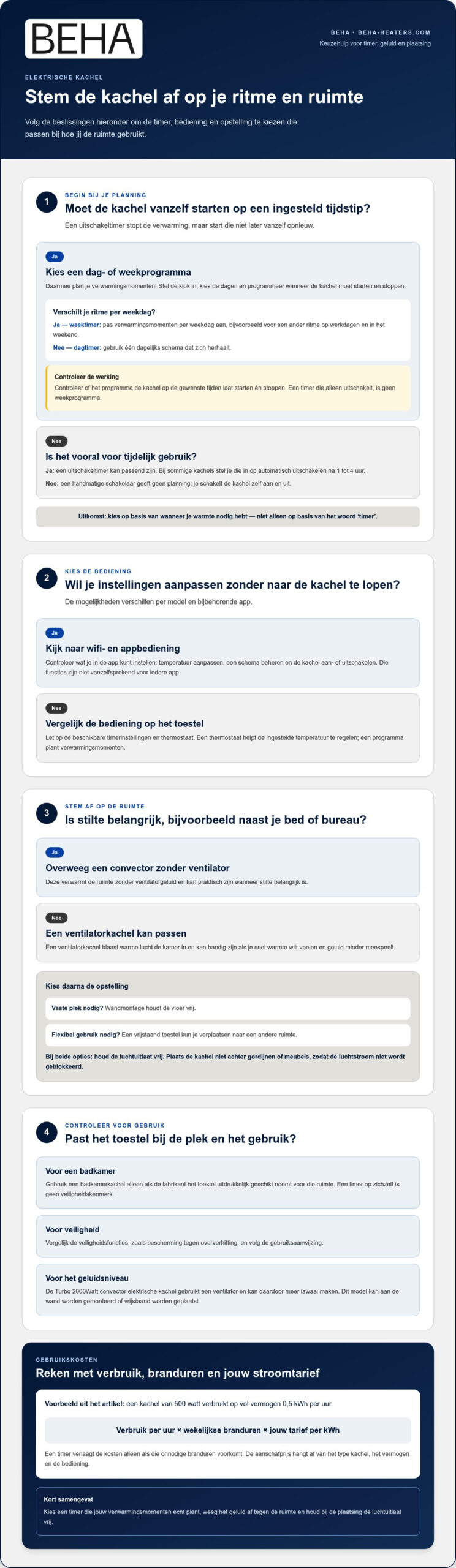
Automatic shut-off prevents a heater from staying on longer than intended. With some electric heaters, you can set a timer that switches the device off after 1 to 4 hours. This differs from a weekly schedule: the timer stops the heating but does not switch it on automatically at a later time. Choose this function primarily for temporary use, such as a home office.
Week timer versus day timer
A day timer typically follows one daily schedule. With a week timer, you can adjust the heating times per day of the week. This is useful if you have a different rhythm on workdays than on weekends. The difference is therefore that with a week timer you can plan individual days, whereas a day timer repeats one daily schedule.
| Type | Planning | Turn off |
|---|---|---|
| Manual switch | No | Manually |
| Shut-off timer | One-time term | Automatic |
| Day timer | Daily schedule | According to schedule |
| Week timer | Schedule per weekday | According to schedule |
| App control | Adjustable via app | Depending on settings |
Purchase costs and operating costs
How much does an electric heater with a weekly timer cost? The purchase price depends on the type of heater, the power output, and the controls. How much does it cost to use an electric heater per week? You calculate this based on consumption, usage time, and your electricity tariff. A 500-watt heater consumes 0.5 kWh per hour at full power. Multiply the hourly consumption by the weekly operating hours and your rate per kWh. A timer only reduces costs if it prevents unnecessary operating hours.
Heaters with adjustable weekly timer
Which electric heaters have an adjustable weekly timer? Programmable convectors and smart heaters with thermostats, in particular, offer scheduling functions. Which electric heaters with a weekly timer are available in the Netherlands? You will find models with controls on the device or via an app. With an electric heater with a weekly timer setting, you first set the clock, select the days, and then program the desired heating times. Finally, check whether the schedule starts and stops the heater at the correct times.
Noise level and placement
A timer determines when a heater operates, not how much noise it makes. That depends primarily on how the device distributes heat. A fan heater blows warm air into the room and can therefore make more noise. In a quiet bedroom, you notice this, for example, while reading, working, or sleeping.
A convection heater without a fan heats the room without fan noise. This makes this type practical when silence is important. A fan heater, on the other hand, can be useful if you want to feel warmth quickly in a room where noise is less of a factor, such as a home office during the day.
For a bedroom, a quiet heater with a suitable weekly schedule can be pleasant. In the bathroom, a timer is not a safety feature in itself. Choose only an appliance that is specifically suitable for that room and follow the instructions for use.
Placement also affects ease of use. Some convection heaters are suitable for wall mounting or freestanding use. A wall-mounted model keeps the floor clear; a freestanding unit can be moved to heat another room. With both options, keep the air outlet clear and do not place the unit behind curtains or furniture. This allows the warm air to circulate and prevents the airflow from being blocked.
Check these points before choosing a spot:
- Determine if you need silence, for example next to a bed or desk.
- Choose wall mounting for a fixed location, or a freestanding model for flexible use.
- Check if furniture, curtains, or doors obstruct the airflow.
- Use a bathroom heater only when the manufacturer designates that room suitable.
If you want to compare different heating solutions for rooms, take a look at the electric heating solutions and pay attention to operation, noise, and placement.
The Turbo 2000Watt convector electric heater can be wall-mounted or freestanding. You can therefore tailor the setup to a fixed location or to the need to move the unit. When choosing a location, ensure there is sufficient space around the air outlet so that the warm air can circulate.
The Turbo 2000Watt electric convector heater uses a fan and can therefore be noisier. Take this into account if you want to use the unit near a bed or at a workspace. The choice between wall mounting and freestanding placement offers flexibility, but is no reason to disregard the noise level.
Smart control via an app
Operation via Wi-Fi and an app makes it possible to adjust the heating digitally. You use the app that comes with the heater for this, instead of just buttons on the unit. This allows you to adjust settings without walking to the heater. The exact functions depend on the model and the accompanying app.
Which features are useful in addition to a weekly timer, such as a thermostat and app control? A thermostat helps regulate the set temperature, while the app brings control together in one place. A weekly schedule is handy if you want to plan heating times per day.
When comparing, pay attention to what the app actually allows you to configure. Can it adjust the temperature, manage a schedule, and switch the heater on or off? These functions make daily use easier, but are not standard for every app. A timer that only switches off, for example, does not replace a program that schedules heating times in advance.
- Thermostat: set a desired temperature and avoid switching exclusively manually.
- Weekly program: adjust heating times on workdays and holidays.
- App control: change settings via your phone instead of on the device.
- Clear controls: choose an app where temperature and schedule are easy to find.
Connect the heater to your Wi-Fi network according to the manual and open the accompanying app. Add the device, set the desired temperature, and create a schedule if that function is available. Then check on the heater whether the settings have been applied. This way, you can immediately see if app control fits your routine.
For example, you can set the living room to use after you get home and create a separate schedule for the bedroom. This way, one schedule does not unintentionally apply to both rooms. Adjust the temperature via the app when your daily schedule changes. This allows you to tailor the heating to your routine without constantly using the controls on the device.
Safety features
A weekly program regulates when the heater heats, but does not replace a safety function. Therefore, in addition to the controls, check what protection the appliance offers. Protection against overheating is an important feature to look out for. This is present, for example, on the Turbo 2000Watt convector electric heater. Such a function is separate from the timer: the timer follows a schedule, whereas overheating protection focuses on the temperature of the appliance.
An electric heater with a weekly timer setting can switch on when you are not in the room. Therefore, place the appliance on a stable spot and keep the air vents clear. Do not place a curtain, blanket, or laundry against the heater. For example, ensure there is sufficient space between a freestanding heater and furniture so that the airflow is not blocked.
Follow these steps before first use:
- Read the instruction manual and look for the explanation of safety features.
- Check if the device is standing stably or hanging securely on the wall.
- Keep paper, textiles, and other items away from the device.
- Test the timer while you are at home and check if the heater switches on according to schedule.
- Check that the air intake and air outlet remain clear.
If you use an electric heater in the bathroom, choose only a device that is suitable for this purpose. A weekly timer does not automatically make a heater suitable for damp rooms. Follow the manufacturer's instructions for placement and use. In the bedroom, adjust the schedule according to your presence and keep textiles, such as bedding, away from the device.
After moving a freestanding heater, recheck the location and ensure the air vents are clear. If the weekly schedule changes, also review the switch-on times and keep the area around the appliance clear. Evaluate the timer settings and the setup as separate points of attention. Compare heating solutions based on features that suit your usage.
The Turbo 2000Watt convector electric heater features overheating protection. Take this feature into account when evaluating the appliance, but do not base your choice solely on this function. Also check whether the placement and operation suit the room and your usage. Keep the user manual at hand and follow the instructions for safe use.
BEHA: Smart convectors steel front
BEHA offers smart convectors with a steel front, controllable via Wi-Fi and the BEHA Smart App. This allows you to control the heating digitally and set heating times. Compare the features with your daily use, such as adjusting the temperature via the app.
BEHA also offers smart convectors with glass or paintable fronts. Classic convectors are an alternative if you do not require smart controls. Consider the type of front and the desired controls when making your choice, and keep timer functions as a separate point of attention.
Would you like to choose an electric heater that suits your space and operating method? View the BEHA and compare the models. You are welcome to contact us or convectors visit the website BEHA
Choose the heating that suits your space
Choose based on how the room is used, not just the timer. Consider when you need heat, how important quiet operation is to you, and whether you want to control the heating via an app. This will clarify which features contribute to your daily comfort.
An electric heater with a weekly timer setting is only practical if the controls fit your routine. If you are looking for smart controls and a choice in appearance, compare the smart convectors from BEHA with steel, glass, or paintable fronts. Consider in advance which room you want to use the convector in and which controls suit it best.
Would you like to discuss your wishes and discover which version suits your situation? Ask BEHA for personal advice. With a clear picture of your space and preferences, you can make a suitable choice with confidence.