
Choosing the best electric heater: A complete guide
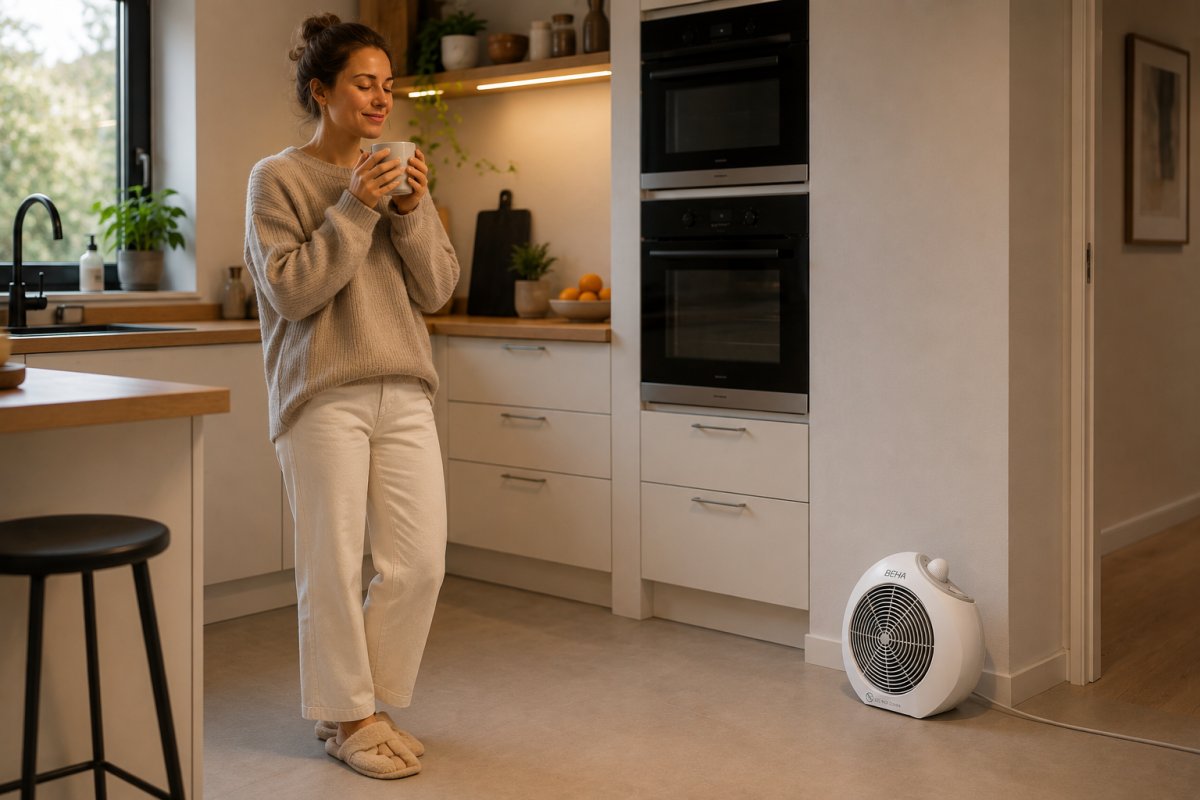
Did you know that the energy tax on natural gas has risen to €0.72679 per m³ in 2026? This substantial increase is forcing many households to seriously review their heating strategy. You are probably looking for a way to keep your home comfortably warm without your monthly costs skyrocketing. It is perfectly understandable that you are unsure about the required capacity for your rooms or that you dread unsightly radiators that spoil your carefully designed interior.
In this guide, you will discover how to heat your home efficiently, stylishly, and completely gas-free with a modern electric heater. We draw on our more than one hundred years of experience in Norwegian heating technology to show you how design and innovation come together perfectly. You will learn exactly which type of convector suits your specific space and how smart Wi-Fi control helps keep your energy consumption to a minimum. We dive into the world of advanced thermostats and paintable fronts, so you can choose a heater that truly fits your modern lifestyle and interior.
Key Points
- Learn why switching to an electric heater in 2026 is the smartest choice to effectively avoid rising gas costs.
- Discover how to save up to 25% on your energy bill by using smart Wi-Fi features and precise weekly schedules via the BEHA app.
- Get practical tools for calculating the correct power for every specific room in your home.
- See how a paintable radiator blends seamlessly into your interior, bringing technology and design together in harmony.
- Trust in more than a hundred years of Norwegian expertise for a safe, sustainable, and technologically advanced heating solution.
What is an electric heater and why is it the future?
At its core, an electric heater is an advanced system that converts electrical energy into thermal energy with 100% efficiency. Unlike traditional gas central heating systems, where heat is lost during transport through meters of pipes, heat generation takes place directly in the room. You can compare this process to how an electric heater works based on the Joule effect; the current passes through a resistor, thus immediately producing the desired heat without any waste.
Previously, an electric heater was often seen as a temporary solution for a cold garage or attic. Nowadays, however, technology has advanced to the point where it is a full-fledged alternative for primary heating. There are various types on the market, ranging from compact fan heaters for a quick heat boost to infrared panels for targeted radiant heat. The most popular choice for living rooms and bedrooms, however, is the convector, which ensures a constant and even temperature distribution throughout the entire room.
The benefits of gas-free heating
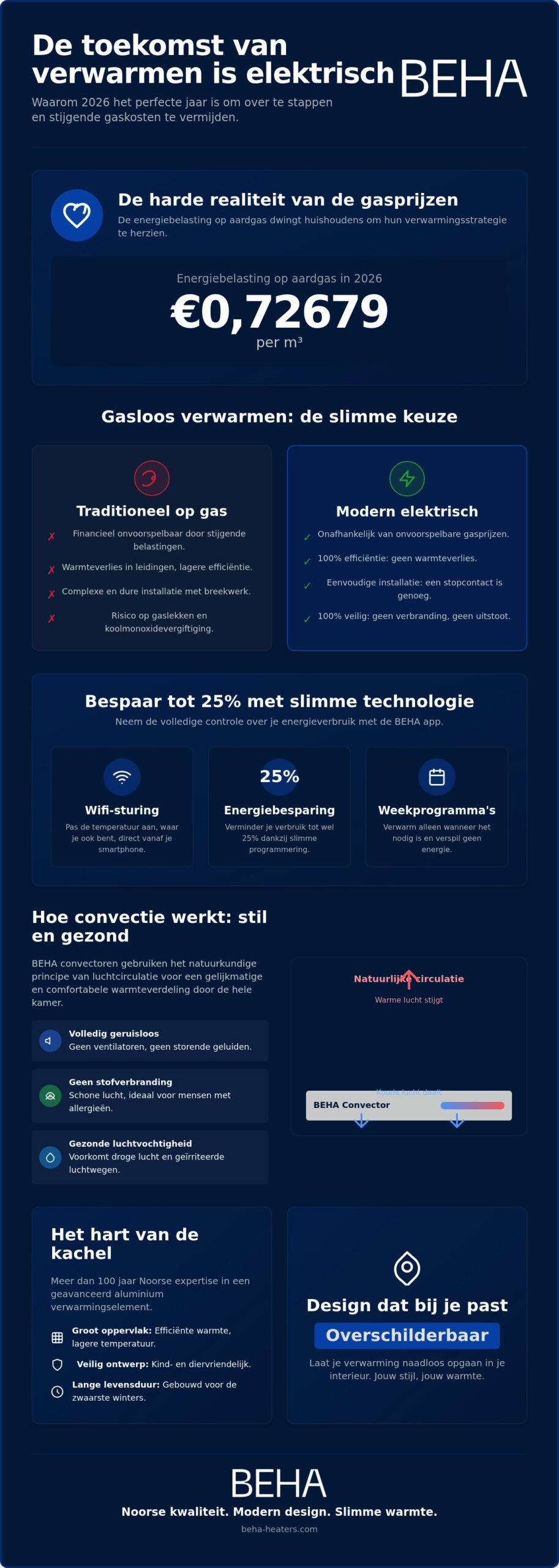
The switch to electric heating will have become a necessity for many Dutch households by 2026. Now that the energy tax on natural gas has risen to €0.72679 per m³, dependence on fossil fuels is a heavy financial burden. By choosing electricity, you make yourself independent of these rising gas prices.
In addition, installing an electrical solution is extremely simple. No hacking or breaking is required to run new wires through your walls; a free socket is often sufficient. Moreover, you immediately increase safety in your home. Without a combustion process in your rooms, there is no risk whatsoever of gas leaks or carbon monoxide poisoning. This provides a reassuring feeling, especially in rooms where you sleep.
Why 2026 is the year of the electric convector
The year 2026 marks a technological turning point due to stricter Ecodesign standards. These European guidelines require manufacturers to build heaters that are smarter and more efficient than ever. Modern convectors respond extremely quickly to minimal temperature fluctuations, ensuring they never consume more energy than strictly necessary.
Another crucial factor is the growing synergy with solar panels. If you have panels on your roof, you can use the electricity generated during the day directly to heat your home virtually for free. Smart thermostats play a central role in this. They not only help reduce your own costs but also contribute to relieving the strain on the Dutch power grid. By smartly programming your heating for times when there is a high supply of sustainable energy, you benefit optimally from the modern energy market.
How does an electric heater with convection work?
Air is constantly in motion, even if you cannot see it. An electric heater that operates on the basis of convection makes clever use of this physical principle. Cold air is heavier than warm air and therefore always stays close to the ground. The convector draws this cold air in from the bottom, after which an internal heating element warms the air. Because warm air is lighter, it rises naturally and flows back into the room through the top of the heater. This process repeats continuously, creating a gentle air circulation that heats the entire space evenly.
You notice the difference compared to older systems immediately in terms of comfort. Whereas a fan heater blows air into the room with force, often causing a draft and noise, natural convection works completely silently. Moreover, this method ensures much better humidity. Because the air is not forcibly pressed past glowing hot wires, no dust is burned. This prevents that typical dry air and the familiar 'burning smell' that you often smell with cheaper fan heaters. The result is a healthy and pleasant indoor climate where you can stay for hours without bothering your respiratory system.
The heating element: the core of the stove
The quality of the heat is determined by the heating element. At BEHA , we use advanced aluminium elements with an extra-large surface area. This is a deliberate choice; by increasing the surface area, the element can release more heat to the passing air without needing to become extremely hot itself. A lower surface temperature is not only safer for curious little hands or pets, but also significantly extends the lifespan of the heater. Our Norwegian technology is designed to last for decades, even in the most extreme Scandinavian winters where heating is a matter of survival.
Convection versus radiant heat
When choosing the right electric heater, it is essential to understand that a convector heats the air in the entire room, whereas infrared focuses on objects and people. Convection is therefore the ideal solution for maintaining a constant base temperature in your living room or office. It ensures that every corner of the room feels equally warm. However, if you want to quickly provide extra heating to a specific workspace or seating area, a combination of techniques can be interesting. For seamless integration into your home, you might consider looking at a paintable radiator, which combines the power of modern convection with an aesthetic that blends completely into your wall.
Energy-efficient heating and smart features
The heart of a modern electric heater today is not just the heating element, but above all the intelligence that controls the heat. Many users are rightly concerned about the running costs of electric systems. However, technological advancements have effectively tackled this problem. An electric convector with Wi-Fi, for example, helps you save up to 25% on your energy costs compared to traditional heaters without smart control. This saving stems from the fact that the heater responds with extreme precision to the actual heat demand in a room.
The BEHA app acts as your personal energy coach. With it, you can easily set up weekly schedules that seamlessly align with your daily routine. Additionally, the app offers group management capabilities. This means you can switch all the heaters in the bedrooms to a lower night temperature with the touch of a button, while the living room remains comfortably warm. Safety and convenience are also enhanced by remote temperature control; you can turn on your heating in advance while you are still on your way home or to your holiday home.
Another innovation that combats waste is open window detection. Smart sensors in the electric heater recognize a sudden drop in temperature, for example when a door is open or a window is opened for ventilation. Instead of roaring louder to compensate for heat loss, the heater temporarily switches itself off. This prevents you from literally heating the outside air. Combined with a highly accurate thermostat, cycling—the constant switching on and off of the heater—is kept to a minimum.
Smart thermostats and app control
With your smartphone in hand, you have complete control over the climate in your home. You set the heating based on your routine; the bathroom is warm when you get up, but for the rest of the day, the heater consumes hardly any power there. Managing multiple rooms is clear and intuitive. Moreover, you get real-time insight into your consumption. This insight is often the first step towards more conscious energy use, because you immediately see the effect of a degree lower or a shorter heating cycle.
What does the Ecodesign standard mean for you?
Since the introduction of the Ecodesign standards, strict European requirements apply to the efficiency of heating equipment. Nowadays, a modern heater must feature smart functions to even be allowed on the market. Older heaters with mechanical thermostats often have a deviation of several degrees, causing them to consume unnecessarily large amounts of electricity. BEHA meets the highest standards by using exclusively electronic thermostats that are accurate to a fraction of a degree. This is not only better for the environment, but immediately noticeable in your wallet.
How do you choose the right electric heater for your home?
Selecting a new heating solution is a decision that directly impacts your daily comfort and monthly energy costs. Instead of simply going for the cheapest option, it is wiser to follow a structured approach. After all, every room in your house places unique demands on an electric heater. A well-considered choice prevents you from dealing with a room that is too cold or unnecessarily high consumption costs later on.
To find the best match, you can follow this step-by-step plan:
- Step 1: Determine the function of the room. A bedroom requires a silent solution without distracting lights, while a bathroom imposes specific safety requirements.
- Step 2: Calculate the required power. This is the most crucial step to guarantee a comfortable climate without wasting energy.
- Step 3: Choose the mounting type. Wall mounting saves space and looks sleek, while a freestanding model on legs offers maximum flexibility.
- Step 4: Select the design. Choose a robust steel front, a modern glass front, or a paintable front that blends completely into your wall.
- Step 5: Check the IP rating. For damp rooms such as the bathroom, a minimum IP24 certification is required for safe operation.
Calculate power: how many watts do you need?
A common mistake is underestimating the required power. For well-insulated Dutch homes, we use a rule of thumb of 30 to 40 watts per cubic meter (m³). Do you have an older home with less insulation? Then it is wise to calculate with 50 to 60 watts per m³ to compensate for heat losses. It is always better to choose a heater with slightly more power; after all, the thermostat ensures that the heater switches off as soon as the temperature is reached. Consult our guide for an electric heater with a steel front to see exactly which wattage suits your surface area.
Placement and safety in the home
The ideal location for a convector is on the coldest wall, often under a window. This helps to block the natural draft. For optimal air circulation, we recommend mounting the heater approximately 5 to 10 centimeters above the floor. Safety comes first at BEHA ; our heaters are equipped as standard with overheat protection and a child lock on the controls. Because there are no moving parts in the system, you are choosing a maintenance-free electric heater that will continue to work reliably for years. Are you ready to make the switch to a smarter and warmer home? Then view our full range immediately at behabeha-heaters.com find the perfect match for your interior.
Discover the quality of the Norwegian stoves from BEHA
BEHA is not just a brand; it is a Norwegian family business with a history stretching back more than a century. In a country where winters can be merciless, reliable heating is not a luxury, but a necessity. This 100 years of experience is reflected in every detail of the electric heater you place in your living room today. We use exclusively sustainable materials designed to last for generations, which stands in stark contrast to the throwaway culture of much modern electronics.
Our expertise is not limited to the consumer market alone. We also offer extensive support and specific solutions for the commercial electric heating market. Whether it concerns a modern office building, a healthcare facility, or a large-scale renovation project, our local experts in the Netherlands are ready to provide technical advice. We supply systems that not only meet the aesthetic wishes of architects but also the strict efficiency and safety requirements of professional installers.
Design that suits your style
A heater must be functional, but aesthetics matter too. For a modern, almost industrial look, our sleek steel fronts are an excellent choice. However, if you are looking for a real eye-catcher that exudes luxury in a minimalist living room, the glass fronts make a beautiful, reflective addition to your interior.
However, the most innovative solution for a minimalist result is our paintable radiator. With this, we break the stigma of the striking white radiator that often clashes with your carefully chosen wall color. You can simply paint the front of this heater in exactly the same color as your wall. This makes the electric heater virtually invisible in your interior, while you still enjoy the superior Norwegian warmth. It is the ultimate way to seamlessly blend advanced technology and personal aesthetics.
Reliability from the far north
Choosing BEHA means choosing long-lasting peace of mind. Our heaters are designed to withstand the harshest Scandinavian winters, which means they offer constant comfort with playful ease in the Dutch climate. The focus is always on user-friendliness. This starts with simple installation using the included wall brackets and extends to intuitive operation via our smartphone apps.
We are proud to have helped thousands of satisfied customers over the past decades transition to a gas-free and sustainable home. By investing in quality from the far north, you choose a system that not only heats your home today but will continue to operate just as efficiently and silently for many years to come. Join the growing group of users who are no longer satisfied with anything less than the Norwegian standard for their home comfort.
Switch to the warmth of tomorrow today
With current energy rates, the transition to a gas-free home is a wise investment in your own living comfort. You have discovered how modern convection technology ensures healthy air circulation and how smart Wi-Fi control helps to significantly reduce your monthly costs. Whether you fall for the aesthetics of a glass front or the invisible power of a paintable radiator, the right choice ensures harmony between technology and interior.
With an electric heater from BEHA , you choose proven Norwegian quality that has been continuously developed since 1917. All our convectors are Ecodesign certified and offer you the freedom to manage your consumption down to the degree via the free BEHA app. This way, you combine sustainability with the ease of use that suits a modern household.
Are you ready to say goodbye to that high gas bill and enjoy a smartly heated home? Browse our range of smart electric heaters and save instantly. Treat yourself to the peace and warmth of a system built to last for generations.
Frequently asked questions about electric heating
How much power does an electric heater consume per hour?
The power consumption of an electric heater is directly related to the appliance's power output and the thermostat settings. A 1000-watt heater consumes exactly 1 kWh per hour if it runs constantly at full power. However, thanks to modern electronic thermostats, the heater only runs when the temperature drops below the set value. As a result, the actual consumption in a well-insulated room is often significantly lower than the maximum wattage suggests.
Is an electric heater cheaper than gas central heating?
For targeted heating of specific rooms, an electric heater is often more economical than heating the entire house with a gas boiler. With the rising gas price of €0.72679 per m³ in 2026, it pays to turn down the central heating and only heat where you actually are. In combination with solar panels, electric heating can even be virtually free at times when you generate your own electricity.
Can I leave an electric heater on all night?
Yes, high-quality convectors like those from BEHA are designed to safely stay on all night. They are equipped with overheat protection that immediately switches off the power if the heater gets too hot. By setting the heater to a lower temperature at night via the app, you maintain a healthy base temperature in the bedroom without consuming unnecessary energy.
Which electric heater is the most energy-efficient in 2026?
The most energy-efficient choice in 2026 is an electric convector that meets the latest Ecodesign standards and features Wi-Fi control. These models use advanced sensors to regulate the temperature with accuracy down to a fraction of a degree. Features such as open window detection and programmable weekly schedules prevent energy loss, which can result in savings of up to 25% compared to heaters without smart features.
Can I install an electric convector myself?
You can very easily install an electric convector yourself without the help of an installer or technician. Most models come with a handy wall bracket that you attach to the wall with a few screws. Once the heater is hanging on the bracket, you simply need to plug it into the socket. Furthermore, configuring the Wi-Fi app is self-explanatory via the clear instructions on your smartphone.
Is an electric heater safe for children and pets?
Modern convectors are very safe for children and pets thanks to their relatively low surface temperature and built-in safety features. The heating element is located deep inside the housing, ensuring the exterior never becomes scorching hot to the touch. Furthermore, many models feature a child lock on the controls. This prevents curious little hands from unintentionally changing the settings while you are away.
What is the difference between a convector and an infrared panel?
A convector heats the air in the entire room via natural air circulation, while an infrared panel directly heats objects and people within the radiation beam. Convection heating ensures an even base temperature throughout the room, which is ideal for general living comfort. Infrared, on the other hand, is more suitable for highly targeted heat in one specific spot, such as directly above a desk or a seating area, but hardly heats the ambient air itself.
Do I need a dedicated circuit for an electric heater?
For a standard electric heater up to 2000 watts, you generally do not need a separate circuit in your fuse box. A normal Dutch circuit can handle up to 3680 watts, so there is usually sufficient capacity for other appliances on the same circuit. However, if you plan to connect multiple powerful heaters in the same location, it is wise to check the total power to prevent overloading.