
Electric convector for the bathroom: how to choose safely and comfortably
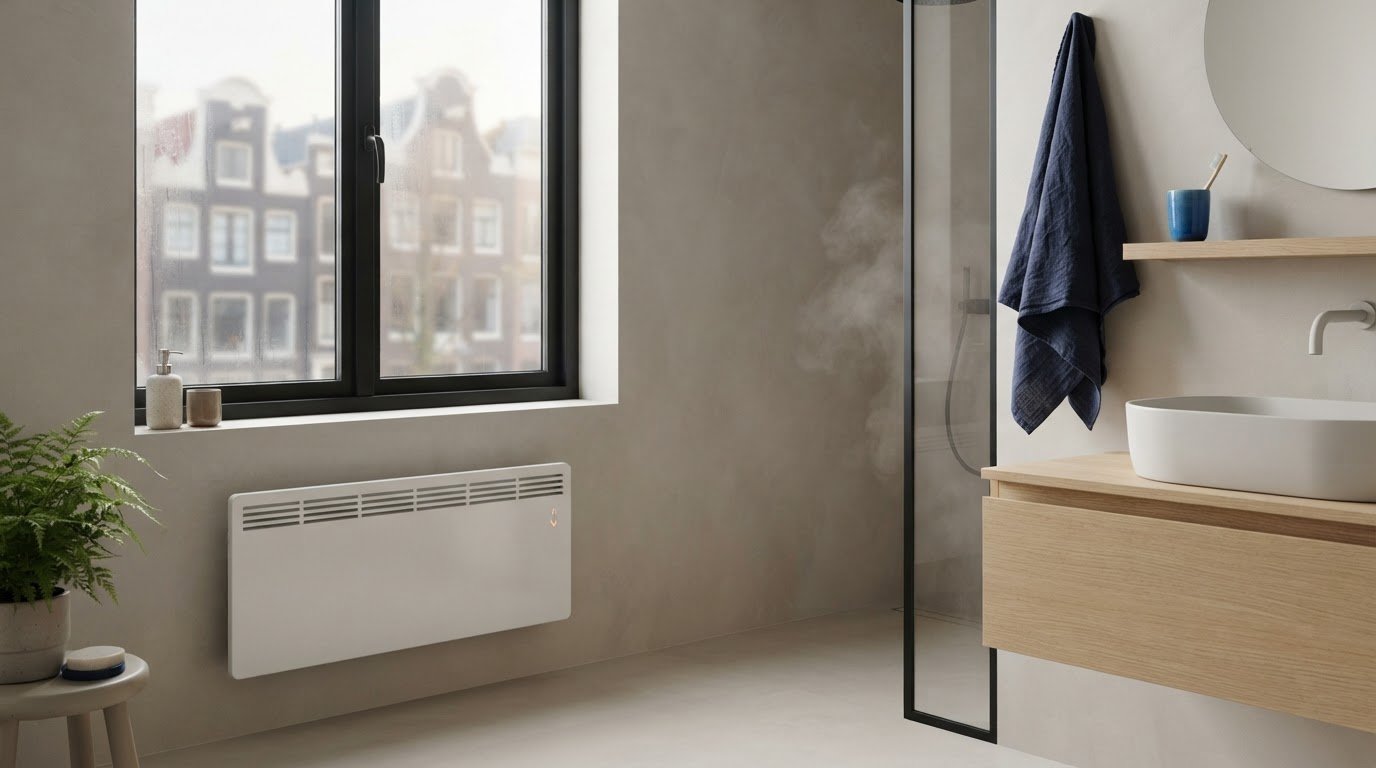
Is the most powerful model automatically the best choice for your bathroom? Not necessarily. An electric convector for the bathroom must match the size and insulation of the room, the location where you want to use it, and the times when you need heat. Because water and electricity come into close contact, choosing safely is at least as important as quick comfort.
You don't want to wait in the morning for the bathroom to feel comfortable, but you also don't want to choose a heater that doesn't suit the space. A convector heats the air and can help bring the temperature up to the desired level. The required power and warm-up time depend, among other things, on the room and insulation. Additionally, always check whether the product specifications mention bathroom use and an appropriate IP protection rating.
In this article, you will read what to look for regarding power, placement, operation, and safety. You will also discover how app control can integrate into fixed routines and why design matters alongside heat output. This allows you to evaluate electric convectors, including the smart models from BEHA, based on what is important for your bathroom and daily use.
Key Points
- Understand how convection heating works and how a convector differs from a towel radiator or infrared panel.
- When choosing an electric convector for the bathroom, pay attention to the installed application and the IP protection rating.
- Compare heating options based on heat output, intended use, placement, and operation, so you choose what suits your routine.
- Determine your heat requirement based on the room, insulation, ceiling height, and desired temperature.
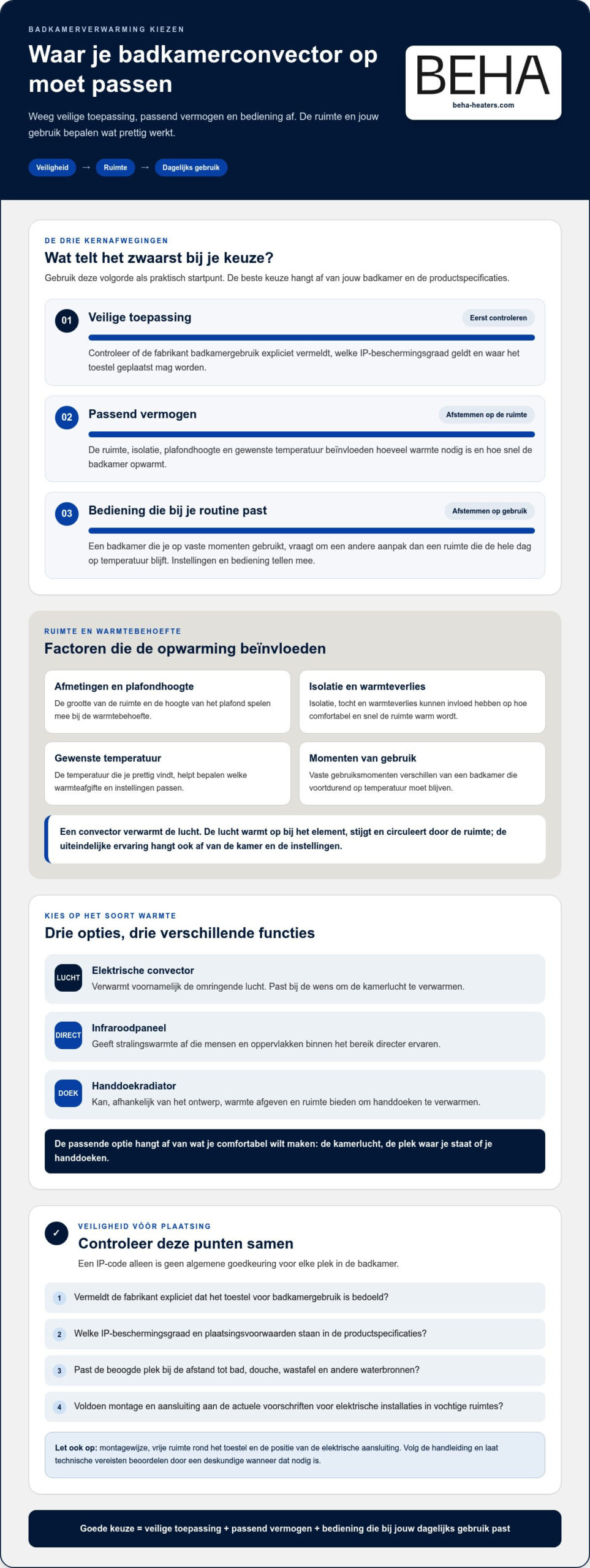
- Weigh three things against each other: safe application, appropriate power, and operation that works well in your daily life.
What does an electric convector do for the bathroom?
An electric convector for the bathroom heats the air with an electric heating element, causing that air to circulate. This is called convection heating: the heating is directed primarily at the surrounding air, not directly at you or a towel. The operation of a convector heater relies on this airflow.
How does a convector heat the air in the bathroom?
In a convector, air flows past the heating element and heats up there. The warmer air rises, while cooler air moves towards the element to be heated in turn. This creates a circulation that gradually affects the temperature in the room. How comfortable this feels depends not only on the device, but also on the dimensions and insulation of the bathroom, the ceiling height, and the use of the space.
A bathroom that you use primarily at fixed times requires a different approach than a room that needs to remain at a constant temperature throughout the day. Drafts and heat loss can also make a difference. Therefore, you cannot predict how quickly a room heats up based solely on the type of heating. The power output, settings, and conditions in the room also play a role.
What is the difference compared to a towel radiator or infrared panel?
A convector primarily heats the air. Infrared emits radiant heat that people and surfaces within its range experience more directly. Depending on the design, a towel radiator can offer space to warm towels in addition to heat output. The three solutions therefore work differently and suit different needs. Consider whether you mainly want to heat the room air, appreciate direct heat, or consider warm towels important.
None of these types is automatically the best choice for every bathroom. Your daily routine, available wall space, and desired heat output all play a role. If you want to tailor the heating to specific usage times, also consider the options for electric convectors with Wi-Fi.
Why do bathroom use and placement require extra attention?
A bathroom is a humid room. Therefore, do not look solely at the heat output or appearance of a device. The IP protection rating indicates how well the housing protects against ingress, including moisture and water. Check the product specifications to see if the manufacturer explicitly states that the device is suitable for bathroom use and what placement is permitted. A device suitable for another room is not necessarily suitable for the bathroom. Always follow the specified application and installation conditions.
Which safety features are important for a bathroom convector?
In a bathroom, suitable heating is not just a matter of heat and size. Moisture, splashing water, and the distance to the bath, shower, and sink all play a role in the selection and placement. Therefore, before considering an electric convector for the bathroom, always check the product information and follow the current Dutch regulations for electrical installations in damp areas.
What does the IP protection rating tell us about an electrical device?
The IP code indicates the degree to which the enclosure offers protection against the ingress of solid substances and water. The numbers following the code refer to different types of protection. An IP rating is a product specification, not a general approval for every location in a bathroom. The permitted application also depends on the manufacturer's instructions and the conditions at the installation site.
Therefore, look beyond just the IP code. Check whether the manufacturer explicitly mentions bathroom use and read what restrictions apply to installation and use. If that application is not listed in the product information, do not assume that the device is suitable for a damp room. A protection rating in itself does not mean that every installation is safe.
What should you pay attention to during installation and connection?
The location of the appliance must be compatible with the distance to water sources, the manufacturer's instructions, and applicable regulations. Also pay attention to the mounting method and the connection. Wall mounting, clearance around the appliance, and the position of the electrical connection can affect a safe installation. Use the manual as a starting point and have technical installation requirements assessed by an expert if necessary.
Use this checklist before you make a choice:
- Does the manufacturer explicitly state that the device is intended for bathroom use?
- Which IP protection rating and installation conditions are stated in the product specifications?
- Is the intended location suitable given the distance to the bath, shower, sink, and other water sources?
- Do installation and connection comply with current regulations for electrical installations in damp rooms?
Evaluate the product specifications and the intended placement together. Also view the electric convectors BEHA if you wish to compare different models. Always base your choice for bathroom use on the specifications of the specific unit.
How do you compare a bathroom convector to other heating options?
The right choice depends on what you want to make comfortable in the bathroom: the air in the room, your towels, or where you stand. The size of the bathroom, the insulation, and the times you heat also play a role. Therefore, compare not only the type of appliance, but also how the heat is emitted and where the appliance can be placed.
| Heating option | Heat output | Usage situation | Placement and operation |
|---|---|---|---|
| Convector | Primarily heats the air in the room. | Fits the desire to make the bathroom air pleasant. | Placement and operation depend on the model and the operating instructions. |
| Towel radiator | Emits heat and can warm towels. | Handy if warm or dry towels are part of your desire for comfort. | The available wall space and operation vary by version. |
| Infrared panel | Provides direct radiant heat to people and surfaces. | An option if you primarily want to experience direct heat in a specific spot. | The location and orientation of the panel partly determine where the heat is felt. |
| Underfloor heating | Emits heat through the floor surface. | Could be suitable if warm feet and warmth from the floor are important to you. | The installation and control depend on the system and the floor structure. |
When is convection heating suitable for your bathroom use?
First, consider the function of the heater. If you primarily want to heat the air in the bathroom, an electric convector for the bathroom might be an option to compare. Suitability and the experience of heating depend, among other things, on the size and insulation of the room, the desired temperature, and how often you use the heater. Without data on both the unit and the bathroom, a promise regarding performance or heating time is unreliable.
When is a different electric heater a better fit?
If you primarily want a warm towel after showering, a towel radiator might better meet that need. If you are looking for direct heat in a specific spot, you might consider infrared. No single technology is necessarily the best for every bathroom. Determine what kind of heat you want to feel and what practically fits the available space.
Your living style and daily routine can also play a role, in addition to the technical characteristics. If you are looking for inspiration for heating in other rooms, check out the guide on electric heating by room.
How do you determine the capacity, layout, and placement for your bathroom?
You do not choose a suitable electric convector for the bathroom based solely on the number of square meters. The height of the room, insulation, ventilation, and desired temperature also influence how much heat is needed. Use these steps to map out your situation before comparing models and specifications.
How do you estimate the heat requirement of the room?
- Step 1: Measure the bathroom. Note the length, width, and ceiling height. This will give you an idea of both the floor area and the total room volume.
- Step 2: look at heat loss. Consider insulation, ventilation, and any drafts. A bathroom with high heat loss may require something different than a well-insulated room of the same size.
- Step 3: Determine usage. Do you heat the bathroom mainly around fixed morning or shower times, or do you want a consistent temperature for longer? Also note what temperature feels comfortable for you.
- Step 4: Compare the appliance specifications. Review the power output and control options of each model. Compare these specifications with the dimensions and conditions of your bathroom. A general watt-per-square-meter rule does not automatically take ceiling height, insulation, or heat loss into account.
This prevents you from choosing a capacity based solely on a general rule of thumb. The final heat requirement depends on the combination of room, usage, and appliance. Without this data, a precise estimate is not possible.
Which system makes heating easier?
A thermostat helps regulate the set temperature. If a device has a programmable schedule, you can align the heating times with your routine, for example, before you typically use the bathroom. This makes operation straightforward and prevents you from having to manually adjust settings every time.
With a smart model, operation via an app can offer extra convenience. You can then manage settings via the app, depending on the capabilities of the specific device. Check which features are listed in the product specifications. Do not assume that an app automatically offers a special bathroom setting.
Placement is also part of the choice. Compare the possible mounting location with the product instructions and take bathroom safety and the electrical connection into account. In the guide on smart electric convectors with Wi-Fi, you can read more about operation and smart control. Also view the electric convectors from BEHA and compare the power specifications, operation, and approved application per model.
Which electric convector suits your bathroom and living style?
Make your choice based on three criteria: the confirmed application, the heat requirement, and the controls that fit your routine. An appearance that complements your interior is valuable, but it comes second. This way, you avoid relying solely on looks or smart features and losing sight of technical suitability.
First, check whether the manufacturer explicitly states that the specific device is suitable for the intended application and what installation conditions apply. Next, compare the product specifications with the heating requirements of your room. Finally, consider which control method you prefer, such as a thermostat, a schedule, or control via an app. A smart feature does not automatically make a device suitable for use in the bathroom.
Which finish suits your interior?
At BEHA convectors are available with a steel, glass, or paintable front. A steel front can complement a calm, functional interior; a glass front gives the unit a different look. With a paintable front, you can match the finish to your interior. Also consider how visible the unit should be and how it blends with the rest of the room.
Do you want to know how a paintable front can be used in an interior? Then read the guide on paintable radiators. The information regarding the finish does not in itself say anything about bathroom use. For this, the specifications and installation instructions of the specific appliance remain the guiding principle.
What does a smart convector from BEHAoffer?
BEHA has over a hundred years of experience with electric heating. The range includes smart convectors with Wi-Fi and app control, as well as versions with various front panels. App control can be useful if you want to tailor settings to recurring usage times. The available features vary by unit. BEHA products comply with Ecodesign requirements.
Carefully compare the technical data and approved applications before making a choice. Would you like to view the versions and product information? Discover the electric convectors from BEHA and assess for each model whether the specifications match your space, heating needs, and desired operation.
Choose suitable bathroom comfort with confidence
A good choice does not start with appearance or output alone. First, map out your heating needs and usage times, then compare the controls and always check whether the manufacturer lists the specific appliance for bathroom use. The installation and connection must also comply with the product specifications and applicable safety regulations.
An electric convector for the bathroom can suit your needs if the application, heat output, and controls match the space. With over a hundred years of experience in electric heating, BEHA offers smart convectors with steel, glass, and paintable fronts. This allows you to consider the aesthetics as well as the technology, without losing sight of the product specifications.
View the models and compare what suits your situation: View the electric convectors from BEHA. This way, you choose with attention to product specifications, the room, and your daily routine.
Frequently Asked Questions
Is an electric convector suitable for the bathroom?
Yes, an electric convector can be suitable for the bathroom if the manufacturer explicitly specifies the specific model for that application. Check the product information, including the IP protection rating and the conditions for installation and use. This data helps you assess whether the device is suitable for the humid environment, but does not automatically permit it for every installation location. Also take into account the size, insulation, and usage of your bathroom.
Can I use a standard electric convector in the bathroom?
No, do not assume that a standard convector is safe in a bathroom. A device intended for a dry living space is not automatically suitable for moisture or splashing water. Use it only if the manufacturer explicitly permits bathroom use and the intended placement corresponds to the instructions. An appropriate IP rating is relevant information, but always assess it in conjunction with the installation conditions and current regulations for electrical installations.
How much power does an electric convector for the bathroom need?
That depends on more than just the floor area. Measure the length, width, and height of the bathroom and take into account insulation, ventilation, heat loss, and your preferred temperature. Compare these data with the output stated in the product specifications. There is no universal output that suits every room. If in doubt about the heating requirements, an expert can assess the situation and appliance data.
What is the difference between a convector and an electric towel radiator?
A convector primarily heats the air in the room: air heats up at the heating element and then circulates through the bathroom. An electric towel radiator emits heat and, depending on the design, also offers space to warm towels. Therefore, consider what is most important to you. Do you mainly want to heat the room air, or is a warm towel function an important feature? Additionally, compare the placement and operation.
Is an electric bathroom convector energy-efficient?
That depends on the appliance, the heat demand, and how you use it. The insulation and ventilation of the bathroom affect how much heat is lost. A thermostat helps regulate the set temperature; with a schedule, you can align heating times with your routine. This prevents the heating from staying on unnecessarily long. For a realistic estimate, compare product specifications and operating settings, and do not rely solely on the type of heating.
Where do you place an electric convector in the bathroom?
Install a convector only in a location permitted by the manufacturer for the specific model. Take into account the distance to the bath, shower, and washbasin, the installation instructions, and current regulations for electrical installations in damp areas. Also check whether the connection is compatible with the installation. The safest location varies by bathroom and appliance. Have the placement and connection assessed by an expert if technical knowledge is required.