
Electric convector with digital thermostat for home
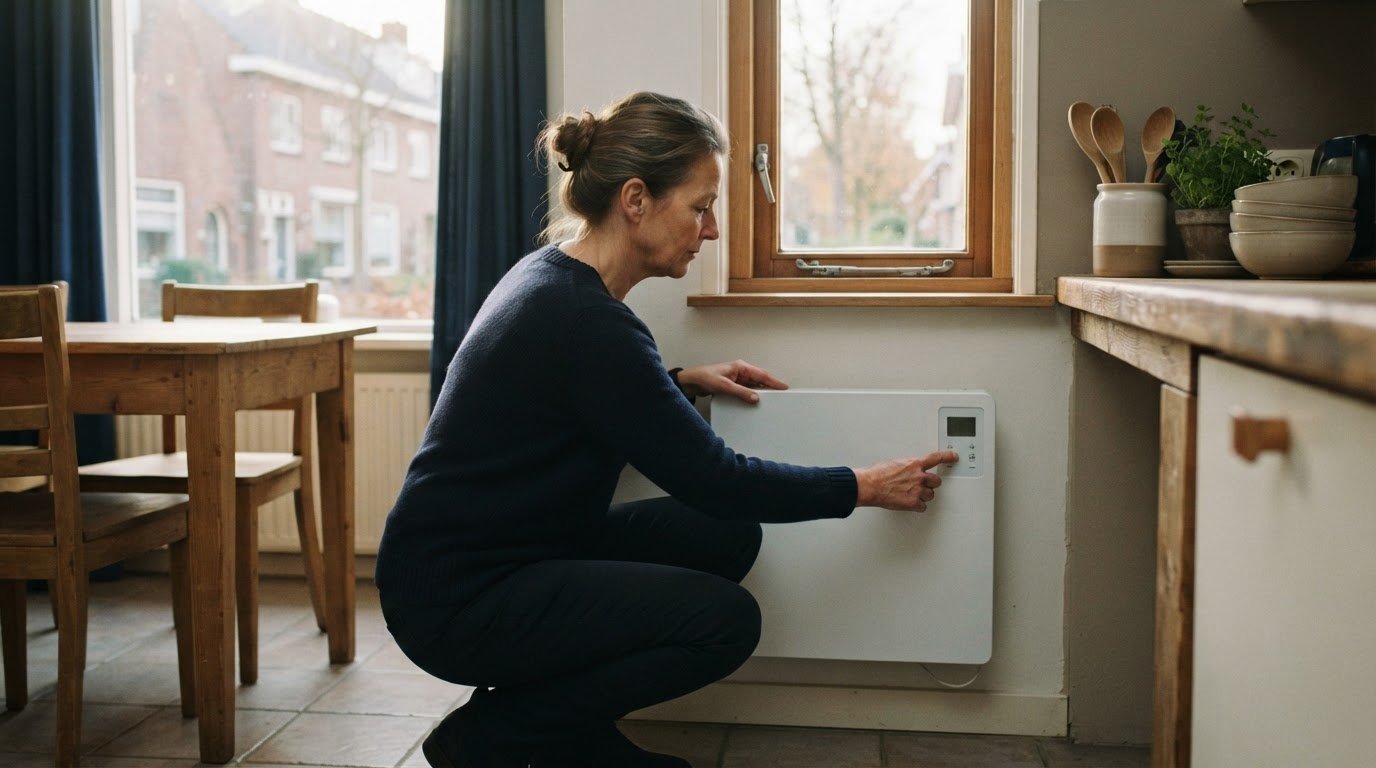
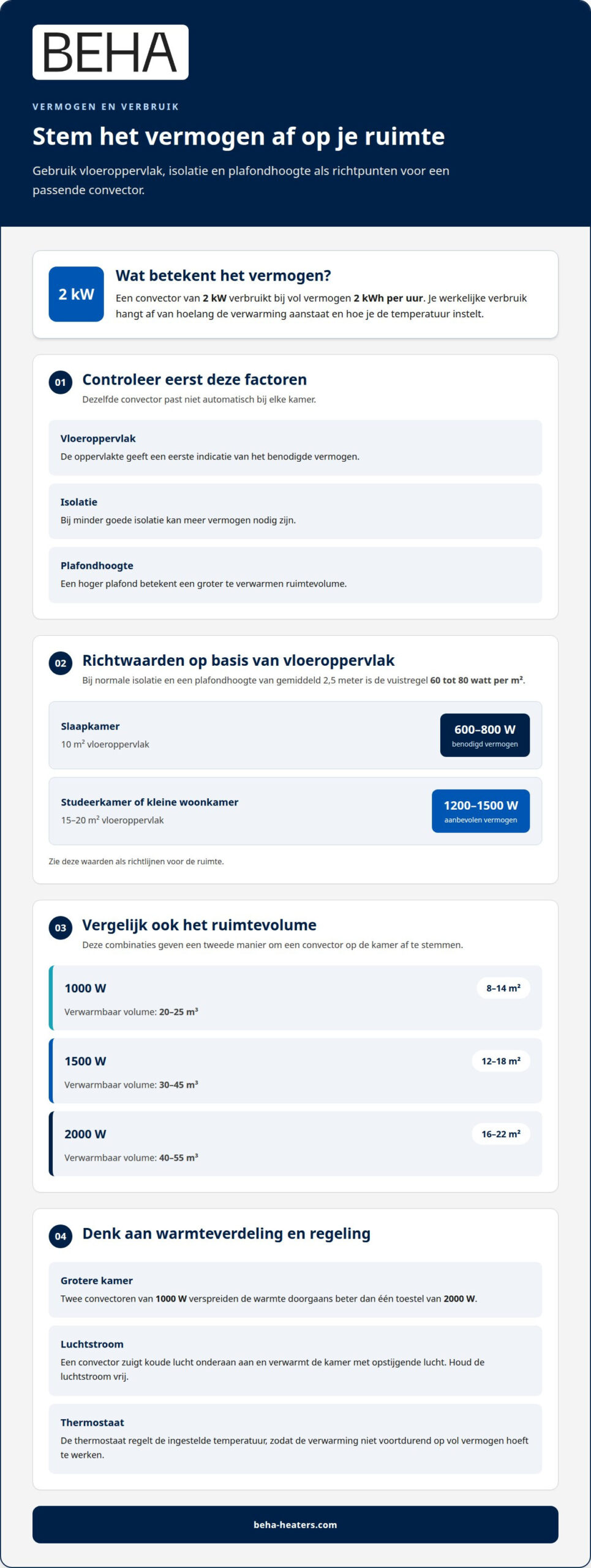
A 2 kW electric convector with a digital thermostat consumes 2 kWh per hour at full power. Your actual consumption depends on how long the convector heats and how you set the temperature.
Power consumption is understandably important if you want to heat a room comfortably without losing sight of the costs. A thermostat regulates the set temperature. Furthermore, with programmable settings, you can tailor the heating to your daily routine.
In this article, you will learn how to calculate consumption and operating costs, which settings you can program, and what to consider during installation. You will also discover how to match the output to the room, so that you choose a convector that suits your home and heating needs.
Key points
- Match the power to the floor area, insulation, and ceiling height of the room.
- Program the thermostat to your daily rhythm to regulate the heat better.
- Choose between wall mounting and freestanding placement based on the layout and available space.
- Discover what to look for in a convector with a built-in digital thermostat and which model suits you.
What is the power consumption and cost of an electric heater?
The power output determines the maximum amount of electricity a heater uses per hour. A 2 kW convector consumes 2 kWh per hour at full power. The thermostat influences consumption because the heating does not have to operate at full power continuously.
Choose the power output based on floor area, insulation, and ceiling height. As a rule of thumb, electric heating requires 60 to 80 watts per square meter for normal insulation and an average ceiling height of 2.5 meters. A 10 m² bedroom therefore requires 600 to 800 watts. For a study or small living room of 15 to 20 m², 1200 to 1500 watts is recommended. More power may be required with less effective insulation.
Room volume provides a second way to match convection heaters. A power output of 1000 watts suits a heatable volume of 20 to 25 m³ and a surface area of 8 to 14 m². For 1500 watts, the guideline values are 30 to 45 m³ and 12 to 18 m². A 2000-watt model is intended for 40 to 55 m³ and 16 to 22 m². Consider these values as guidelines for the room.
For a larger room, heat distribution can be a factor. Two 1000-watt convectors generally distribute heat better than a single 2000-watt unit. A convector draws in cold air from below and heats the room with rising air. Infrared heats people and objects directly. An oil-filled radiator heats oil and releases that heat gradually.
In a bathroom, placement also matters. For zone 3, starting 60 centimeters from the bath or shower cabin, IP21 is specified as the minimum IP rating. Keep the installation zone and the IP rating of the device in mind together; a suitable distance alone does not tell the whole story regarding protection against moisture.
Digital thermostats with programmable settings
A digital thermostat regulates the set temperature and can better align the heating with your daily routine. The available controls vary by electric heater and model.
Programmable thermostat settings
Some digitally controlled thermostats offer four additional programmable options. When choosing, check exactly which settings the model has and how to operate them. This allows you to tailor the controls to the times when you use the room. Programmable functions are particularly practical when you have fixed routines, such as working in a study or sitting in the living room in the evening. The thermostat regulates the temperature according to your settings.
Wi-Fi control and programming capabilities
With Wi-Fi control, the heater communicates with an app. You then control compatible models via your phone, instead of only on the unit itself. Check which programming options are included with the model: Wi-Fi control does not automatically mean that every model has the same functions. A fixed schedule is convenient if your heating times recur regularly. On varying days, direct control may be more practical. Also check if the model combines a digital thermostat and Wi-Fi control.
Wi-Fi control suits those who prefer to configure their electric heater digitally. You can adjust the temperature via the app and tailor the heating to your usage. A smart convector with Wi-Fi control is an option to consider if you want to add app control alongside the thermostat function.
Thermostat function and models
A thermostat measures the temperature and regulates the heating around the set value. This is different from a device that can only be switched on or off. Choose a model with controls that are easy to set up and pay attention to the combination of thermostat, programming, and Wi-Fi. Some electric heaters have a Wi-Fi programmable thermostat. The design and power output vary by model. Base your choice on the room and how you use it.
With a programmable thermostat, you set settings in advance for greater comfort. Therefore, do not just compare the appearance of models, but also look at the controls and which functions suit your routine. A fan in a heater is a separate feature and says nothing in itself about thermostat programming.
Wall mounting or freestanding placement
The position of a convector affects how warm air moves through the room. With wall mounting, the unit hangs in a fixed location, leaving the floor clear. A freestanding model can be moved if you want to heat a different room. Therefore, first determine where you need heat, for example in a seating area or workspace. Then check whether the unit is intended for wall mounting, freestanding use, or both.
Not every model offers the same mounting options. Some electric heaters are suitable for horizontal wall mounting. When making your choice, take into account the available wall space and the dimensions of the unit. For example, a 600-watt convection heater measures 34.2 cm high, 64.5 cm wide, and 8 cm deep. These dimensions help determine whether the location fits without obstructing passageways or furnishings.
A convector heats via air circulation: cold air enters at the bottom and warm air rises. Therefore, keep the airflow unobstructed and do not place the unit behind a large object. This allows the heat to spread evenly throughout the room. In a larger room, multiple heat sources can help distribute the heat across different areas.
Make your choice in three steps: determine the desired location, measure the available space, and compare those measurements with the dimensions of the unit. For wall mounting, consider a fixed position; choose freestanding if moving it between rooms is important. For example, an 80.5 cm wide convector requires more wall space than a more compact model. The right placement supports an even distribution of warm air and keeps the setup practical for daily use.
Convectors with built-in digital thermostat
With a built-in digital thermostat, you set the desired temperature directly on the convector. The thermostat regulates the heating around that setting. This way, you control the temperature and heat output from the same unit, without a separate thermostat. When choosing, check where the control panel is located and whether you can easily read the settings. This makes daily adjustments easier.
The operation of a convector is based on air circulation. The unit draws in cold air from the bottom and heats it. The warm air then rises and spreads throughout the room. The thermostat measures the temperature and regulates the heating around the value you set. Keep the air inlet clear so that cold air can flow into the unit.
With a digital setting, you select the temperature precisely. Start with the desired room temperature and adjust it if the room feels different than expected. Position the convector so that the thermostat is not directly next to a heat source or in a location with irregular air currents. This ensures that the measured temperature corresponds better with that in the rest of the room.
Distinguish between a built-in thermostat and programmable control. A thermostat regulates the set temperature; programmable functions add time settings if the model supports them. Wi-Fi control is a separate option. Therefore, compare the controls on the device with the functions you actually want to use, such as setting only the temperature or programming the heating times as well.
Power output and the room also play a role in your choice. Match the unit to the room you heat and consider how you usually set the temperature. Built-in digital controls are suitable if you want to regulate the heating directly on the convector. Before purchasing, read the user instructions regarding temperature setting, operation, and placement. This way, you will know how the unit responds to your settings and usage. As with other electrical household appliances, proper maintenance ensures that everything continues to function optimally; for those requiring expert repairs and home service, Tu Línea Blanca specialized technical support.
BEHA
BEHA offers convectors for various living spaces and heating needs. When choosing an electric convector with a digital thermostat, it helps to first determine which power output and controls suit your space. The desired appearance can also be a factor.
The range consists of smart convectors with a steel, glass, or paintable front, in addition to Classic convectors. The smart convectors can be controlled via Wi-Fi and an app. This allows you to weigh the design and operation against your requirements for the room. A convector is particularly suitable if you want to heat a specific room electrically.
Would you like to discuss your choice of power output, thermostat, and model? Then please contact BEHA.
Choose a heater that suits your home
An electric convector with a digital thermostat is a choice for daily comfort and for the appearance of your interior. Therefore, consider not only the desired heat output, but also the placement of the unit in the room. A calm, cohesive design may require a different finish than a room where the heating is meant to be visible.
BEHA offers smart convectors with a steel front, a glass front, or a paintable front. This allows you to match the heating to your interior. Determine which look suits your home and which controls align with your heating style. This way, you choose a device that is both practical and suitable.
Would you like to discuss the possibilities for your home at your leisure? Contact BEHA and explore which design suits your living space. A well-considered choice starts with what is important to you, so you can move forward with confidence.
Frequently Asked Questions
Want to buy a convector radiator?
Choose a convector that suits the room, the desired controls, and the location where you intend to use it. First, determine whether you want a fixed wall installation or prefer a portable unit. Next, compare the temperature control and any programming functions. For a room where you spend a lot of time, a precisely adjustable thermostat is practical. The finish can also be a factor if the unit remains visible.
How much power do I need?
The required power depends primarily on the size and heat demand of the room. Also take into account the insulation, ceiling height, and the number of exterior walls. A room with high heat loss requires more heating power than a comparable, well-insulated room. Use the wattage guidelines as a starting point and tailor your choice to the conditions in your home.
Can I use an electric convector as the sole heating source, or is it only supplementary heating?
An electric convector can serve as primary heating if its output matches the room's heat demand. In a small, well-insulated room, one suitable unit may suffice. In a large room or a home with significant heat loss, supplementary heating may be necessary. Therefore, first determine which rooms you want to heat and whether you require the same temperature throughout.
Does an electric convector make a lot of noise?
A convector that distributes heat via natural air circulation does not require a fan to blow air around. Therefore, the device produces no fan noise during this operation. A model with a separate fan may, however, make noise when that function is active. Therefore, check the operation of the specific device if silence is important, for example in a bedroom or office.
Does an electric convector heat my room quickly?
The warm-up time depends on the power output, the volume of the room, and the amount of heat the room loses. A convector heats air, which then moves through the room. In a smaller room, you generally notice the effect sooner than in a large, cold space. For an even result, the air around the unit must be able to circulate freely.
What are electric radiators?
Electric radiators use electricity to heat a room. A convector is a type of electric heater that heats air, which then circulates through the room. Other electric radiators can emit heat in a different way. Therefore, when comparing, pay attention not only to the name, but also to the operation, controls, and suitability for the room.