
Designer electric radiator: the complete guide to a stylish and gas-free interior
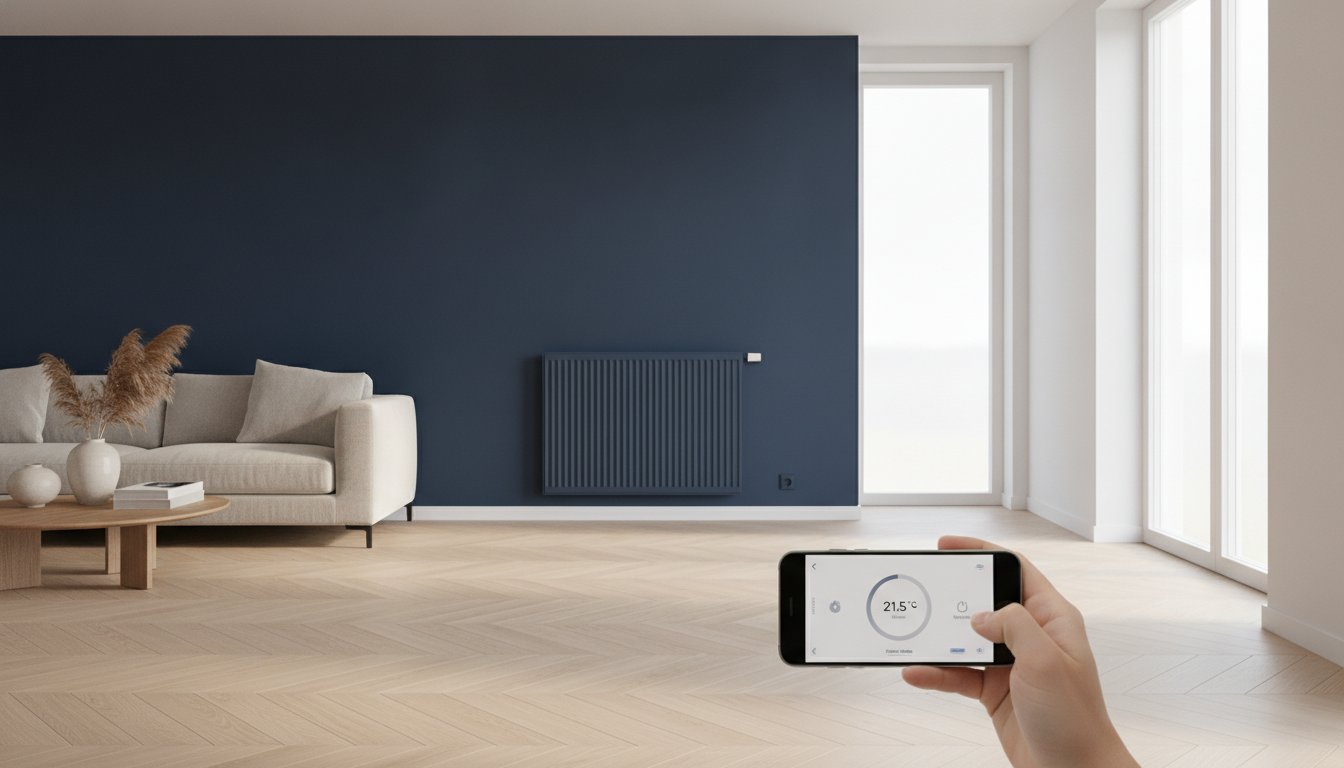
You no longer have to choose between a warm home and a beautiful interior. For many people, the switch to gas-free living is an aesthetic challenge, as they feel stuck with those bulky, white metal boxes that disrupt the atmosphere of the room. However, a designer electric radiator proves that heating can actually be an enrichment to your home. It is frustrating when your carefully chosen furniture and colors are overshadowed by an outdated heating system that also consumes an unnecessary amount of electricity.
In this guide, you will discover how to heat your home efficiently and stylishly without complicated renovations or demolition work. We show you how modern technology and Norwegian craftsmanship come together in smart solutions that lower your energy bill through precise control via an app. You will learn everything about the right capacity for your rooms and how to make the heating virtually invisible with paintable fronts. From the latest regulations regarding gas-free living in 2026 to the benefits of Wi-Fi-controlled convectors, after reading this, you will know exactly how to make your interior future-proof.
Key Points
- Discover how an electric designer radiator seamlessly blends into your interior thanks to innovative materials such as glass and unique paintable fronts.
- Learn how to lower your energy consumption and increase comfort by using smart Wi-Fi control and programmable weekly schedules via an app.
- Understand why calculating the correct wattage based on your home's insulation value is essential for efficient heating.
- Experience the assurance of Norwegian quality and discover why more than 100 years of experience in cold climates guarantees a reliable and durable system.
What is an electric designer radiator and why is it the future?
A designer electric radiator is essentially an advanced convector heater that converts electricity into heat via natural air circulation. Unlike outdated radiant heaters, this system heats the air in the room evenly and quickly. what is electric heating ? It is a process in which electrical energy is directly converted into thermal energy. In a modern interior, this ensures a constant and comfortable temperature without the dry air of the past. We are currently seeing a massive shift in the Netherlands. Where we relied on central gas boilers for decades, we are now switching en masse to decentralized, electric solutions.
This change is necessary. Regulations are becoming stricter; the first new rules of the revised EPBD IV directive will enter into force on May 29, 2026. From 2030, all new buildings must even be completely emission-free. In this transition, the electric radiator is not a temporary emergency solution, but the new standard. It offers the flexibility needed to make homes gas-free step by step without the need for extensive remodeling of the pipe network.
The benefits of decentralized heating
Decentralized heating means managing each room as an independent zone. You only heat the rooms where you are actually present at that moment. It is a waste to keep the bedroom at temperature all day if you only work in the living room. This immediately saves on your energy consumption. Moreover, you do not suffer from heat loss through long pipe runs that run through cold walls or floors. The response time is another major plus. While a traditional radiator needs time to heat the water mass, an electric convector delivers results almost immediately.
Why design is the deciding factor in your choice
In a modern interior, every detail counts. The days when a radiator was a bulky object you preferred to hide behind a curtain are over. Nowadays, aesthetics are just as crucial as the heat output itself. A designer electric radiator functions as an integral part of your interior design. Whether you choose a sleek glass front or a robust steel variant, the slim profile ensures a minimalist look on the wall. For those who desire complete interior freedom, there are even paintable models that literally blend into the wall. This way, you opt for technological superiority without compromising your personal living style.
Materials and styles: from glass fronts to paintable radiators
Choosing the right materials for your heating goes beyond just appearance. Each material has unique properties that determine how heat is distributed and how the radiator blends into your interior. While steel is the classic choice due to its robustness, glass offers a modern sophistication that we see increasingly often in contemporary homes. A designer electric radiator with a steel front often features a high-quality powder coating. This coating protects against scratches and discoloration. As a result, the unit retains its fresh appearance even after years of intensive use.
The choice of materials also influences the sustainability of your home. Recent research into energy consumption underscores that switching to efficient electric heating appliances is an effective way to reduce total household energy consumption. By choosing materials that optimize heat transfer, you get the maximum return from every kilowatt-hour. This fits perfectly within the trend of gas-free living, where efficiency and style go hand in hand.
Luxurious appearance with a glass front
Glass panels are a favorite for those who love a sleek, almost futuristic look. The smooth surface reflects light in the room in a subtle way. This can make a room appear optically larger, which is a major advantage, especially in smaller bedrooms. In addition to its aesthetic value, glass is extremely practical to maintain. A damp cloth is usually sufficient to remove dust and fingerprints. The material remains beautiful for years without the color fading due to UV radiation or heat.
The paintable radiator: the ultimate chameleon
For those who prefer not to see the heating at all, the paintable radiator the ideal solution. This model acts as a chameleon in your home. You can paint the front in exactly the same color as your wall, allowing the unit to blend completely into the background. This offers you ultimate freedom when designing your interior. If you decide to give the room a different color in a few years, you simply paint the radiator along with it. It is the perfect way to create a seamless interior without compromising on your comfort.
It is important to apply the correct technique here. Preferably use water-based wall paint and ensure that you keep the ventilation openings at the top and bottom clear. This ensures that natural air circulation continues to function optimally. Curious which finish best suits your living preferences? Then discover the versatility of our smart convectors for an interior that truly suits you.
Smart technology and Wi-Fi control for maximum comfort
Nowadays, a designer electric radiator is much more than a simple heating element. In 2026, everything revolves around digital connectivity and data-driven efficiency. A “smart” radiator understands when you are at home and adapts to your rhythm. This is not just a matter of luxury; it is an essential part of a sustainable lifestyle. By using advanced sensors and smart algorithms, the device never consumes more energy than is strictly necessary to reach your chosen target temperature. You have complete control over your climate management without having to worry about it.
This technological advancement is driven by increasingly stringent heating efficiency standards. Governments worldwide are raising the bar to combat energy waste. The current generation of electric radiators must comply with strict European Ecodesign requirements. This means that features such as a weekly timer and electronic temperature control are standard. As a result, you can be certain that you are investing in a product that not only performs well now but will also still meet the highest standards ten years from now.
Remote control via the BEHA app
With the BEHA app, you transform your smartphone into a central remote control for your entire home. You can easily set personal weekly schedules for each individual room. Do you have an irregular schedule? You can turn on the heating while you are still at work or on your way home. In the app, you can see the status of all connected devices at a glance. This prevents a radiator from remaining on unnecessarily in an empty guest room. Installation is intuitive; within minutes, you connect the radiators to your home network via Wi-Fi.
Save energy with smart thermostats
The true power of a modern convector lies in the accuracy of the thermostat. Older systems often fluctuate by several degrees around the set temperature, which consumes a lot of energy. A smart thermostat measures with accuracy down to a fraction of a degree, ensuring the room remains constantly comfortable. Another indispensable feature is open window detection. As soon as the radiator signals a sudden drop in temperature, such as when airing a room, the system temporarily switches off. This way, you never heat the outside air. A high-quality electric convector with Wi-Fi is therefore an investment that pays for itself in the long run through lower energy bills. It offers you the perfect balance between a warm interior and responsible consumption.
Calculate the correct capacity for your home
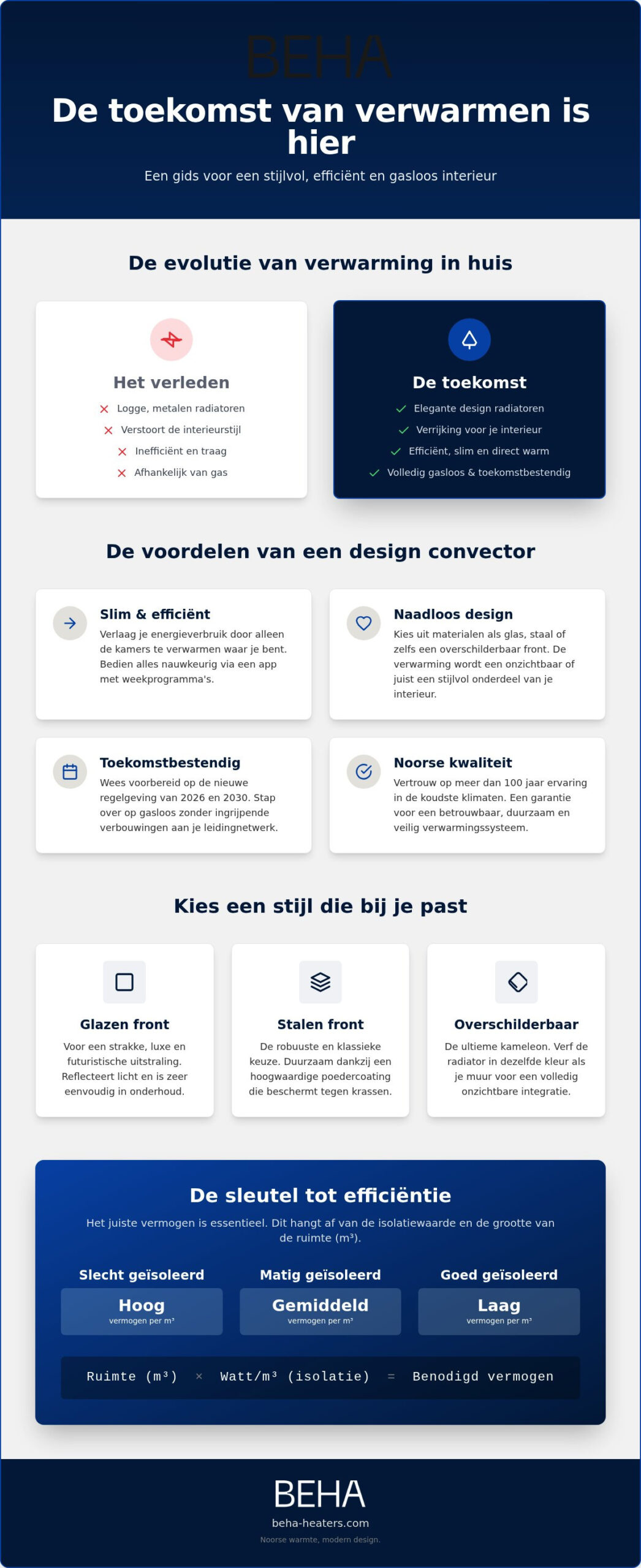
When selecting a designer electric radiator, many people make the mistake of focusing primarily on the physical dimensions of the unit. However, in the world of electric heating, wattage is the only factor that determines whether you can get a room comfortably warm. A larger panel does not automatically mean more heat; it is about the power the convector can deliver to heat the air mass in the room. Calculating the correct capacity is therefore the most important step in achieving an efficient and gas-free interior without consuming unnecessary electricity.
It is often wise to opt for slight overcapacity. A radiator with more power than strictly necessary does not have to work as hard to reach the desired temperature. As a result, the room heats up faster and the thermostat switches off sooner. This prevents the system from running at full power constantly, which extends the lifespan of the components and ensures a more stable indoor climate.
Wattage per room: a handy guideline
The function of the room largely determines how much power you need. For the living room, where you often sit still for extended periods, we use a guideline of 75 to 100 Watts per square meter. In the bedroom, this can be lower; approximately 60 Watts per m² is usually sufficient for a comfortable sleeping temperature. The bathroom is an exception. Here, you want the room to heat up very quickly and for towels to dry fast. Therefore, we often recommend a higher power output per square meter for the bathroom, provided the appliance meets the correct safety class for damp rooms.
- Living room: 75-100 Watts per m²
- Bedroom: 60 Watts per m²
- Bathroom: 100+ Watts per m²
The influence of insulation on your choice
Your insulation value is the biggest variable in the calculation. In a modern new-build home with an A++ label, heat is retained much better than in a characteristic building from the 1930s. Good wall insulation and double glazing can reduce the required capacity by as much as 20%. For large projects or homes with a complex layout, it is always advisable to have a professional heat loss calculation performed to determine exactly what you need. Do you need help making the right choice for your specific situation? Then take a look at our range and discover which smart convectors best suit the wattage of your rooms.
Norwegian quality and sustainability with radiators from BEHA
BEHA is not just a manufacturer; it is a Norwegian institution with over 100 years of experience. In a country where winters are extreme, reliable heating is not a luxury but an absolute necessity. This rich history translates directly into the quality of every electric designer radiator that leaves the factory. Norwegian design is known worldwide for its minimalism and functionality. At BEHA , however, this goes beyond mere appearance. It involves a well-thought-out construction where every component is designed to last a lifetime without sacrificing efficiency. By choosing this product, you opt for one rooted in tradition, yet fully equipped to meet the modern demands of sustainability.
The focus on quality also means that the systems are virtually maintenance-free. While traditional heating systems often require technical attention, BEHA technology offers reassuring reliability. The brand positions itself as an innovative guide that helps you make responsible choices for your living environment. By investing in Norwegian craftsmanship, you choose a solution that brings peace and continuity to your daily routine.
Climate-friendly heating with peace of mind
Choosing an electric heater with a steel front is an environmentally conscious step. Unlike combustion systems, an electric convector emits no harmful substances or particulate matter into your own home. This contributes directly to a healthier indoor climate for you and your family. However, the real power lies in the synergy with renewable sources. If you have your own solar panels, you use the self-generated electricity directly to keep your rooms at a comfortable temperature. This not only reduces your ecological footprint but also makes you less dependent on fluctuating energy prices on the market.
Easy installation and maintenance
The installation process is designed with simplicity in mind. You do not need an installer or plumber to install your new heating. With the included wall brackets, you can easily mount the radiator yourself in the desired location. It is simply a matter of marking, drilling, and plugging it in. Because no water is involved, you will not have to worry about leaks or the periodic bleeding of pipes. This makes an electric designer radiator one of the most user-friendly ways to make your home more sustainable. You enjoy the warmth immediately without any demolition work, backed by the quality guarantee you can expect from an established Norwegian brand.
Ready for a stylish and gas-free future
The switch to a sustainable interior is easier and more beautiful than ever with an electric designer radiator. You now know that accurate wattage calculation and the smart use of Wi-Fi control form the basis for an efficient gas-free home. By choosing high-quality materials such as glass or unique paintable fronts, you allow the heating to seamlessly blend into your personal living style. It is no longer necessary to compromise on aesthetics to enjoy a pleasant indoor climate.
BEHA, a Norwegian family business with experience in extreme cold dating back to 1917, offers the assurance of products that meet all strict ecodesign requirements. With the smart technology included as standard, you always remain in control of your own energy consumption and comfort. Discover the full range of designer radiators on the BEHA homepage and take the step towards a future-proof home today. You are now fully prepared to make a responsible choice that guarantees years of living enjoyment.
Frequently asked questions about electric designer radiators
How many watts do I need for an electric designer radiator in the living room?
For an average living room, you need between 75 and 100 Watts per square meter to heat the space comfortably. The exact requirement depends heavily on the insulation of your home and the number of exterior walls. In a well-insulated new-build home with double glazing, 75 Watts is often sufficient, while an older home tends to require closer to 100 Watts. A designer electric radiator with the right capacity ensures a stable climate without unnecessary energy consumption or temperature fluctuations.
Is an electric designer radiator expensive to use compared to gas?
Consumption doesn't have to be more expensive if you heat smartly and control rooms independently via an app. Whereas central heating heats the entire house and loses heat through long pipes, an electric radiator works directly and locally where you are. By using weekly schedules and precise thermostats, you prevent waste. In combination with solar panels, electric heating is often even more economical than gas, especially considering the lower maintenance costs.
Can I install an electric designer radiator myself?
Yes, you can easily carry out the installation yourself without the help of a certified installer or plumber. Most models come as a plug-and-play system with clear instructions and the necessary wall brackets for secure mounting. It is simply a matter of attaching the brackets level to the wall, hanging the radiator in place, and plugging it into the socket. Because no water pipes are required, you save significantly on installation costs and avoid any demolition work.
What is the best place in the room to hang an electric radiator?
The ideal location for your radiator is under a window or against a cold exterior wall for optimal air circulation. This immediately warms up the incoming cold air, ensuring an even heat distribution throughout the room. However, make sure there is sufficient free space around the unit for an unobstructed airflow. Mount the radiator at least 5 to 10 centimeters above the floor and keep the top free of curtains for the best efficiency.
Are electric radiators with a glass front safe for children?
Yes, the glass fronts of modern convectors are designed with safety as an absolute priority for families. The tempered glass used is very robust and the surface temperature remains within safe margins, ensuring that direct contact does not immediately lead to burns. Furthermore, many models have rounded corners to prevent injury in the event of impact. The stable wall mounting ensures that the unit cannot tip over, which is a major advantage in households with playing children or pets running through the room.
How does the Wi-Fi control work on a BEHA design radiator?
Wi-Fi control works via the user-friendly app on your smartphone or tablet, allowing you to manage your heating from anywhere in the world. After a simple connection to your home network, you can set the temperature per room and create detailed weekly schedules that suit your rhythm. You can see the current temperature in real-time and even turn the heating on remotely. This system not only makes your electric designer radiator more comfortable but also actively helps you save energy by preventing unnecessary heating.
Can I paint over any electric radiator?
No, you cannot simply paint any radiator; this can impair heat output or damage the paint due to the heat. Only models specially developed for this purpose with a paintable front are suitable for a safe result. These radiators have a surface that absorbs water-based wall paint well without the paint peeling. It is an ideal solution if you want your heating to blend completely into the color of your wall for a minimalist and seamless interior that exudes tranquility.
Do BEHA radiators meet the Ecodesign requirements?
Yes, all BEHA radiators fully comply with the strict European Ecodesign requirements applicable to electric heating appliances. These regulations set high standards for energy efficiency to prevent waste. To meet these requirements, our radiators are equipped with smart features such as an accurate electronic thermostat, programmable weekly timers, and open window detection. This guarantees that you are bringing a sustainable product into your home that not only heats effectively but also meets the latest environmental standards for a responsible, gas-free future.