
Electric shed heating: choose the smartest solution for your workshop or storage
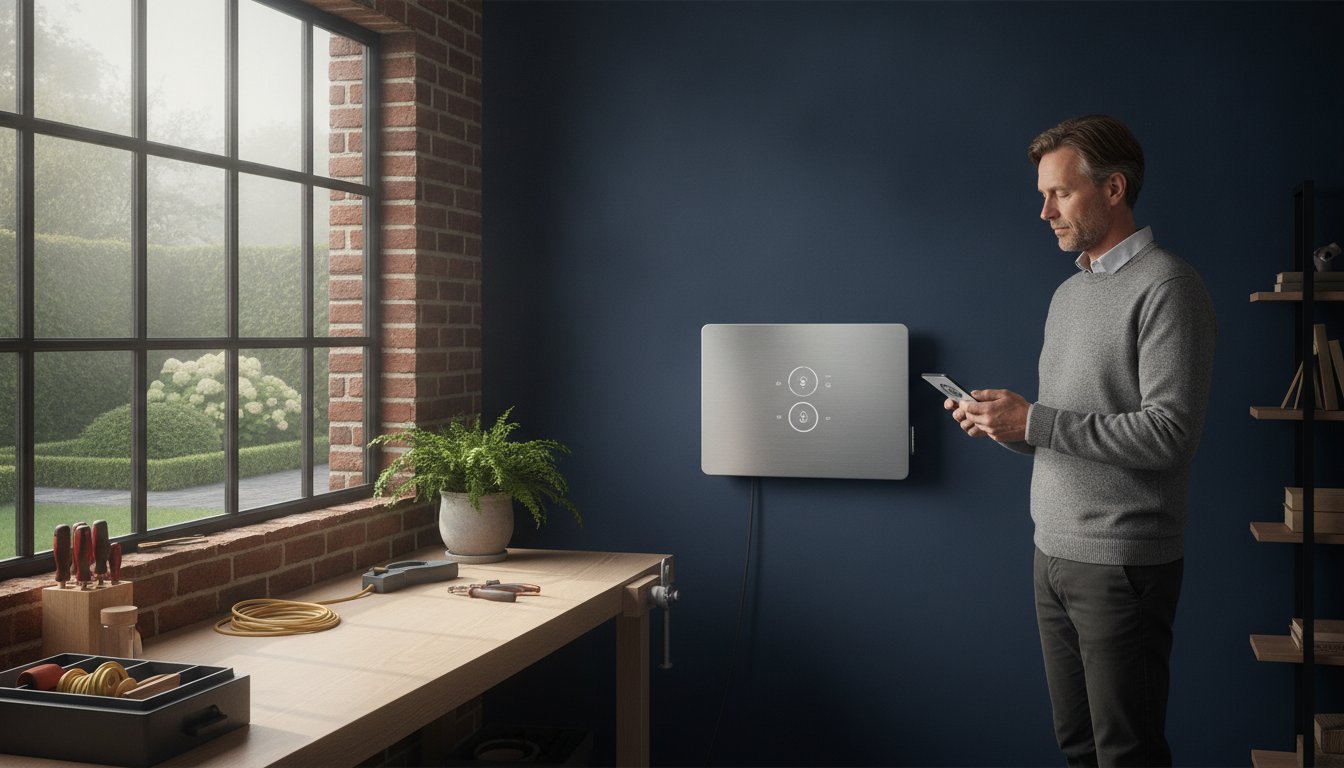
Why would you spend a small fortune on energy for a space where you only occasionally do DIY projects or store your tools? Many people think that electric shed heating is a bottomless pit for the wallet, especially when the insulation is not optimal. You probably recognize the frustration of an ice-cold workspace where moisture and mold run rampant, while the fear of high costs or fire hazards prevents you from turning it on. It is an understandable concern that limits your use of your own shed.
In this article, you will discover how to heat your shed efficiently, safely, and affordably, from precise frost protection to a comfortable hobby space. We show you how modern technology, such as robust smart convectors with a steel front, ensures a healthy environment without waste. You will learn exactly which solutions suit your situation and how to maintain full control over the temperature and your energy bill remotely using an app. This way, your workshop or storage finally becomes a place you can enjoy using all year round.
Key Points
- Discover why an electric installation is the most practical and fastest solution for a shed without a gas connection.
- Learn how to prevent moisture problems at minimal cost with the right insulation and precise frost protection.
- Understand which technical requirements, such as IP rating and current load, are essential for safe electric shed heating.
- Discover the benefits of robust convectors with a steel front that can withstand the challenging conditions of a workshop.
- See how you maintain complete control over the climate in your shed with a smart Wi-Fi app, wherever you are.
Why electric heating is the best choice for your shed
The days when a shed served solely as a cold storage place for bicycles are over. Nowadays, we transform these outbuildings into fully-fledged workshops, home offices, or even sports facilities. Such a transformation calls for reliable climate control. electric shed heating is the most efficient way to achieve this. You benefit from simple installation without the need for an installer for complex gas lines or a costly expansion of your central heating network. It is often simply a matter of hanging the convector and plugging it into the socket.
In 2026, we will see a clear shift in how we view energy. Due to the rise of smart grid control and dynamic energy contracts, electric heating is becoming smarter than ever before. Modern systems respond immediately to price fluctuations and the load on the power grid. As a result, you heat not only when necessary, but also when it is most economically advantageous. This makes the switch to electricity a future-proof investment that pays for itself through intelligent and lower consumption.
The barn as a multifunctional space
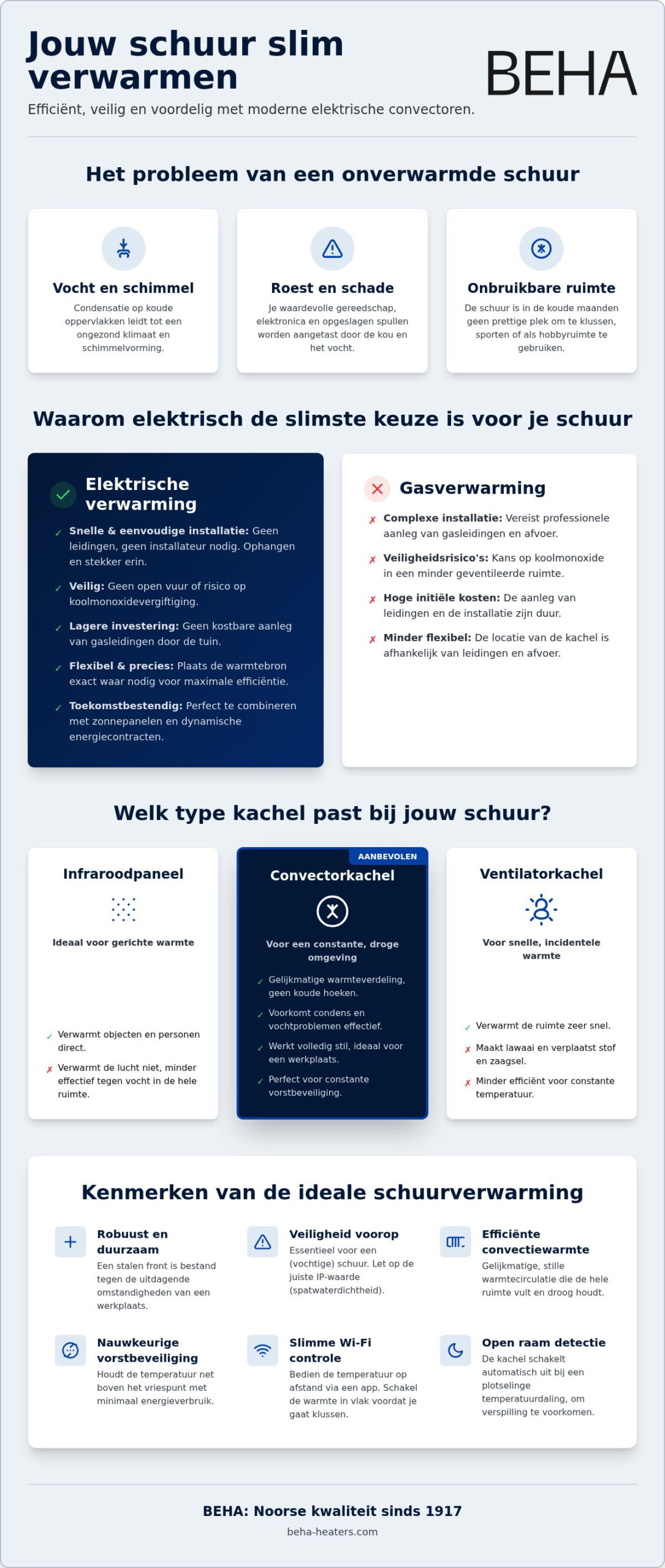
Whether you are an avid DIYer working on projects like those of CutByBEES or use your shed to store valuable items, a constant temperature is crucial. Cold and moisture are the greatest enemies of your possessions. As soon as the temperature drops below the dew point, condensation forms on cold surfaces. This leads to rust on your expensive tools and mold growth in textiles or stored documents. By choosing an electric solution with an accurate thermostat, you keep humidity under control. You create a dry environment that significantly extends the lifespan of your electronics and equipment.
Electric versus gas shed heating
For outbuildings, the comparison between gas and electricity often works out in favor of the latter. The initial investment for a gas-fired solution is substantial. After all, you have to run pipes, often deep through the garden, and take into account the discharge of combustion gases. Additionally, in a relatively small, often less ventilated space such as a shed, there is always a risk of carbon monoxide poisoning when using gas. Electric convectors do not pose this danger. They offer the flexibility to place the heat source exactly where the cold enters hardest, such as under a window or next to an uninsulated door. This ensures direct and safe heat transfer without energy loss in long transport pipes.
Which types of electric heaters are suitable for a shed?
Not every heat source is up to the specific conditions of a shed or garage. While you strive for a constant base temperature in your home, an outbuilding often requires a hybrid approach: reliable frost protection combined with powerful heat for DIY projects. When searching for the right electric shed heating, you will encounter various technologies, each with its own strengths. The choice depends entirely on how you use the space.
Infrared panels, for example, are popular for targeted heat above a workbench. They heat objects and people directly, which feels pleasant. However, because they do not heat the air itself, they are less effective at preventing moisture problems throughout the entire space. For a healthy and dry shed, a combination of techniques, with a leading role for convection and smart control, is usually the most sustainable solution.
Convection heating for a constant temperature
Convectors work on the basis of natural air circulation. Cold air is drawn in at the bottom of the heater, heated, and blown out at the top. This process repeats until the entire room has reached the desired temperature. The major advantage is the even distribution of heat. As a result, no cold corners are created where condensation can collect. Moreover, these heaters are completely silent. This makes them ideal for those who want to work or exercise in peace. An electric convector with Wi-Fi offers ultimate control, as you can regulate the temperature down to the degree via your smartphone.
Fan heater for quick jobs
Do you only need heat occasionally for a short job? Then a fan heater can offer a solution. These devices blow warm air directly into the room, allowing you to feel a noticeable difference within a few minutes. However, there are disadvantages to this type of electric shed heating. The constant airflow moves a lot of dust, which is undesirable in a woodworking shop or hobby room. Additionally, they are relatively noisy and less energy-efficient for prolonged use. Therefore, view a fan heater primarily as temporary support and not as the primary source of climate control.
For a shed that needs to remain functional and dry all year round, a robust convector with a steel front is the smartest choice. It can take a beating and offers the reliability you need in a workshop. Explore the options of our smart convectors to discover which solution best suits your shed.
Save smartly on your energy bill in a cold shed
Many people shy away from electric shed heating because they fear a sky-high electricity bill. That is unnecessary. The costs are not in the device itself, but in how you use it. By making smart choices regarding technology and management, you keep costs surprisingly low. A crucial part of this is the thermostat. While traditional heaters often experience large temperature fluctuations, modern convectors use an electronic thermostat that achieves an accuracy of 0.2 degrees. This precision can save you up to 20% on your energy consumption, simply because the heater never stays on longer than strictly necessary.
Another smart way to save is the frost protection mode. In an unattended shed, you don't need to keep the temperature at a constant 20 degrees when you're not there. Most smart models have a setting that keeps the temperature around 5 degrees. This is just enough to prevent liquids from freezing and moisture buildup, while keeping power consumption to a minimum. It is the most cost-effective way to protect your valuable tools and stored items during a harsh winter without having to worry about it.
Insulation tips for more efficient heating
You can buy the most advanced heater, but if you heat the outside air, the bill will remain high. Therefore, start with the basics: insulation. Seal gaps around the shed door and windows with simple draft strips. This costs little time and money but prevents the generated heat from escaping immediately. Do you have a shed roof or walls made entirely of wood? Then consider covering them with insulation material such as PIR boards or glass wool. Floor insulation, in particular, is often overlooked, even though a cold floor immediately reduces the sense of comfort. A well-insulated space retains heat much longer, meaning your electric shed heater needs to switch on less often to maintain the target temperature.
The power of Wi-Fi and smart thermostats
You save the most by taking control. With the BEHA app, you can easily set up weekly schedules that seamlessly fit your routine. Do you do DIY projects every Saturday morning? Set the convector so that the shed is already pleasantly warm while you are still enjoying your first cup of coffee inside. You don't have to leave the heater on all night for that one hour of comfort. Via the app, you have real-time insight into your consumption, allowing you to see immediately where you can still optimize. This digital connectivity transforms a simple heater into an intelligent system that proactively thinks along with you about your energy management.
Safety and installation of electric shed heating
When installing electric shed heating, safety comes first. A shed is a different environment from a living room; there is more often dust, moisture, or flammable materials such as a woodpile. Before hanging a convector, it is essential to check the electrical circuit. An average heater requires considerable power. If that circuit also powers your heavy tools or garden lighting, the fuse may blow. Therefore, ensure a realistic estimate of the total load on your power grid to prevent overheating of your wiring. For demanding projects or industrial environments, high-quality cabling from Belcab.
Fixed wall mounting is always preferred over a freestanding heater. It prevents the appliance from tipping over or flammable materials from being placed too close. Follow these steps for optimal installation:
- Height: Mount the convector approximately 10 to 20 centimeters above the floor. This ensures natural suction of cold air at the bottom.
- Clearance: Keep a minimum distance of 10 centimeters from shelves, tool walls, or curtains at the top and sides.
- Connection: Always use a grounded outlet suitable for the required wattage. Avoid using thin extension cords, as these can become dangerously hot during prolonged use.
Maintenance of your shed heater
In a workshop where you saw or sand, dust accumulates quickly. This fine dust can get into the intake grilles of your heater, reducing efficiency or causing a burning smell. Make it a habit to periodically vacuum the grilles. While doing this, also check that the power cable is still fully intact and shows no damage from sharp tools. A maintenance-free electric heater from BEHA is designed to function safely for years with minimal care. Do you want to be sure you choose the safest setup? Then take a look at our range of smart convectors with steel fronts for a robust and reliable solution in your workshop.
Discover the Norwegian quality of BEHA for your shed
When you choose electric barn heating, you want a system that not only works today but will still be reliable in ten years' time. BEHA brings over 100 years of Norwegian experience to your workshop. In Norway, electric heating is the standard; that expertise is reflected in every detail of our products. From the robust finish to the smart software that meets the strictest Ecodesign requirements, everything is designed for sustainability and ease of use. You are choosing a brand that combines tradition with the latest digital connectivity.
The controls of our convectors are designed with the user at the center. Via the intuitive app, you have complete control over the climate in your outbuilding, no matter where you are. This means you never have to step into a cold shed again or worry about whether you turned off the heater. It is a reassuring thought that fits perfectly with a modern and responsible lifestyle.
Why a steel front is the best choice for your shed
An active work environment is a place where life happens. You move tools, slide materials around, or work with heavy parts. A glass front looks aesthetically pleasing but is vulnerable to hard impacts. Our smart convectors with a steel front have been specifically developed for these demanding situations. Steel is impact-resistant, easy to clean, and effortlessly retains its shape during large temperature fluctuations. It is the no-nonsense, solid solution that does exactly what it needs to do without compromising on quality. For more details on making the right choice, consult our electric heater with steel front buying guide.
Paintable options for the luxury shed or garden room
Not every shed is a dusty workshop. Increasingly, we see outbuildings transformed into modern garden rooms, guest houses, or high-quality home offices. In such a space, you want the technology to blend into the interior rather than stand out. Our smart convectors with a paintable front offer the ideal solution here. You can simply paint the radiator in exactly the same color as the wall, making it virtually invisible. It combines the brute power of a professional electric shed heater with the refined aesthetics of a design element. You can read more about these unique possibilities in our guide on the paintable radiator.
Choose a future-proof and frost-free workshop
You now have the knowledge to turn your shed into a fully functional, dry space without energy costs getting out of hand. By choosing smart electric shed heating, you prevent persistent moisture problems and protect valuable tools from the elements. It is all about the right balance between physical robustness and intelligent digital control, so you only consume energy when it is truly necessary for your comfort or the safety of your gear.
With the Norwegian quality of BEHA , you choose a tradition that has stood for reliability and innovation since 1917. Our convectors offer not only simple Wi-Fi control for maximum ease of use, but also the assurance of a 5-year warranty on all models. This allows you to transform your workshop or storage into a place where you can work with pleasure and peace of mind all year round. View our smart convectors for your shed and discover the ideal solution that seamlessly meets your needs.
Frequently Asked Questions
How much does it cost to heat a shed electrically?
The cost of electrically heating a shed depends heavily on the level of insulation and your usage pattern. By using a convector with an accurate electronic thermostat, you prevent unnecessary energy consumption. When the shed only needs to remain frost-free, the heater consumes only a fraction of its maximum power in frost protection mode. Smart schedules via an app ensure that you only heat at full capacity when you are actually working.
Can I safely leave an electric heater on in the shed when I am not there?
Yes, modern electric convectors are designed to operate safely unattended, provided they are equipped with overheat protection. This system immediately switches off the power if the internal temperature becomes too high. For a shed, an IP24 certification is essential so that the device is resistant to moisture and splashing water. BEHA 's frost protection mode keeps the temperature constant at around 5 degrees, which is a safe and responsible way to prevent freezing and moisture damage without continuous supervision.
How many watts do I need to heat my shed?
To determine how many watts you need for electric shed heating, you must consider the volume of the space and the degree of insulation. In a poorly insulated shed, you often need more power than the standard 60 to 100 watts per square meter that applies to residential homes. It is wise to have some overcapacity, so that the heater warms up the space faster and can then maintain a stable temperature at a lower setting.
Is a convector heater better than infrared for a shed?
That depends on your goal; for even heat and combating moisture, a convector heater is usually the better choice. Infrared heat only warms the objects and people it radiates onto, which is pleasant at a workbench but leaves the air cold. A convector circulates the air throughout the entire shed, preventing condensation on cold walls and tools. For a healthy and dry storage space or workshop, convection offers the most complete climate control.
How do I prevent pipes in the shed from freezing with an electric heater?
You prevent freezing by setting the heater to the special frost protection mode. All BEHA smart Wi-Fi models feature this function as standard, where the thermostat automatically keeps the temperature above freezing, usually around 5 to 7 degrees. This is sufficient to prevent water pipes from bursting or liquids in your shed from freezing. Thanks to the app, you can check at any time whether the temperature in the shed is still safe, even during a severe frost period.
Do I need a dedicated circuit for a shed heater?
Whether you need a separate circuit is determined by the total wattage of the equipment you use simultaneously. A heavy 2000-watt electric heater consumes a significant portion of the available capacity of a standard 16-amp circuit. If you also use heavy machinery such as a table saw or compressor in the shed, there is a high risk of an overloaded circuit. Therefore, always check the total load and consider a separate power line for the heater during intensive use.
Can an electric heater withstand the damp environment of a shed?
An electric heater can withstand a humid environment perfectly well, provided it has at least an IP24 rating. This certification guarantees that the electronics are protected against splashing water and condensation, which occurs frequently in a shed or garage. The robust BEHA convectors with a steel front are specifically built to function trouble-free for years under these challenging conditions. Moreover, the steel front is less susceptible to the effects of fluctuating humidity than other materials, which significantly extends the lifespan.
How does the Wi-Fi control work on a BEHA heater in the shed?
The Wi-Fi control of a BEHA heater works via a user-friendly app on your smartphone. After connecting the heater to your wireless network, you can read and adjust the temperature in your shed from anywhere in the world. You can easily set weekly schedules so that the shed is warm when you arrive and switches to energy-saving mode when you leave. You also get real-time insight into energy consumption, allowing you to see exactly what the electric shed heating is costing you at that moment.