
Electric supplementary heating: the complete guide to a warm and energy-efficient home in 2026
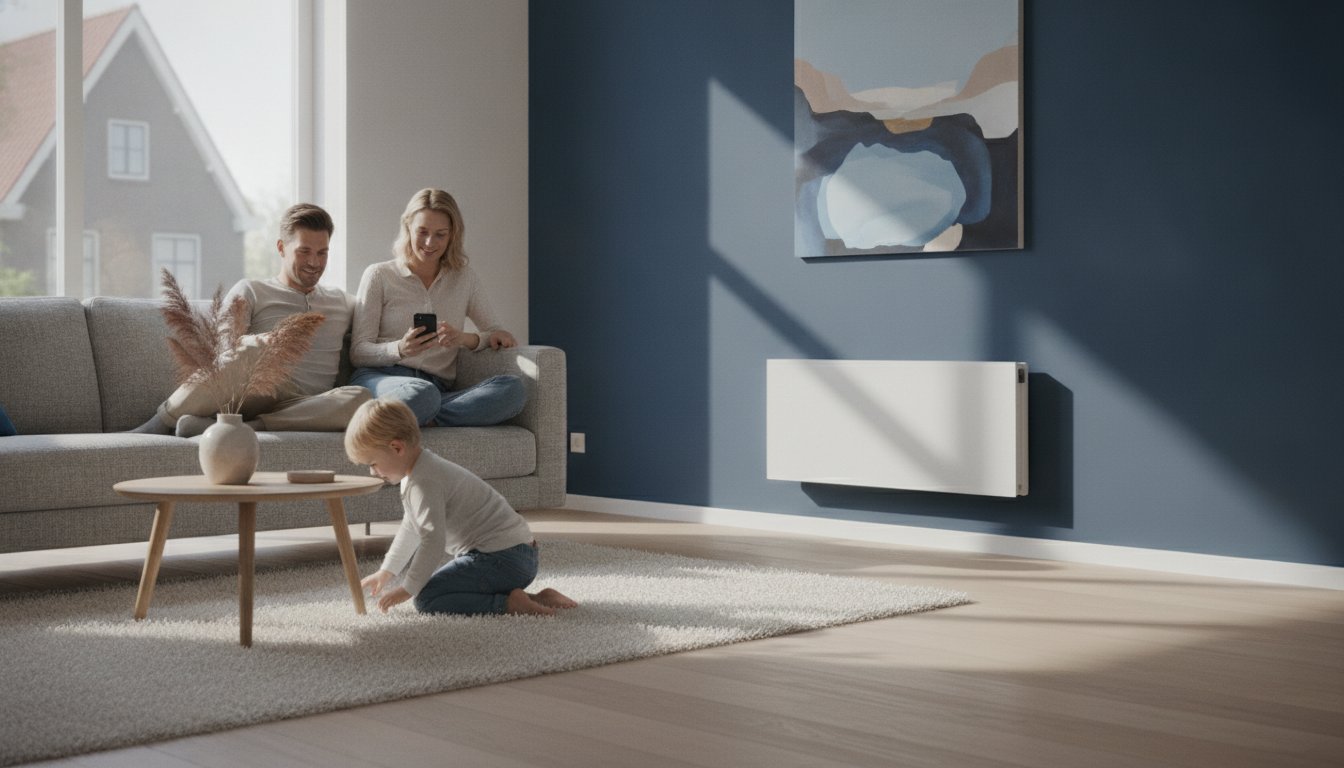
Would you rent an entire cinema hall if you were watching a movie by yourself? Probably not, and yet that is exactly what many people do with their central heating. It is frustrating to turn up the thermostat throughout the entire home just because you have cold feet in your study or the sitting area. Moreover, with current energy prices averaging €1.60 per m³ of gas in 2026, that bill mounts rapidly, while some corners of the house stubbornly remain chilly.
You probably recognize the feeling of preferring to put on an extra sweater rather than turn up the gas tap. Fortunately, comfort is not a luxury you have to pay top dollar for. In this guide, you will discover how to use smart electric supplementary heating to specifically reduce your gas consumption while simultaneously optimizing the heat in every room. We show you how modern technology and Norwegian design come together in heating solutions that blend seamlessly into your interior and are easy to control via an app on your phone. This way, you turn your home into a smart, warm place that is fully ready for the future.
Key Points
- Understand why the shift from gas to electricity in 2026 makes using electric supplementary heating a financially smart choice.
- Discover why smart convectors are the best all-round solution for constant heat in every room of your house.
- Learn how to easily calculate the required wattage based on the dimensions and insulation level of your room.
- Experience how Wi-Fi control and modern design ensure maximum comfort without the heater being an obtrusive presence in your interior.
- Trust in the Norwegian quality of BEHA , which meets the strictest European EcoDesign requirements for a safe and sustainable home.
What is electric supplementary heating and why will it be indispensable in 2026?
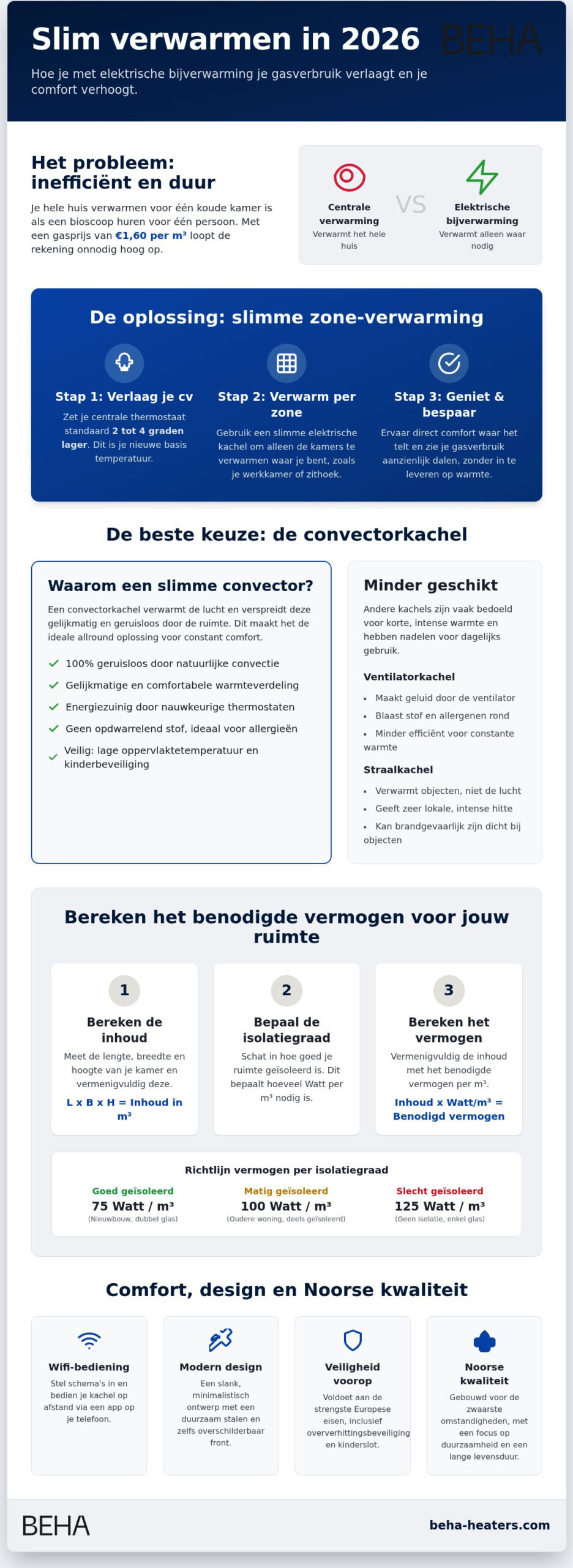
Electric supplementary heating is essentially any heating source used to supplement your central system to bring specific rooms to a targeted temperature. By 2026, the role of these devices will have fundamentally changed. Whereas an electric heater was once often a stopgap solution for a drafty attic, it is now a strategic tool for controlling energy costs. With current gas prices averaging €1.60 per m³, it simply no longer makes financial sense to heat your entire home if you only stay in the home office or sitting area.
By setting the central thermostat 2 to 4 degrees lower as standard and only providing supplementary heating where necessary, you significantly reduce the load on your gas connection. What exactly is electric heating in this context? It is a method in which electrical energy is directly converted into heat, ensuring an efficiency of nearly 100 percent at the point of use. At a time when we are increasingly focused on the total cost of our energy consumption, this flexibility offers the control that a traditional central heating system lacks.
The role of supplementary heating in a gas-free Netherlands
The transition to a sustainable home has gained momentum in 2026. Especially during the transitional months, such as early autumn and late spring, a convector heater proves its value. Instead of running up the heavy central heating system for just an hour of warmth in the morning, you use electricity in a targeted way. This is particularly attractive if you have solar panels, as you can use the self-generated energy directly for your own comfort. To further maximize the efficiency of your solar power, you can look at the modular energy storage solutions from greenSANE. Compared to an old-fashioned radiant heater, a modern convector is much more efficient at maintaining a stable temperature without unnecessary energy peaks.
Instant comfort without warm-up time
The greatest advantage of modern electric supplementary heating is the speed and directness of heat output. In the bedroom or at the home office, you don't want to wait for the entire house to warm up before you can get to work comfortably. We distinguish between radiant heat, which heats objects directly, and convection heat, which circulates the air in the room for an even temperature.
Zone heating is the targeted heating of only the rooms you are currently in, completely eliminating energy loss in unused rooms.
This approach is not only economical but also improves the quality of your living environment. You create a climate in every room that suits the activity of the moment, without it coming at the expense of your energy bill.
The different types of electric heaters for your home
Not every heater is suitable for every situation. While a fan heater often makes noise and stirs up dust, a convector offers a silent experience that perfectly aligns with the needs of a modern household. For effective electric supplementary heating, it is essential to consider how the heat is distributed and how safe the device is for daily use. By 2026, we see the focus shifting from temporary emergency solutions to sustainable systems that last for years.
Safety is a critical factor in this regard. When purchasing, always look for the presence of a CE marking and automatic overheating protection. Especially in households with children or pets, a heater with a low surface temperature and a child lock on the controls is not an unnecessary luxury. The Norwegian BEHA guarantee that every appliance meets these strict safety requirements; a principle that is also central to Kigata for the professional equipping of schools and daycare centers.
Conveyor heaters: the silent powerhouse
A convector works on the principle of natural air circulation. Cold air is drawn in at the bottom, heated by a heating element, and then rises silently. A modern electric convector with Wi-Fi goes a step further by combining this technology with intelligent software. You can choose between wall mounting for a fixed, sleek spot in your interior, or a freestanding model for maximum flexibility.
The choice of materials determines the lifespan. A steel front is significantly more durable than plastic alternatives; it does not warp due to heat and retains its aesthetic value. For those who want to go a step further in personalization, we also offer smart convectors with a paintable front , so that the heater blends completely into the wall.
Infrared versus convection: which suits you?
Infrared panels work with direct radiant heat. This feels like the sun on your skin and is ideal for places where you sit still, such as above a desk. Convection, on the other hand, ensures a more even temperature throughout the entire room because the air itself is heated. For a comfortable indoor climate without cold spots, convection remains the most stable choice for electric supplementary heating.
| Feature | Convector | Infra-red | Fan |
|---|---|---|---|
| Warm-up time | Quick (10-15 min) | Direct (radiation) | Very fast |
| Energy consumption | Efficient via thermostat | Low for local use | Often high |
| Comfort | Even heat | Direct radiation | Varying/Tour |
| Sound | Silent | Silent | Noisy |
Whether you choose the direct heat of infrared or the stable air heating of a convector, ensure that the power matches the room. In the next section, we explain exactly how to calculate this wattage.
Calculate power: how many watts do you need for your space?
Choosing the right capacity for your electric supplementary heater is not a matter of guesswork. Insufficient power means the room never reaches the desired temperature, causing the device to run continuously at full power without result. In practice, a slight overcapacity in a convector is actually beneficial for your wallet. This is because the unit reaches the target temperature faster and then switches more smoothly to an energy-saving mode to simply retain the heat.
The quality of your insulation is the most determining factor here. In a modern home with HR+++ glass and high-quality wall insulation, 30 watts per cubic meter is often sufficient. Do you live in an older house with single glazing or moderate insulation? Then the requirement quickly rises to 50 or 60 watts per cubic meter to compensate for constant heat loss. For optimal heat distribution, it is preferable to place the convector under a window. This ensures that the cold airflow coming from the glass is immediately captured and heated before it reaches the rest of the room.
Step-by-step plan for an accurate calculation
To avoid consuming excessive power, follow these steps for an exact calculation:
- Measure the space: Multiply the length, width, and height of the room to determine the number of cubic meters (m³).
- Assess the insulation: Multiply the number of m³ by 30 (good insulation), 40 (average), or 50 (moderate insulation).
- Adjust for dwelling type: Add 10 percent extra equity to the result if it concerns a detached house or a corner house, as these have more exterior walls.
Example calculations for common spaces
Suppose you have a home office of 12 m² with a standard height of 2.5 meters. This amounts to 30 m³. In a well-insulated home with HR+++ glass, you would need 900 watts. In this case, a 1000-watt model is the smartest choice to heat the room quickly and efficiently. Do you have a large living room with a persistent cold corner? Instead of installing one heavy 2000-watt heater, you would be better off choosing two smaller 1000-watt models. This ensures much more even heat distribution without creating drafts.
Always use an accurate digital thermostat to measure the temperature to the degree and prevent unnecessary power consumption.
Once the power output has been determined, it is time to look at the controls. In the next section, you will discover how smart features help you increase comfort while keeping costs low.
Smart features and interior: comfort meets design
A warm room is essential, but in 2026, we expect more from our equipment than just functionality. Modern electric supplementary heating has been transformed into an intelligent part of the smart home ecosystem. It is no longer about a device you manually switch on and off; it is about a system that anticipates your lifestyle. Through the integration of Wi-Fi technology and advanced sensors, heating becomes a process that takes place silently in the background, while you maintain full control via your smartphone.
This digital connectivity is the key to maximum efficiency. When your heater is connected to a smart home platform, it can respond to other variables in your home, such as the presence of people or current energy prices. This prevents you from heating rooms where no one is present, which directly contributes to lower power consumption without having to compromise on your daily comfort.
The benefits of a smart app
The BEHA SmartHeater app acts as the central control room for your indoor climate. Instead of guessing the right settings, you have direct access to features that keep your energy bill under control:
- Weekly programs: Set the desired temperature per day and per hour. This way, your home office is warm exactly when you start working, and the heater automatically switches down as soon as you leave the room.
- Remote control: Are you unexpectedly coming home later? Via the app, you can adjust your settings at the touch of a button so that the heater does not run unnecessarily while you are still on your way.
- Consumption insight: Gain detailed insight into how much energy each convector consumes. This enables you to recognize patterns and further optimize your settings for an even more energy-efficient home.
Heating that deserves to be seen (or perhaps not)
Looks matter too. The days of bulky, white cabinets that spoil the interior are definitely over. Nowadays, you have a choice of various finishes to suit your personal taste. A minimalist steel front exudes solidity and tranquility, while a luxurious glass front adds a modern accent to the room. For those striving for completely seamless integration, the paintable radiator the ultimate solution.
This special convector features a front panel that can behawith the same wall paint as the rest of the room. This allows the device to blend seamlessly into the wall. The result is a calm and harmonious interior where the technology is invisibly present. Furthermore, thanks to the slim wall-mounted model, you save valuable floor space, which is a major advantage, especially in smaller bedrooms or hallways. Curious which style best suits your home? Browse our collection of smart convectors and discover the possibilities for your interior.
Why Norwegian BEHA quality is the best choice
Choosing the right electric supplementary heating is a long-term decision. In a market sometimes flooded with temporary solutions, BEHA itself with a Norwegian heritage dating back to 1917. Norway is known worldwide for its unforgiving winters. For over a century, this environment has forced our engineers to develop heating solutions that not only provide warmth but also continue to perform under the most challenging conditions. This expertise translates directly into the reliability of the products you install in your own home.
Our devices meet the strictest European EcoDesign requirements. This is not an empty slogan; it means that the efficiency and safety of every convector have been tested down to the smallest detail. You are investing in a device designed to waste as little energy as possible, which will be more important than ever in 2026. Moreover, sustainability lies in the materials used. We use high-quality steel that can withstand years of thermal stress without deforming or compromising quality.
Another major advantage is the simple installation. You do not need an expensive installer or professional to get your new supplementary heating up and running. With the included wall bracket and a clear step-by-step guide, the convector is securely mounted on the wall within minutes. It is simply a matter of plugging it into the socket, connecting the app, and immediately enjoying a pleasant climate in your home.
Norwegian technology for your comfort
The reliability of a BEHAstove is rooted in details often missing in other brands. Think of the focus on fire safety and a casing that never becomes dangerously hot on the outside. This makes our stoves ideally suited for families with small children or pets. By seamlessly combining our 100-year tradition of craftsmanship with the latest Wi-Fi technology, we offer a heating experience that is both nostalgically solid and modernly intelligent.
Ready for the future with BEHA
When you BEHA , you choose the reliability of an established European brand with a solid warranty. We look beyond tomorrow and ensure that both our hardware and the app software are ready for the further digitalization of our homes. Are you looking for a robust and stylish solution for your living room or office? Then discover our full range of electric heaters with steel fronts.
Make the switch to smart supplementary heating today and experience for yourself why Norwegian quality has been setting the standard for over a century. Your home deserves a system that is reliable, efficient, and safe, so you can face the winter months with peace of mind.
Prepare your home for a sustainable and warm future
Reducing your gas consumption does not have to come at the expense of your daily living comfort. By opting for strategic electric supplementary heating, you create a smart balance between targeted heat and energy efficiency. We have seen that accurately calculating the required power and intelligently utilizing Wi-Fi control is the key to a lower energy bill in 2026. This way, you only heat the rooms you are actually in, exactly when it is needed.
With BEHA solutions, you bring over 100 years of Norwegian craftsmanship into your home, rooted in a tradition that has stood for reliability since 1917. Whether you choose a model with a modern glass front or a paintable convector that blends seamlessly into your interior, you are investing in technological superiority. The intuitive app control ensures you always stay in control of your consumption, while the Norwegian design is a stylish addition to any room.
Are you ready to take back control of your heating costs and heat your home smarter? View all smart electric heaters from BEHA and discover how easy it is to make your home comfortable and future-proof. A warm and energy-efficient home starts with the right choices today.
Frequently asked questions about electric supplementary heating
Is electric supplementary heating more expensive than gas heating?
Electric supplementary heating is often more economical when used strategically to lower your central heating thermostat by a few degrees. Although the price per kWh of electricity in 2026 differs from the price of gas, a central heating boiler consumes an enormous amount of energy to heat an entire house. By heating only the room where you are actually staying, you avoid unnecessary heating costs in unused spaces. This makes zone heating a financially smart choice.
Which electric heater is the most energy-efficient as supplementary heating?
A convector heater with an accurate digital thermostat and Wi-Fi control is currently the most energy-efficient option. These devices respond immediately to small temperature fluctuations and switch off the heating element as soon as the target temperature is reached. Unlike simple heaters that constantly switch on and off, a smart convector maintains a stable climate with minimal power consumption. This is ideal for rooms where you desire long-term comfort, such as a living room or home office.
Can I leave an electric convector on all day?
You can safely leave a modern convector on all day, provided the unit is equipped with a thermostat and overheating protection. This is because the heater does not burn constantly at full power; it only consumes energy when the temperature drops below the set value. Thanks to smart weekly schedules, you can set the heater to automatically switch off when you are not at home, further increasing safety and efficiency.
How many watts do I need for a 20 square meter room?
For a 20-square-meter room with a standard height of 2.5 meters, you typically need between 1,500 and 2,000 watts. The exact requirement depends on the level of insulation in your home. In a well-insulated house with HR+++ glass, a 1,500-watt model is usually perfectly adequate. For an older home with moderate insulation, it is better to choose 2,000 watts to effectively compensate for cold drafts near windows.
Is an electric heater safe enough for the children's room?
BEHA convectors are ideally suited for children's rooms due to their low surface temperature and child-friendly safety features. The housing does not become dangerously hot, minimizing the risk of burns upon contact. Additionally, our units meet the strictest European EcoDesign safety requirements. You can lock the controls via the app or on the device itself, preventing children from accidentally changing the temperature settings while playing in their room.
What is the advantage of a Wi-Fi controlled heater?
The biggest advantage of a Wi-Fi-controlled heater is complete control over your comfort and energy costs via your smartphone. You can easily set weekly schedules to suit your daily routine, ensuring you never heat an empty room. Are you unexpectedly coming home later? Then you can adjust the settings remotely. Furthermore, many apps offer insight into your current power consumption, allowing you to recognize patterns and optimize your settings for an even lower energy bill.
Can I install an electric radiator myself?
You can very easily install an electric convector yourself without the help of an installer. Most models come with a wall bracket that you attach to the wall with a few screws. Because the system runs on a standard 230V socket, you do not need to lay complicated wiring or modify the fuse box. This makes it a very accessible solution for anyone who wants to save on gas consumption immediately without high start-up costs.
Are electric heaters suitable for damp rooms such as the bathroom?
Electric heaters are suitable for the bathroom provided they have an IP24 certification, which indicates that they are splash-proof. Many of the smart convectors in our range meet this standard and can be safely installed in zone 2 of the bathroom. It is essential to mount the heater at a safe distance from direct water contact. This way, you can enjoy fast, targeted heat in the bathroom as well, without overloading the central heating system.