
Electric textile dryer: prices and costs per drying cycle
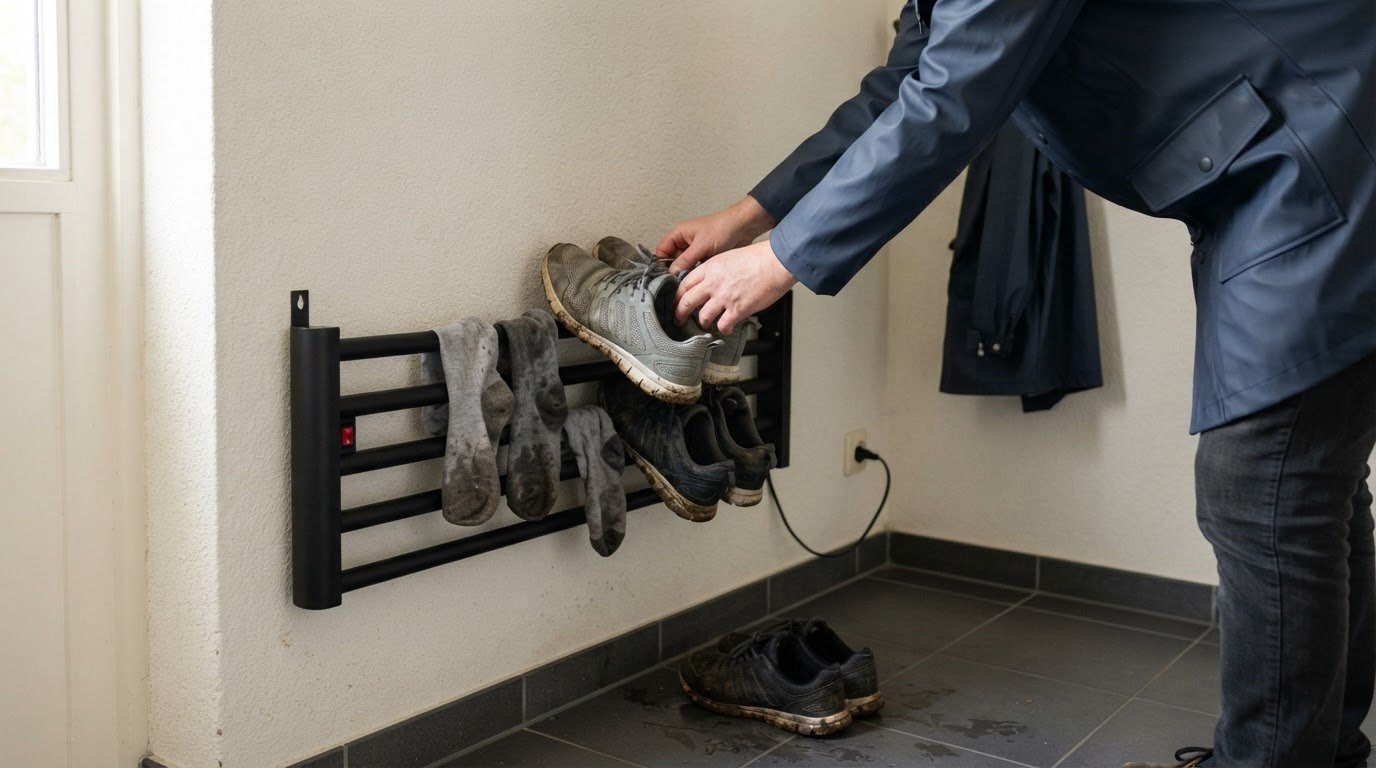
The purchase price does not indicate how much an electric dryer costs per drying cycle. Therefore, compare the price of each model with its power consumption. This way, you can see which electric dryer suits your usage. The costs also depend on how often you dry and what laundry you put in it.
Key points
- Calculate the operating costs based on energy consumption and how often you dry, separate from the purchase price.
- Choose a dryer that suits the type of laundry you want to dry, so that its application aligns with your daily use.
- Measure the available space and think about storage before choosing a model.
- When making your choice, also take into account the connection and the electrical circuit the dryer requires.
Energy consumption and cost per drying cycle
The cost per drying cycle depends on power consumption and your tariff. Multiply the consumption per cycle in kilowatt-hours by the price per kilowatt-hour on your bill. This calculates the energy costs for a single drying program. The purchase price is a separate cost. Use this calculation to compare electric textile dryers in the same way.
Note the consumption specified by the manufacturer for the selected program. If only annual consumption is stated, divide this by the number of drying cycles on which that value is based. Compare programs with a similar load. A full drum, a different setting, or wetter laundry can affect actual consumption.
The capacity determines how much laundry you can dry per cycle. Compare the stated capacity with your usage. A small load of sportswear differs from a load of towels. Too much laundry can impede air circulation and result in uneven drying. Therefore, follow the loading instructions for the model you are considering.
A tumble dryer or drying cabinet works differently than a drum dryer. You hang clothes or shoes inside, after which air flows past the textile. This is convenient for items you prefer to hang up. The drying time and result depend on the material, the moisture, and the air circulation. Always follow the washing label. With an electric textile dryer, the drying method is therefore just as important as the energy consumption.
For safe use, keep the ventilation openings clear and remove lint according to the manual. Position the appliance as prescribed by the manufacturer and follow the safety instructions for the model. Which connection is suitable for an electric textile dryer depends on the product specifications and the circuit to which you connect it.
Whether a subsidy or energy-saving scheme applies in the Netherlands depends on the scheme and the measure. Limit electricity consumption by utilizing the capacity appropriately and not choosing a drying setting longer than necessary. This is how you assess the operating costs of an electric textile dryer based on your own usage and electricity tariff.
Advice on dryers by type of laundry
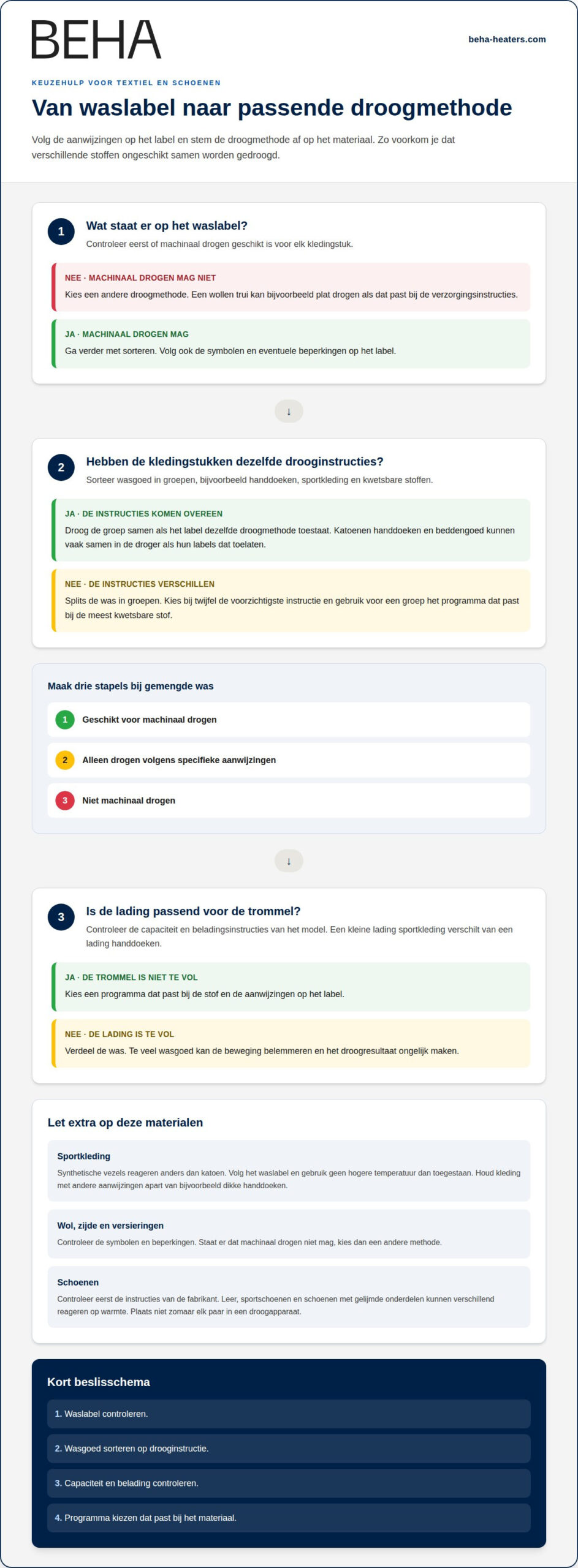
Start by checking the washing label on each garment. It indicates whether machine drying is suitable. Then, sort your laundry into groups, for example, towels, sportswear, and delicate fabrics. This prevents a sturdy cotton towel from being assigned an unsuitable program together with a delicate garment. If in doubt, follow the most careful instruction.
Cotton towels and bedding can often be tumble-dried together if the labels allow the same drying method. Also, check that the drum is not too full. A packed load restricts the movement of the laundry and can result in an uneven finish. Remove heavy items from the machine immediately after the cycle is finished and shake them loose before folding.
Sportswear often consists of synthetic fibers, which react differently than cotton. Therefore, follow the washing label and do not use a temperature higher than allowed. For example, dry a shirt with elastic parts separately from thick towels if the labels give different instructions. This way, you choose the appropriate program for each material.
Wool, silk, and embellished clothing require extra attention. If the label states that machine drying is not permitted, choose a different drying method. For a wool sweater, for example, drying flat may be more in line with the care instructions. Follow all directions, including the symbols and any restrictions.
The same applies to shoes: check the manufacturer's instructions first. Leather shoes, athletic shoes, and shoes with glued parts can react differently to heat. Therefore, do not simply place any pair in a dryer. Remove loose laces only if the care instructions allow it, and follow the instructions for the material.
For mixed laundry, create three piles: machine dryable, dry only according to specific instructions, and do not machine dry. Then, select a program that suits the most delicate fabric in the first pile. This way, you tailor the drying method to the clothing, not the other way around.
Dimensions and storage
Start with the location where you want to use the dryer. Measure the available width, depth, and height and note the measurements. Also measure doorways and the route to the spot. This prevents a situation where an appliance fits in the laundry room but cannot be brought inside. A niche under a shelf, for example, requires attention to the total height.
Next, compare your measurements with the dimensions in the product specifications. Do not just look at the housing, but also at the space required for the cord, controls, and any ventilation openings. The manual states how much clearance the device requires. A cabinet positioned tightly between two walls can obstruct airflow or access to the controls.
Also take into account the space you need during use. With a dryer, the door must be able to open and you must be able to hang clothes easily. With a model featuring a flap or pull-out section, it must be able to move fully. Therefore, do not place a laundry basket where the door swings open. A clear walkway makes loading and unloading easier.
Do you want to store the device after use? Then determine in advance where it will be placed when not in use. For example, measure the space in a storage room and check if the device can stand there stably. A compact spot behind a door is only suitable if the door can move freely and the device is not wedged in.
Use this order before choosing a model:
- Measure the usage site and the route to it.
- Compare width, depth, and height with the product specifications.
- Reserve space for doors, controls, and air vents.
- Determine where the device is located when you store it.
For shoes and textiles of various shapes, the interior space is also important. Check whether long garments can hang and shoes can stand stably. The stated external dimensions do not indicate how much usable space is inside. Therefore, consult the product drawing and manual to assess the layout. This way, you can match the size to both the available space and your laundry.
Which connection and circuit are required for an electric textile dryer?
The connection varies by model. Therefore, first check the rating plate and the manual. These list the power rating, mains voltage, and any circuit requirements. A compact appliance may have different electrical specifications than a larger dryer. So, do not rely solely on the plug. For an electric textile dryer, always follow the instructions for the specific model.
Next, map out the usage location. Note which wall socket you want to use and which appliances are on the same circuit. A washing machine or kettle may draw power simultaneously. The total load of these appliances plays a role in the assessment. Therefore, compare the product specifications with the fuse box data before connecting the dryer.
Go through this check in order:
- Locate the nameplate and note down the electrical specifications.
- Read which connection the manufacturer prescribes in the manual.
- Map out which other devices use the same group.
- Compare that data with the existing circuit and wall socket.
Just because a plug fits does not mean every socket is suitable. Do not use an extension cord or power strip if the manual advises against it. Keep the cord free from kinks, moisture, and hot surfaces. Ensure that you can reach the plug. Do not continue using the device if the cord is damaged or the plug becomes unusually hot.
Are you unsure about the fuse box? Have an electrician assess the circuit and the appliance specifications. This is especially relevant for older electrical installations in the home. This way, you do not base the connection on general assumptions. The manual is always the starting point for the electric textile dryer you choose.
Keep the manual with the device and note which connection you use. This way, you can find the correct information when you move the device. If you would like to view a drying solution for shoes and textiles, check out the options for shoes and textiles.
BEHA: Shoes & textile dryers
BEHA sells shoe and textile dryers for the targeted drying of shoes or clothing. If you are looking for a suitable solution based on the material, available space, and intended use, this is a logical next step. This shifts the focus from general features to a device that suits your specific needs.
Consider in advance what you primarily want to dry: shoes, textiles, or both. Also take into account the location where the appliance will be placed and the connection you have evaluated. These points will help you determine which solution suits your household.
Would you like to discuss which shoe or textile dryer suits your situation? Then contact BEHA.
Choose a drying solution that fits your routine
Make your choice based on what you want to dry. Consider which items you want to dry regularly, where the appliance will be placed, and how it fits into your daily routine. This way, you evaluate an electric textile dryer not only on individual features but also on the role the appliance needs to fulfill in your home. Having a clear priority, such as drying shoes or assigning a fixed spot to textiles, makes the next step easier.
Would you like to discuss your situation and discover which solution meets your needs? Contact BEHA. Together, you can explore which application is suitable for your household, without basing your choice on assumptions. Contact BEHA and take the first step towards a drying solution that fits your daily use.
Frequently Asked Questions
What is an electric textile dryer and how does it work?
An electric textile dryer uses electricity to provide heat and air movement, allowing moisture to evaporate from shoes or clothing. The precise operation depends on the design. A drum moves the laundry during drying, whereas in a drying cabinet, you hang textiles and air flows past the clothing. Always follow the washing label and the manual, as not every material can be machine dried.
What types of electric textile dryers are there?
You can choose from tumble dryers, upright dryers, and compact appliances for shoes or smaller textile items. Tumble dryers are available with a heat pump, condensate drain, or air vent, among other options. In an upright dryer, you hang clothes to dry, while a shoe dryer is intended for shoes. Choose the type based on what you want to dry, the care instructions, and the available space.
How much does an electric textile dryer cost in the Netherlands?
The purchase price depends on the type of appliance, the capacity, and the features. A drum dryer is a different purchase than a tumble dryer or shoe dryer. Therefore, compare models with the same application. In addition to the price, pay attention to the energy label, how often you expect to use the appliance, and how much space it saves. This way, you assess its overall suitability and look beyond just the price tag.
How much power does an electric clothes dryer consume per drying cycle?
Power consumption per cycle varies by type, program, load, and amount of moisture in the laundry. Product information often states consumption per cycle or per year. Use that value to compare appliances with similar capacity. A full load of towels and a small amount of thin clothing are not equivalent usage situations.
How much energy does a drying cycle with an electric dryer consume?
Multiply the power consumption of the selected cycle by your rate per kilowatt-hour. The result is the energy cost for that cycle. To calculate an exact amount, you therefore need both the appliance's consumption and your current electricity rate. Also take into account the program and the amount of laundry: these influence the power consumption of the cycle.
Which electric textile dryer is the most energy-efficient: heat pump, condenser, or vented?
Of these three types, a heat pump dryer is generally the most economical choice. Condenser and vented dryers may use more electricity per cycle, but the actual difference depends on the model and the program. Therefore, compare the stated consumption for a comparable load. Also, check whether the drying method suits your home and how you intend to use the dryer.