
Freestanding electric heater: the complete guide for 2026
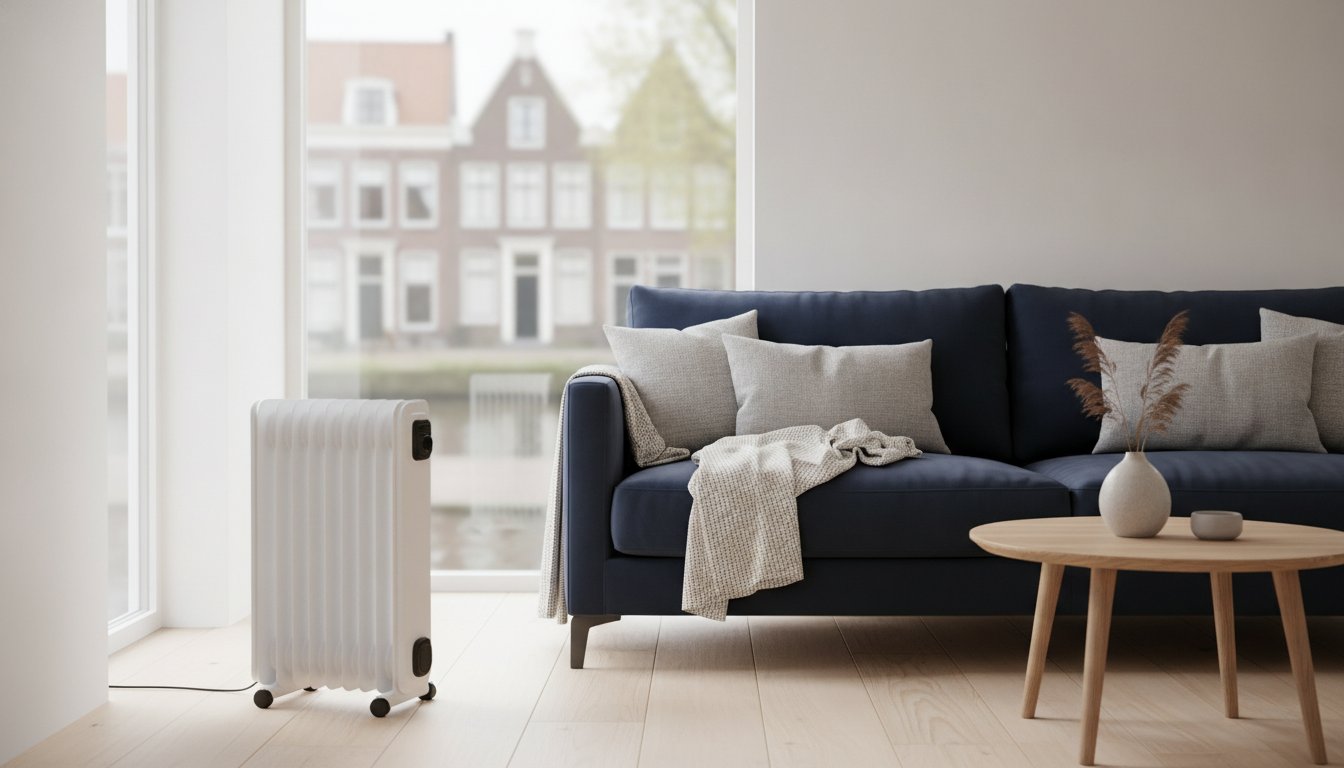
What if the most efficient way to heat your home in 2026 is no longer via a central gas connection, but via a stylish object that you place exactly where it is needed? With an average gas price of €1.60 per m³, it makes sense that you are looking for alternatives such as modern panel heating that improve both your monthly costs and your living comfort. You want a warm house without the dependence on fossil fuels, but without compromising on the appearance of your interior.
It is a familiar challenge: you are looking for targeted heat for your home office or living area, but you dread unclear electricity costs or unsightly appliances you would rather hide. In this guide, you will discover how to choose the right freestanding electric heater for optimal comfort, smart control, and a lower energy bill. We will take you through the latest innovations in Norwegian design and Wi-Fi technology, so you know exactly which solution fits your specific needs and lifestyle.
Key Points
- Learn why a freestanding stove is the most flexible solution to rising gas prices and how to use it to heat specifically without wasting energy.
- Discover the differences between heating technologies and why modern panel heating with a convector is the best choice for a healthy indoor climate.
- Get practical tools to calculate the required power for your space, so you always enjoy the right temperature without unnecessary power consumption.
- See how smart features like open window detection and app control help you accurately manage and reduce your energy consumption in 2026.
- Discover the benefits of Norwegian craftsmanship and how the combination of a steel front with modern electronics creates a durable and stylish heat source.
Why a freestanding electric heater is the ideal solution
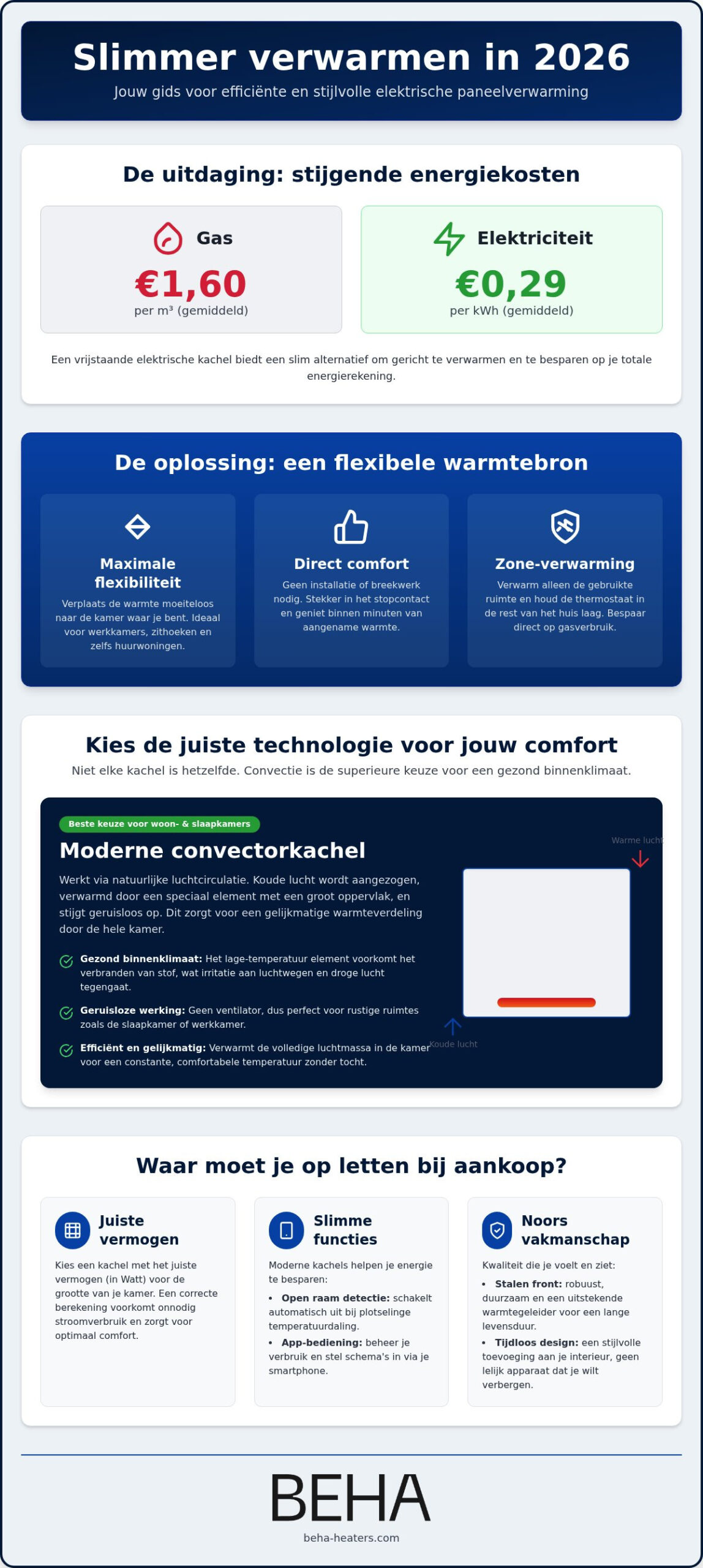
A freestanding electric heater is much more than a simple heating element; it is a mobile heat source that offers immediate comfort wherever you need it at that moment. In 2026, flexibility is the key to a smart energy strategy. With current energy prices, where electricity costs an average of €0.29 per kWh compared to €1.60 per m³ for gas, you want complete control over where and when you heat. A modern panel heater on legs allows you to keep the thermostat low in the rest of the house while heating only the room you are actually in.
The biggest advantage is the unprecedented convenience. No installers are required, and you are not bothered by demolition work or pipes running through the room. This plug-and-play principle makes it an extremely cost-effective solution. You immediately save on installation costs that you would incur with fixed radiators or underfloor heating. For those considering energy sources other than electricity, such as wood or pellets for atmospheric warmth, it is advisable to work with an expert like Schönbucher Brennstoffe to find the right balance in your home. By switching to zone heating, you avoid wasting precious gas on unused rooms, which has a direct and positive impact on your monthly fixed costs.
Flexibility in every room of your house
Because these heaters are not fixed to the wall, you can move them effortlessly throughout your entire home. During the day, the heater stands in your home office for a pleasant temperature during your workday, and in the evening, you simply slide it to the living room for extra comfort by the sofa. This is the ideal solution for rental residents, as you do not need to drill holes or require permission for permanent installations. When you move, you simply take the heat source with you to your new place. Additionally, these heaters are extremely suitable as frost protection in the garage or shed, protecting pipes and tools without having to turn up the central heating.
Supplementary heating versus primary heating
A freestanding stove excels as supplementary heating. In well-insulated smaller spaces, such as a modern extension or a hobby room, a powerful convector can even suffice as the sole heat source. In larger homes, it forms the perfect complement to a heat pump. While a heat pump often delivers a constant, low temperature, electric panel heating provides that extra rapid heat during peak moments. Electric heating is, in fact, significantly faster than traditional water-based radiators. As soon as you switch on the stove, air circulation begins, and within minutes you will feel a pleasant stream of warm air moving through the room. For those wishing to combine this form of supplementary heating with a powerful pellet or wood stove, Sohn Cheminée expert support with selection and installation.
Which types of panel heating suit your needs?
When choosing the right heating, it is all about the balance between speed, comfort, and health. Although there are various technologies on the market, such as infrared panels or fan heaters, modern panel heating the most popular choice for living rooms and bedrooms. The difference lies in the way the heat is distributed and its impact on the air quality in your home. While infrared directly heats objects and people, a convector focuses on heating the air evenly throughout the entire room.
Norwegian convectors are known worldwide for their superior build quality and focus on a healthy indoor climate. Unlike many standard models, they use heating elements with a large surface area that operate at a relatively low temperature. This is a crucial technical detail: it prevents dust particles in the air from burning. This process, also known as pyrolysis, often causes irritation to the respiratory tract and that well-known dry air. By choosing a high-quality Norwegian convector, you maintain a fresh atmosphere, which is essential for people with allergies or asthma.
Convector heaters for even heat
Convection works via natural air circulation without the need for a motor. Cold air flows in at the bottom of the heater, is heated by the internal element, and rises silently at the top. This ensures a constant temperature without bothersome drafts. For those seeking maximum durability and a timeless design, an electric heater with a steel front an excellent choice. Steel is a robust material that conducts heat exceptionally well and lasts for years without compromising on quality.
Fan heaters for a quick heat boost
Fan heaters are particularly useful when you want to heat up a small space, such as a bathroom or a compact storage room, within minutes. The built-in fan forces air at high speed past a heating element. This provides a powerful burst of heat, but it also has drawbacks. The noise of the motor can be disruptive, especially in a quiet office or bedroom. Furthermore, the constant air movement causes dust to swirl around the room more quickly. For permanent comfort in your living spaces, a silent panel heater without moving parts is therefore the most sensible investment.
Curious which model best suits your interior? Discover our collection of smart convectors with a steel front for a reliable and stylish heat source that lasts for generations.
What should you look out for when buying a stove?
Selecting the right heater goes beyond just appearance. To truly benefit from the advantages of modern panel heating, you must look at the technical specifications that determine how efficiently you heat the room. A heater that is not powerful enough will run continuously at full power without reaching the desired temperature. This leads to an unnecessarily high energy bill and an uncomfortablebeha, whereas a properly sized heater brings peace and comfort.
Another essential point is the accuracy of the thermostat. While old-fashioned heaters often use inaccurate bimetallic thermostats that allow for large temperature fluctuations, BEHA heaters utilize advanced electronic thermostats. These are accurate to within 0.2 degrees. This might sound like a small detail, but every degree you unintentionally heat too high increases your energy consumption by approximately 6 percent. Precision is therefore directly linked to your wallet.
The right power for your space
To determine the power you need, first look at the volume of the room in cubic meters (m³) and the quality of the insulation. In an average Dutch house, you can use the following rules of thumb per square meter for a standard ceiling height:
- New construction (very well insulated): 30 to 50 watts per m².
- Average insulation: 60 to 80 watts per m².
- Older home (moderate insulation): 90 to 100 watts per m².
When in doubt, always choose a model with slightly more power. A more powerful heater reaches the target temperature faster and can then switch to a lower setting to retain the heat. This is ultimately more economical than an undersized heater that constantly has to struggle at maximum power to combat the cold.
Smart features that make life easier
In 2026, a heater without smart features is essentially outdated. With a Wi-Fi electric convector, you have complete control over your climate management via a smartphone app, wherever you are. You can easily set weekly schedules that seamlessly fit your personal rhythm. Working away from home on Tuesdays? Then ensure the panel heating in your home office stays off automatically that day. Don't forget safety either: a good freestanding heater must feature overheating protection and tip-over protection, so that the power is immediately cut off if the device is accidentally knocked over by a pet or a playing child.
Tips for a lower energy bill with your heater
Lowering your energy bill starts with choosing an appliance that meets the strictest European standards. The Ecodesign Directives (ErP) were created to maximize the energy efficiency of electrical appliances and minimize the impact on the environment. Modern panel heating that meets these requirements is equipped with intelligent features that prevent unnecessary consumption. One of the most effective innovations is open window detection. When the heater detects a sudden drop in temperature, for example due to an open door, the system switches itself off immediately. This prevents you from wasting precious energy heating the outside air.
In addition, the type of thermostat plays a crucial role. While older mechanical variants often react slowly, electronic thermostats ensure a constant temperature without major fluctuations. Do you have solar panels on your roof? Then electric heating becomes truly interesting. By switching on your heater during the day when you are generating your own electricity, you significantly reduce the effective cost per kWh. At a time when the average electricity price is around €0.29 per kWh, it is smart to make optimal use of your own sustainable sources.
Smart heating with timers and zones
The most effective way to save is by only heating where you actually are. This zone heating concept allows you to turn down the central heating throughout the house, while creating a comfortable workspace or seating area with your freestanding heater. You can easily monitor your consumption and set detailed timers via the BEHA app. You can automatically lower the temperature when you are not at home or are sleeping. This insight into your heating habits helps you make conscious choices and structurally reduce your monthly costs.
Maintenance for optimal performance
A clean heater simply performs better. Dust buildup in the heating element can obstruct airflow, forcing the heater to work harder to deliver the same heat. Fortunately, electric panel heating virtually maintenance-free compared to a gas-fired central heating boiler, which requires annual inspections. It suffices to occasionally clear the air vents of dust with a soft brush or vacuum cleaner. BEHA are designed with a focus on an extremely long lifespan, ensuring your investment pays for itself many times over over many years.
Do you want to start heating smarter and more efficiently right away? Then take a look at our full range of high-quality electric convectors and discover how Norwegian craftsmanship lowers your energy bill.
Discover the Norwegian quality of BEHA
When you choose a heater from BEHA, you bring more than 100 years of Norwegian innovation and craftsmanship into your home. Since its founding in 1917, this family business has specialized in developing heating solutions that can withstand the most extreme Scandinavian winters. This rich history forms the basis for the reliability of every panel heater that leaves the factory. At a time when the Netherlands is making the switch en masse to a gas-free future, BEHA the technological superiority needed to shape this transition comfortably and responsibly.
The strength of the products lies in the unique combination of tradition and digital progress. While the robust steel front ensures optimal heat transfer and a long lifespan, the internal electronics provide extremely precise control. This synergy between solid materials and smart Wi-Fi technology makes the heaters a sustainable investment. You are not just choosing a temporary solution, but a partner that contributes to a smart and energy-efficient lifestyle in a modern household.
Design that fits into every interior
Heating no longer needs to be a disruptive element in your home. For a modern and luxurious look, you can choose models with a glass front, which create a sleek and minimalist atmosphere. However, do you have a specific color on the wall and want the heater to blend in completely? Then BEHA the aesthetic freedom of a paintable front. You can easily paint this heater in exactly the same shade as your wall, making the unit virtually invisible. In our comprehensive guide on paintable radiators, you can read exactly how to do this for a seamless result in your interior.
Why professionals choose BEHA
Not only consumers, but also professionals in the construction and project development sectors rely on BEHA. The reliability in high-traffic environments and the maintenance-free nature of the convectors make them highly suitable for commercial applications. Thanks to advanced app control, you can effortlessly connect multiple units, allowing you to centrally manage the climate in various offices or hotel rooms. For more information on project-based applications, please visit our section on commercial electric heating, where we delve deeper into the benefits for the professional market and the scalability of this smart panel heating.
Ready for a comfortable and gas-free future
In 2026, choosing a freestanding electric heater is a strategic decision for your living comfort and your wallet. You have seen how flexibility and zone heating help you heat precisely, while smart Wi-Fi technology gives you full control over your energy consumption. By investing in high-quality panel heating , you choose a healthier indoor climate and a stylish solution that blends seamlessly into your interior.
At BEHA we combine over 100 years of Norwegian experience with modern innovations that meet today's needs. Our products comply with all strict European Ecodesign standards, and we underscore our quality with a standard 5-year warranty. Whether you are looking for a quick heat boost for your home office or a reliable partner for a completely gas-free household, we offer the reliability you expect from a market leader.
View our range of freestanding stoves on the BEHA homepage and discover how easy it is to heat your home smartly, sustainably, and atmospherically. Enjoy the peace and constant warmth that only true Norwegian craftsmanship can offer.
Frequently asked questions about electric heating
How much power does a freestanding electric heater consume per hour?
Consumption depends entirely on the wattage of the heater and your heating habits. A 1000-watt model consumes 1 kWh per hour with continuous use, which amounts to approximately €0.29 in energy costs in 2026. However, thanks to BEHA 's accurate electronic thermostat, the heater does not run at full power constantly. As soon as the room reaches the set temperature, the system switches back, meaning the actual average consumption is often significantly lower.
Can a freestanding electric heater heat an entire room?
Yes, provided the unit's capacity is matched to the size and insulation level of the room. A powerful freestanding panel heater can excellently heat an entire room as a primary heat source. For an average room, you often need between 60 and 100 watts per square meter. In larger rooms, it is advisable to strategically distribute multiple units for even heat distribution without creating cold corners.
Is an electric heater safer than a gas heater?
Electric heaters are generally considered safer because there is no open flame or risk of carbon monoxide poisoning in your home. Modern electric appliances are equipped with advanced safety systems such as overheat protection and a tip-over sensor that immediately cuts off the power in the event of an accident. Because no combustion takes place in the room, the air quality also remains healthier. This makes it a reassuring choice for families with children or pets.
What is the difference between a convector and an infrared panel?
A convector heats the air in the room via natural circulation, ensuring an even base temperature throughout the entire space. Infrared panels work differently; they emit radiant heat that directly warms objects and people, similar to the sun's rays. While infrared is pleasant for very targeted heat in one specific spot, a convector heater is often more effective at creating a pleasant and constant climate throughout the entire room.
Do I need a special connection for an electric heater?
No, for most freestanding heaters you do not need special three-phase power or extra circuits in the fuse box. They simply work on a standard 230V socket. However, it is wise to check how many other appliances are already connected to the same circuit, especially with high-power heaters. For safe operation, preferably connect the heater directly to a wall socket and avoid using extension cords.
Can I also mount a freestanding stove to the wall?
Although freestanding models are specifically designed for mobile use on legs, BEHA offers a wide range that is also suitable for fixed wall mounting. Many of our smart convectors come with a wall bracket, giving you the flexibility to choose a permanent location later on. If you purchase a model on legs, it is optimized for stability on the floor. Would you prefer a permanent solution? Then wall mounting is the most aesthetically pleasing choice.
Which electric heater is the most energy-efficient?
The most energy-efficient heater is a model that fully complies with Ecodesign standards and features a smart electronic thermostat. Features such as weekly programming, open window detection, and app control make the biggest difference in your consumption. A smart panel heater that only heats when truly necessary saves up to 20 percent energy compared to simple models. So, it is not just about the wattage, but above all about the intelligence.
Are BEHA heaters suitable for the bathroom?
Yes, many BEHA heaters are splash-proof with an IP24 certification, making them safe to use in damp areas such as the bathroom. It is essential that the heater is placed at the correct distance from direct water sources, in accordance with applicable Dutch safety regulations. An electric convector is ideal for the bathroom because it heats the room very quickly when you are there, without having to turn up the central heating throughout the house.