
Heating that matches wall color: how to make the right choice
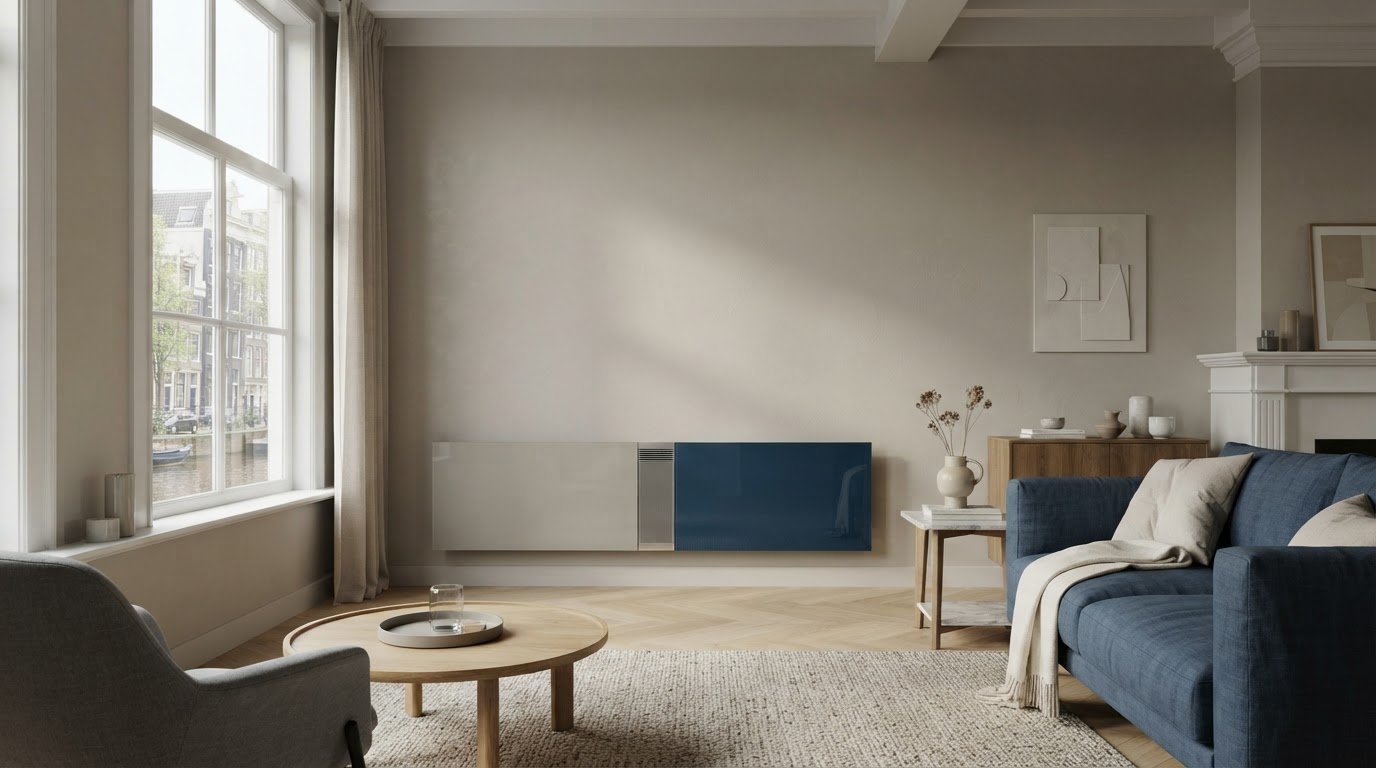
Should a radiator blend into the wall, or should it be an eye-catcher? A radiator that matches the wall color isn't just about choosing the same shade. Contrast, shape, and the material of the front also determine the overall appearance. Perhaps you find it a shame if a radiator stands out visually, or you are unsure whether a striking color actually adds more character to the room. The right choice depends on the atmosphere you want to create.
With a few targeted considerations, choosing becomes easier. A seamless fit against the wall can help make the heater less obtrusive, while a deliberate contrast makes the unit an integral part of your interior. The front also plays a role: steel, glass, and a paintable finish each provide a different look. BEHA manufactures smart convectors with these various fronts.
In this article, you will learn how to match color, contrast, and front. You will discover how to assess the options in your own space and which points to consider to help choose a heater that looks good and suits your daily use.
Key Points
- First, decide whether you want the heater to blend seamlessly into the wall or make it visible as part of your interior.
- Pay attention to the undertone of your wall color and view the wall and heating in daylight as well as artificial light.
- Determine whether you want a subtle transition or a clear contrast.
- Compare steel, glass, and paintable fronts based on their appearance and the atmosphere you want to create in the room.
- Take the wall, lighting, and surrounding materials into account step by step in your choice.
Why match the color of your radiator to the wall color?
Color coordination begins with determining the role the heater will play in the room. You can have the front blend in with the wall so that the unit is less noticeable, or create contrast and make the heater a visible part of the interior. Neither choice is automatically better. The appropriate direction depends on the atmosphere you want to create and what is already present in the room.
Color coordination works best when the radiator either blends seamlessly with the wall or deliberately contrasts with the space. Therefore, first ask yourself this question: do you want the eye to notice the radiator immediately, or can it fade into the background? Combinations and contrast play an important role in color theory . You don't need to memorize color rules; simply observe how shades feel next to each other.
When exactly do you make a heater stand out?
Opt for contrast if you deliberately want to use the heater as a visible element. A dark front against a light wall, for example, can create a clear accent. First, consider whether that accent fits with the rest of your interior and the attention you want to give to that wall.
When does a flush connection to the wall work?
A front in a similar shade to the wall can make the unit visually recede. This can be pleasant if you want a calm wall or want to minimize the visibility of individual color patches in a small space. A subtle difference between the wall and the heater can also add depth without creating a strong contrast.
View the combination in the room itself and at different times of the day. A shade that blends in smoothly in bright daylight may show more of a difference under warm artificial light. Also pay attention to surrounding materials: wood, metal, and textiles influence the atmosphere of the color area. Consider the wall, lighting, and furniture together to choose a heater that matches the desired look.
This is how undertone, light, and contrast work together with your wall color
A color often has an undertone: the warm, cool, or neutral impression behind it. Two walls can both appear light, yet feel different. One looks warmer, the other fresher. That difference affects how a heater next to it appears. Therefore, do not just look at the color name, but compare the colors side by side.
Light also changes your perception. Daylight shifts with the weather and the time of day; artificial light can make colors appear warmer or cooler in the evening. A wall and a cabinet front that seem to match well during the day may differ more in the evening. Therefore, evaluate color samples in the location where the heating will be installed, both in daylight and under the lighting you normally use. Judging color samples in the light of your own room provides a more reliable picture than choosing based on a color sample alone.
How do you recognize the undertone of your wall?
Place colors side by side to make differences visible. For example, compare a warm sand tone with a cool gray tone and note which color seems to contain more yellow, red, or blue. The color name does not always tell the whole story. Also look at the floor, curtains, and furniture: wood can create a warm impression, while cool fabrics or metal details make the room feel different.
Moreover, a color can change depending on what is next to it. Therefore, do not judge the wall in isolation from the rest of the room. The explanation of color theory in interior design shows how color choices contribute to the atmosphere and visual balance of an interior.
Which color strategy suits your interior?
You can roughly choose from three approaches. With ton-sur-ton, you choose a shade that is close to the wall color. This can create a cohesive and calm overall look. A neutral connection uses a subdued color that combines with various shades. In a room with pronounced colors, a neutral front might actually offer less cohesion, so always assess it in the context of the entire room.
Using a contrasting color makes the heater more consciously visible. This is appropriate when you want the unit to speak for itself as part of the interior. Before deciding, consider the amount of color, the lighting, and the materials surrounding the heater. If you want to keep the connection to the wall as seamless as possible, also consider convectors with a paintable front. This way, you match the color and appearance to your room without treating a single color strategy as a rigid rule.
Steel, glass, or paintable fronts: what suits your wall?
Color is not the only factor determining how a heater fits your wall. The visible material of the front also influences the appearance. Steel and glass remain recognizable material choices; with a paintable front, you can match the finish to your interior. The comparison below concerns the visual role and the atmosphere you are looking for.
| Front | Visual role | Fits the desire to… |
|---|---|---|
| Steel | A visible material accent | To maintain a clear, refined form in the interior. |
| Glass | A recognizable, smooth material surface | To add a modern look to the wall. |
| Paintable | A personalized color finish | To visually match the heating to the wall or the rest of the room. |
When does a steel or glass front suit your interior?
Choose steel or glass if you want to keep the front as a visible part of the room. A steel front can suit a minimalist, clean interior; glass can complement a modern look. These are general impressions, not hard and fast rules. Therefore, view the material next to your wall, furniture, and other visible surfaces. If you would like to explore steel further, also read the information about an electric heater with a steel front.
With both choices, the heater does not have to be exactly the same color as the wall. You can let the material play a part in the overall look, for example by matching it with other visible materials in the room. Consider in advance whether the front should draw attention or prefer to be discreet. This way, you choose a heater that matches the wall color as well as the role you intend for the appliance.
What makes a paintable front interesting?
A paintable front is an interesting option if you want to match the color finish to your interior. This is a different approach than choosing a visible steel or glass surface: you can incorporate the look into the wall or other colors in the room. In this way, you can make the heater fit into the overall scheme more consciously, without assuming that an exact color match will occur automatically.
Always follow the product instructions for the appropriate method and finish. This way, base your choice on the instructions for the front, not on general assumptions about paint or the final result. If you want to know more about this type of finish, view the guide on the paintable radiator. Then compare the options with the atmosphere you are looking for: a visible material accent, a modern material choice, or a personal color finish.

This is how you choose a heater to match your wall color, step by step
A good choice doesn't start with a single color sample, but with the room where the heating will be installed. First, clearly map out your color preferences, lighting, and interior. This allows you to compare fronts more fairly. Follow these five steps and keep your notes handy when reviewing options.
- Determine the role the heater will play. Do you want the unit to stand out as a visible part of the interior, or should it blend into the wall as seamlessly as possible? Note your preference in a few words, for example, “clear accent” or “low contrast.” Use this as a starting point when comparing color and front.
- Map out the colors and materials. Write down the wall color and also consider the floor, window coverings, built-in furniture, and other large surfaces. Pay attention not only to the color name but also to the warm, cool, or neutral impression. This way, you avoid choosing a front that looks nice individually but does not match the atmosphere of the entire room.
- Note the location and visibility. Where will the heater be placed, and from which spots in the room is it most visible? A unit on a blank wall can attract more attention than a heater next to furniture or window coverings. Also note whether there are already striking colors or materials present on that wall. The same color choice can look different in different places.
- Compare physical color samples in the room. Hold the samples against the wall and view them at different times of the day. Also compare them under the artificial lighting you use in the evening. Note whether the color difference remains subtle or becomes clearly visible. Evaluate the samples where the heating will be installed; colors on a screen or in another room do not provide a reliable representation of the result in your home.
- Weigh color, front, and usage together. Compare the desired look with the chosen front: steel or glass as the visible material, or a paintable front for a personalized color finish. Additionally, consider the product features that are important for your use, so that your choice is not just visually correct. Ultimately, a heater that matches the wall color is a trade-off between appearance, location, and practical use.
With this inventory, you can look more specifically at convectors with steel, glass, or paintable fronts. Examine the convectors and compare the fronts with your notes regarding color, light, and the desired appearance.
BEHA convectors: choose a front that matches your interior
The color choice takes shape when you match it to the front and the desired role of the heater. Do you want a visible material accent, or are you looking for a personalized finish that complements the wall? BEHA makes smart electric convectors with steel, glass, and paintable fronts. This allows you to tailor the visual choice to the atmosphere in your room.
Choose the BEHAfront based on the look you are going for
A steel or glass front keeps the material visible. This can be suitable if you consciously want to showcase the heater as part of the interior. Which version fits depends on the materials and shapes already present in the room. Therefore, compare the front with the wall, furniture, and other surfaces. Evaluate not only the color but also how the material looks as a whole.
If you want to personally match the finish to your interior, a paintable front is an option. This allows you to incorporate the appearance into your color choice, for example, when you want the radiator to be less prominent. Follow the product instructions for the procedure and finishing. This allows you to base your choice on the instructions for the front, without assuming a specific color match or painting result beforehand.
The guide on an electric convector with Wi-Fi offers additional product information. Use this alongside your choice of color and material: the appearance helps determine which front suits your interior, while the product information helps you evaluate the convector as a heater.
Combine interior choices with smart heating
BEHA has over 100 years of experience, and the convectors meet the ECODESIGN requirements. The choice between steel, glass, and a paintable front remains primarily a matter of the desired appearance and integration with your room.
BEHA 's smart convectors can be controlled via Wi-Fi and an app. View this control as an additional usability feature, not a color advantage. This way, you keep two questions separate: which front panel visually matches the wall, and which product features are important for your daily use? This combination helps you choose a heater that matches the wall color without losing sight of the practical side.
Include your color preference, the location of the unit, and the choice of front panel in your comparison. A steel or glass front allows the heater to remain visible; a paintable front offers scope for a personal interior finish. View the BEHArange of convectors and compare the front panels with the look you are seeking for your space.
Make your color choice a harmonious whole
Take your remaining doubts with you to the room itself. View the heater from the spots where you sit most often and note how the color relates to the wall, floor, and furniture. This way, you not only check whether a shade looks good on its own, but also whether the heater supports the atmosphere you want for the room.
The best heater to match wall color doesn't have to be invisible. A subtle front can let the wall speak for itself, while a clear material accent adds character. Choose what suits your interior and daily use, not just a color sample in the store.
Would you like to see which front finish matches your preference? View the electric convectors from BEHA and compare the options with the colors and materials in your room. This way, you combine style and heating in a natural way.
Frequently Asked Questions
Can a radiator be the same color as my wall?
Yes. With a suitable paintable front, you can match the finish to your interior. How closely the color matches the wall depends, among other things, on the chosen shade and the substrate. Follow the product instructions and evaluate a color sample next to the radiator in the location where it will be installed. This way, you can also see how the combination compares to skirting boards and other details.
Is a white radiator always the best choice for a colored wall?
No, white is one possibility, not a hard and fast rule. Against a dark wall, a white appliance can create a striking contrast; a shade closer to the wall might actually draw less attention. Also consider the colors of large furniture and window coverings. First, decide whether you want to create an accent or keep the wall neutral.
Can I paint over any electric heater?
No, do not assume that every electric heater is suitable for painting. Choose a model intended for this purpose and follow the product instructions for the finish. If you already have a heater and want to modify it, consult the documentation for that device. This will prevent you from using a method that is not compatible with the product.
Does the color of my wall change due to daylight?
The wall itself does not change color due to daylight, but the color can look different at different times. The direction and amount of light influence how you perceive shades; lamplight and colored objects in the room also play a role. Therefore, do not compare a sample only from close to the window. Also view it from the spot where you usually see the heater, for example from the sofa.
How do I prevent a heater from making a small room look more crowded?
Coordinate the visual presence with the other accents in the room. In a space with a lot of furniture, patterns, or striking accessories, a calm front can help limit extra emphasis. If the decor is simple, a contrasting appliance can actually add character. Also consider the wall where the heater will be placed: a busy spot sometimes calls for a different choice than an empty wall.
Should I match the color of my heating to the floor or the wall?
You don't have to take a single surface as your sole starting point. If you want the heating to visually blend in with the wall, start with the wall color. If you primarily want a cohesive look with the furniture and flooring, include those in your comparison as well. Place color samples side by side and view them together in the room. This way, you will notice which combination best suits the atmosphere you are looking for.