
Paintable electric heater: dimensions and installation space
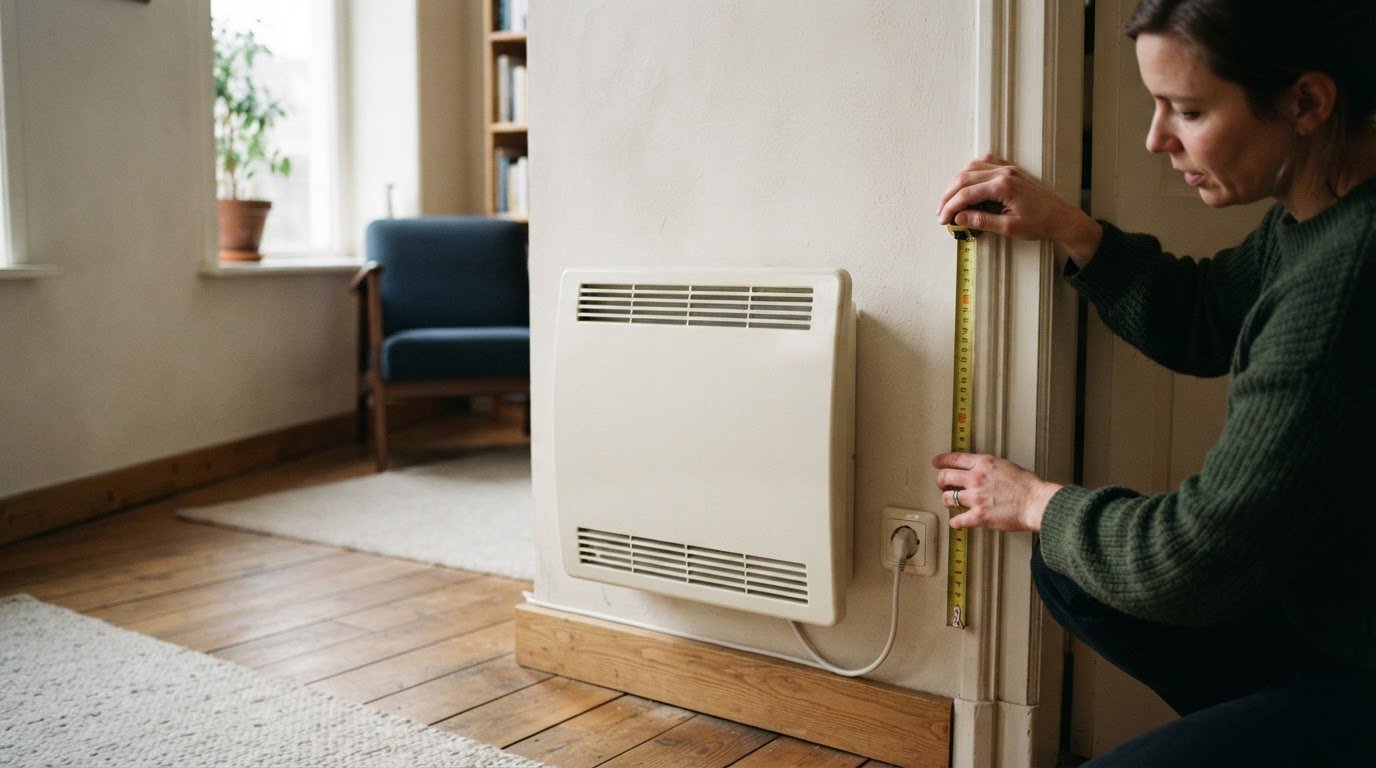
The available space determines which paintable electric heater fits. Compare the width, height, and depth of the heater with the spot where you want to place it. Also take the connection and controls into account so that the appliance fits practically in your space.
A sleek, paintable front allows the heater to blend seamlessly into your interior. Also check in advance how much space the heater takes up and how to connect it. This way, you know what to look out for before choosing a model.
In this article, you will read how to assess dimensions and installation space, the role of controls, and what to look out for regarding the electrical connection. This will help you discover what suits your space. You will also learn how BEHA 's smart convectors combine with paintable front heating and interior finishing.
Key points
- Measure the available width, height, and depth, and also take into account the location of the cable.
- Choose controls and thermostat based on how you want to use the heating in your daily routine.
- Match the type of convector to the room and the way you heat it.
- Compare the required installation space with the dimensions and connection options of the stove before choosing a location.
Dimensions, weight and cable length
Start by measuring the available space: note the width, height, and depth of the spot where the stove will be installed. Compare these measurements with the product dimensions. Take into account space around the appliance and furniture. This will prevent a matching front from proving impractical during installation.
Also include the weight and the cable in your plan. The weight determines whether the surface or wall can support the device; the cable length determines how close the connection needs to be. Determine the cable route and ensure that the cable is not taut, pinched, or runs through a walkway. The manual contains the product-specific details.
Only paint an electric heater if the manufacturer permits it. A front panel designed to be paintable is intended for that purpose. Do not automatically assume that you can paint other parts as well.
There is no universal temperature limit for heat-resistant paint. Follow both the paint's limit values and the regulations for the heater model. Ordinary wall paint is not automatically suitable for a heated surface.
Only paint after you have switched off the heater, removed the plug, and the appliance has completely cooled down. Clean and dry the approved front, mask any openings, and apply the paint according to the instructions on the packaging.
Never paint ventilation openings, controls, connections, sensors, or other parts that dissipate heat or function electrically. Covering them can affect operation. Therefore, follow the manufacturer's markings and instructions.
Incorrect painting can block openings, damage components, or impede heat dissipation. The paint can also peel off due to heating. A wood stove requires different coatings than an electric heater, so do not blindly follow paint advice for fireplaces.
Whether repainting affects the warranty depends on the warranty conditions and the permitted beha. Keep the manual and follow the instructions before applying paint.
Wi-Fi control and thermostat
With BEHA smart convectors, you control the heating via Wi-Fi and the BEHA Smart app. This allows you to adjust the temperature without walking to the unit. The app offers individual temperature control per room and works via your wireless network.
A thermostat measures the temperature and controls the heating based on the set value. The location of the sensor is important: behind a curtain or close to a heat source, the measurement may not correspond as well with the temperature elsewhere in the room. Therefore, choose an unobstructed spot and follow the device's installation instructions.
When making your choice, pay attention to the difference between controls on the unit and those via an app. BEHA 's smart convectors have features such as room-by-room temperature settings, a schedule, vacation mode, and frost protection. Check which features suit your heating method.
Adjust the temperature setting to the use of the room. In a home office, for example, you want warmth when you are working there, while a bedroom is used at other times. Do not set the thermostat higher than necessary, so that the heater does not run longer than you find comfortable.
With electric fireplaces, moving flames primarily create atmosphere; they are not the same as thermostatic heat control. Therefore, look at the controls for the flame effect and the heating separately. A realistic flame effect in itself says nothing about the temperature control.
If you want to weigh up different control options, check the information about control via Wi-Fi and pay attention to which functions suit your daily use.
Suitable spaces
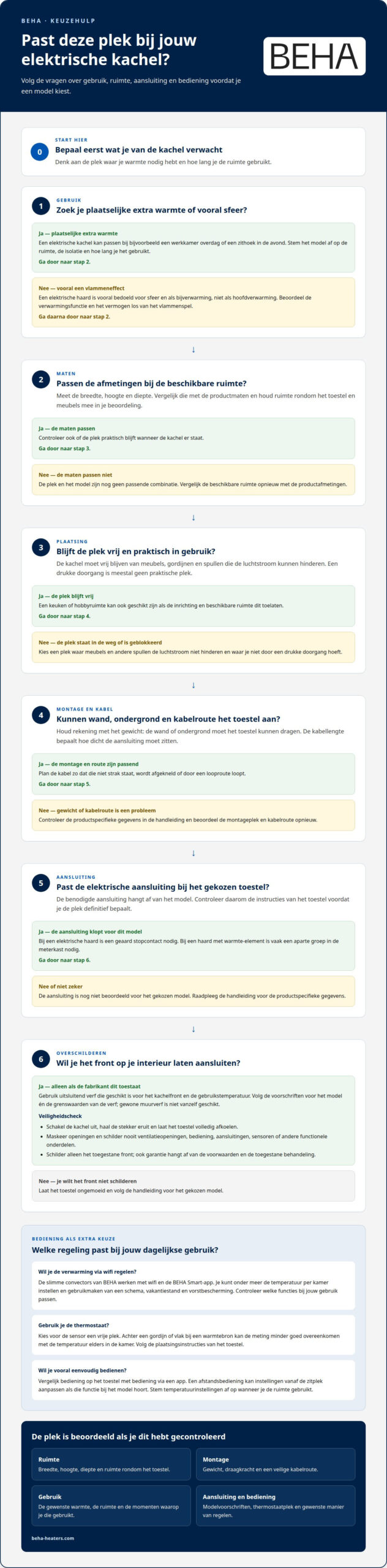
An electric heater is particularly suitable for a room where you want localized extra warmth, such as a home office you use during the day or a sitting area where you relax in the evening. The required heating depends on the room, the insulation, and how long you use the appliance. Determine where heat is needed first, rather than just looking at the appearance.
An electric fireplace is primarily used for ambiance and supplementary heating, not as primary heating. It can be suitable for a living room or bedroom where you desire extra comfort at certain times. Do not expect an atmospheric play of flames to automatically provide sufficient heat for the entire home. Evaluate the heating function and power output of the chosen model individually.
A kitchen or hobby room can also be suitable, provided the placement takes the layout and available space into account. Keep the heater free of furniture, curtains, and items that could obstruct the airflow. A busy passageway is usually not a practical location. An electric fireplace does not require a flue or chimney, as no combustion takes place.
A paintable electric heater is suitable for a room where you want the front to blend in with the wall. The choice of paint depends on the surface and the manufacturer's instructions. Use only paint that is specifically suitable for the heater front and the operating temperature. Ordinary wall paint is not automatically suitable for a heated appliance.
When choosing controls, consider who uses the room and when. With a remote control, you can adjust settings from your seat, if that feature is included with the model. In a home office, however, direct controls on the unit may suffice. Choose the controls you use daily so you can easily enjoy the atmosphere or warmth.
Finally, check the connection and the location before choosing a room. A grounded socket is required for an electric fireplace. A fireplace with a heating element often requires a separate circuit in the fuse box. The required connection therefore depends on the chosen appliance, not just the room. This is how you determine whether a paintable electric heater fits practically in the space.
Installation dimensions
For built-in installation, the external dimensions of the stove are not sufficient. The opening must match the prescribed installation dimensions of the appliance. Measure the available width, height, and depth and compare them with the manual. A niche that is exactly the same size as the front does not automatically provide enough space for the housing or connection.
First, determine whether you will mount a model to the wall or place it in a recess. These are different situations. A wall-mounted model requires space for the housing and fixings; a recessed model requires a suitable niche according to the product instructions. Do not create a wall opening based solely on a photo or the visible front.
When measuring, also include the location of the power outlet, the cable routing, and any skirting boards. The cable must not become pinched behind the heater or be damaged during installation. If the power outlet is located behind the intended spot, mark that position before determining the cutout or mounting.
Check which space around the appliance must remain clear. A niche edge, furniture, or finish must not block the ventilation openings or airflow. The heating element must be able to dissipate its heat according to the manufacturer's instructions. A tight surround must not hinder operation.
When dealing with a paintable front, take the finish into account. A coat of paint does not change the installation dimensions, but painting or masking must not cover seams, openings, or controls. Only paint the front if the manual permits it. Therefore, first compare the model specifications with the available space.
Before installation, make a simple sketch showing the niche, the front panel, the cable outlet, and the connection. Note which dimension corresponds to which part. This prevents you from confusing the visible dimensions with the space required behind the front panel. Always follow the instructions for the chosen appliance for the final placement.
BEHA
BEHA offers electric convectors for spaces where you want to combine heating and aesthetics. The range includes smart convectors with steel, glass, or paintable fronts, as well as Classic convectors. This allows you to choose a front that matches your interior and your desired operation.
Choose a model based on the available space, desired placement, and connection. A paintable front suits an interior where you want the heating to blend in visually. BEHA 's smart convectors can be controlled via Wi-Fi and the BEHA Smart app. Compare the product specifications with your space and usage situation.
Would you like to discuss the possibilities for your interior? Then contact BEHA.
Choose a solution that fits your space
First, determine the role the heater will play in your interior. Do you want the unit to blend visually into the wall, or should it stand out? A paintable electric heater can complement a subtle finish, while a different front might better suit your taste.
At BEHA you can choose from smart convectors with a steel, glass, or paintable front. Match the look to your interior while simultaneously considering heating and daily use. Include your preferences regarding finish and operation in your choice.
Would you like to discuss which direction suits your situation? Contact BEHA to discuss your wishes regarding the room and the front. With a clear choice regarding appearance and use, you take the next step towards heating that matches your interior.