
Replacing an old electric convector: repair or replace the thermostat?
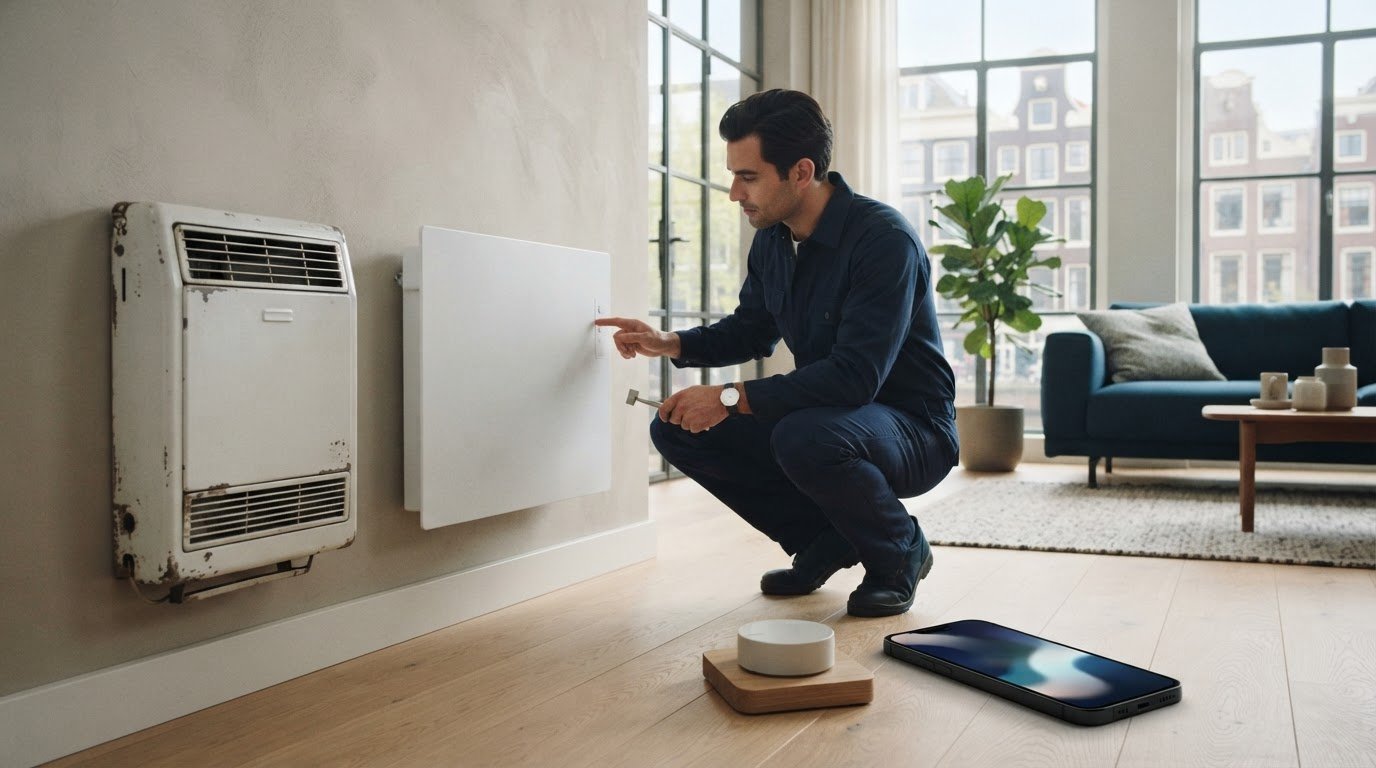
Do you have to replace the entire unit immediately if a convector isn't heating properly? Not necessarily. If you are considering replacing an old electric convector, a defective thermostat could be the cause, but the fault could also lie in the power supply, controls, or the heating element. That distinction helps you determine the sensible next step.
First, check the visible settings and pay attention to exactly what the device is doing. Do not open the convector or work on electrical components yourself. Switch off the device and do not use it further if there is a burning smell, sparks, damaged cables, or unexpected heat. In such cases, have the cause assessed by a qualified professional.
In this article, you will read which signals may indicate a thermostat problem and when replacing the convector is the more appropriate course of action. This allows you to better weigh the options between repair and replacement without taking unnecessary risks. If a new unit suits your situation, you can also look at the control options for Wi-Fi and app operation and choose between a steel, glass, or paintable front. The features vary by model.
Key Points
- A thermostat regulates the desired temperature and switches the heating on or off. Similar issues can also arise from a problem with the power supply, controls, or the heating element.
- Look at the settings, the visible condition, and the behavior of the device before choosing between a simple check, an expert assessment, or replacement.
- Note what happens and check only the settings and visible damage. Stop if there is a burning smell, sparks, damaged cables, or unexpected heat.
- If you want to replace an old electric convector, consider whether repair is safe and appropriate, and what control options you need.
- BEHA sells smart convectors with Wi-Fi and app control, with a steel, glass, or paintable front.
Replacing an old electric convector: what could be wrong with the thermostat?
The thermostat helps the convector regulate the room temperature. You set a desired temperature; based on this, the heating switches on or off. If the unit reacts differently than expected, the thermostat could be the cause. A problem with the power supply, the controls, or the heating element can cause similar issues.
One symptom does not prove that the thermostat is defective: the same complaint can be caused by a problem with the power supply, the controls, or the heating element. The precise control technology varies by device. For general background on the operation of a thermostat, you can consult the explanation on Wikipedia. This does not automatically tell you which component in your convector is malfunctioning.
Which signals might indicate a thermostat malfunction?
An indication may be that the room becomes noticeably warmer or colder than the set temperature. Irregular switching on and off, or failure to respond to a change in the setting, can also point to a problem with the temperature control. These are signals to investigate further, not a conclusive diagnosis.
First, check if the desired temperature is set correctly and if the visible controls respond normally. Also, check if the convector is receiving power without touching any cables or electrical components. Do not open the housing. If the unit remains unresponsive or does not regulate heat as expected, have the cause assessed by an expert instead of replacing parts yourself.
When is an old convector more than just outdated?
Age alone does not cause a convector to malfunction. Pay particular attention to the condition and behavior of the unit. Visible damage, loose parts, and repeated failures are reasons to have it assessed further. Note when the malfunction occurs and what you observe at that time. This will allow you to describe the situation more concretely.
Safety comes first. Stop using the device if there is a burning smell, sparks, or damaged wiring. Do not attempt to open or repair the unit yourself. Unexpected heat is also a reason to switch off the convector if it is safe to do so and to seek expert advice.
If you replacing an old electric convector , do not base that decision solely on age or a single complaint. The visible condition, recurring malfunctions, and the outcome of an expert assessment together provide a better picture of the next step.
How does the thermostat in an electric convector work?
A thermostat control follows a simple cycle. You set a desired temperature. A measurement function registers the temperature in or around the unit, after which the control technology compares this with the setting. If it is colder than desired, the convector switches on the heating. As soon as the measured temperature reaches the set value, the heat output is reduced or the heating stops. If the temperature drops again later, the unit can switch on again.
The thermostat control compares the set temperature with a measurement and switches the heating on or off based on that. The precise operation and construction can vary per convector. The location where the temperature is measured can also influence how well the setting corresponds to the temperature in the rest of the room.
What is the difference between a thermostat and a temperature sensor?
A temperature sensor measures how warm it is. The thermostat control uses that information to determine whether the heating needs to respond. Measuring and controlling therefore go hand in hand, but are not necessarily the same component. The internal functions can be configured differently for each convector. Therefore, do not assume a single fixed structure.
An abnormal room temperature does not tell you which component might be malfunctioning. Do not open the convector to search for parts or to test it yourself. The internal components are not intended for inspection without appropriate knowledge and precautions.
What role do controls and smart features play?
With simple operation, you typically set the temperature directly on the unit. Smart BEHAconvectors can be controlled via Wi-Fi and an app. This gives you an additional way to adjust the settings, for example from your phone. The available control and thermostat functions vary by model. Consult the product information of the chosen unit to compare the features.
Check out the electric convectors with Wi-Fi control if you are looking for that option. Smart control does not change the basics: the device must be able to measure the temperature and control the heating accordingly.
Keep a sufficient distance between the convector and flammable materials and follow the appliance's operating instructions. This way, you use the heater in accordance with the manufacturer's regulations and in a manner appropriate to the layout of your room.
Replace the thermostat or renew the old electric convector?
The right choice does not depend solely on the complaint. Also consider the visible condition of the unit, safety, and the operation you desire. Replacing a thermostat is only a suitable option if the convector's construction allows it and a suitable part can be safely installed. Use the table to weigh the next steps. A suspicion is not yet a diagnosis.
| Option | Possible cause | State and security | Desired features |
|---|---|---|---|
| Check operation | The setting may be incorrect or the visible controls may be responding differently than expected. | The device appears undamaged and shows no alarm signals. | Your current controls are still adequate. |
| Have the device assessed | The temperature control is malfunctioning or the convector repeatedly switches off. | The cause is unclear, or there are signs of wear that must be assessed by an expert. | You want to know if recovery is appropriate. |
| Replace entire convector | There is damage, there are recurring problems, or repair is not suitable for the device. | The State raises questions regarding safe use or reliable functioning. | You are looking for other control options or a different design. |
When might a targeted repair be appropriate?
If a qualified person identifies a clearly defined defect, repair may be worth considering. This does not automatically mean that the thermostat can be replaced. The convector must be suitable for that repair, and a suitable part must be able to be installed safely. Have the suitability and execution assessed by an expert. Do not open the unit yourself and do not attempt to replace any wiring or electrical components.
When is a new convector worth considering?
Repeated malfunctions, visible wear, and limited control options can combined be reasons to consider a new appliance. Think about what you miss in daily use: do you want to set the temperature only on the appliance, or are you looking for additional control via Wi-Fi and an app? Features vary by model. Appearance can also be a factor, for example with a steel, glass, or paintable front.
A new convector is not automatically the best choice, just as repair is not always possible or suitable. If you replacing an old electric convector , weigh the expert assessment against the condition of the unit and the features you consider important from now on. The final choice depends on your situation.
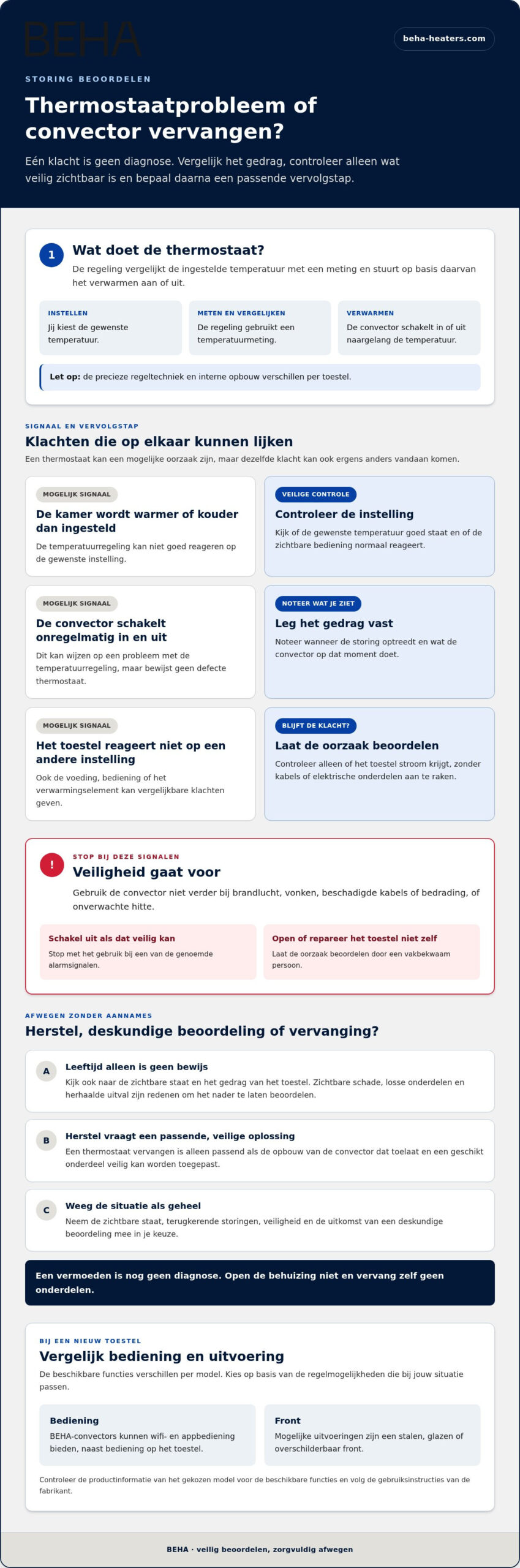
This is how you safely determine if your convector needs replacing
You can gather useful information yourself without opening the device. An electric convector can be live, even if you see nothing unusual on the outside. Therefore, limit yourself to an external inspection. Leave electrical diagnosis and repair to a qualified professional.
- Note the complaint. Write down what happens, such as not heating up, continuing to heat, or unexpectedly shutting down. Mention when the problem started and whether it occurs constantly or only at certain times.
- Check the visible settings. Verify that the desired temperature and visible controls are set correctly. Check only what you can see without tools and without opening the housing.
- Inspect the exterior. Note visible damage, loose parts, and damage to the cord or plug. Do not remove any panels or insert anything through openings.
- Collect device details. Note the make and model if they are visible on the outside. Also keep the manual if you have it; do not disassemble the device to search for data.
You can inspect the convector externally, but for electrical inspection or repair, the housing must remain closed and professional expertise is required. This prevents an initial observation from unintentionally leading to unsafe work on components or wiring.
What information helps assess the malfunction?
A brief description makes it easier to assess the problem in a targeted manner. Note, for example, whether the convector switches off after selecting a specific setting, or whether the complaint recurs at different times. Also mention whether the room temperature is different than you expect. Stick to observations: such signals aid in the assessment but do not constitute a diagnosis in themselves.
What should you do in case of visible damage or unsafe signs?
Do you smell a burning odor, see sparks or damaged cables, or does the unit become unexpectedly hot? Switch off the convector if it is safe to do so and do not use it again. Do not touch damaged wiring. Do not attempt to bypass safety mechanisms or bypass any components. Have the internal inspection and any necessary electrical repairs performed by a qualified professional.
With these observations, you can better discuss whether repair is an option or if replacing an old electric convector seems wiser. Take a look at the electric convectors from BEHA, with various front options and, for smart models, control via Wi-Fi and an app. Features vary by model.
Replacing an old convector with a modern BEHAconvector
Is your current convector damaged, does it no longer meet your needs, or can it not be safely repaired? Then replacement may be a logical next step. When choosing a new unit, pay attention not only to the heating performance but also to the controls and appearance. This way, you choose a convector that suits the room and how you use it daily.
Which features are important for a new electric convector?
Start with the room and your usage. Do you heat that room regularly or only at specific times? Consider how you want to set the desired temperature and whether you want to keep the controls on the unit or are looking for additional features. Additionally, the choice of front panel determines how the convector fits into the interior.
- Steel front: a calm, functional appearance.
- Glass front: a different finish when design is a major factor.
- Paintable front: an option if you want the convector to blend in visually with the wall. The guide on paintable radiators can help you take this finish into account.
Compare the options with the location where the unit will be mounted and the appearance of the room. For the chosen model, also check the product information regarding operation and thermostat functions, as these may vary by version.
How can smart control change daily use?
With smart BEHAconvectors, Wi-Fi and app control can offer an additional way to manage settings. This can be useful if you find control via your phone more accessible than directly on the unit. Which functions are available depends on the model. Tailor the control to your habits and compare the product information of the different versions.
An app can make it easier to set the desired temperature, but it does not in itself guarantee lower energy consumption. That also depends on how and when you heat, the room, and the chosen settings. Therefore, view smart control as added convenience, not as a fixed promise of savings.
If you want to replace an old electric convector, take into account both technical suitability and your preferences regarding operation and design. View the range of electric convectors from BEHA and compare the models that suit your space and usage.
Make an informed choice for your convector
A convector that does not heat properly does not automatically have a defective thermostat. The fault could lie elsewhere. First, check the visible settings and note down what you observe. Do not open the unit yourself. A burning smell, sparks, damaged cables, or unexpected heat are signals to stop use and call for expert assistance.
If in doubt, have it assessed whether a targeted repair is possible. If the unit is damaged, keeps switching off, or no longer offers the controls you need, replacing an old electric convector be a logical step. When choosing a new unit, compare the desired temperature control and appearance. BEHA has over 100 years of experience with electric heating appliances and sells convectors with steel, glass, and paintable fronts. Smart models can offer Wi-Fi and app control; features vary by model.
View the electric convectors from BEHA and compare the designs based on the front panel and controls. This way, you can choose a convector that suits your space and daily needs.
Frequently Asked Questions
Can you replace the thermostat of an electric convector?
Yes, that is sometimes possible, but only if the construction of the convector allows for the replacement of the thermostat and a suitable part can be safely installed. A qualified professional must determine the cause and assess whether repair is appropriate. After all, a device that does not heat properly does not automatically have a defective thermostat; the fault could also lie in the controls, power supply, or the heating element.
How do you know if the thermostat of your electric convector is broken?
An abnormal temperature, irregular switching on and off, or a convector that does not respond to settings may indicate a thermostat malfunction. Such signs do not prove the cause. Check only the visible settings and note when the problem occurs. If the convector shuts down, continues heating, or does not regulate the temperature properly, a qualified professional can investigate whether the thermostat or another component is the cause.
Is it safe to replace the thermostat of an electric convector yourself?
No, do not open the convector to replace the thermostat yourself. The unit may be live, and working on wiring or electrical components involves risks. Limit yourself to checking visible settings and damage. Leave the internal inspection and any repairs to a qualified professional. Do not bypass safety mechanisms or bypass any components, not even temporarily.
When is it better to replace an old electric convector?
Replacement may be worth considering in the event of repeated malfunctions, visible damage, loose parts, or limited control options that no longer suit your usage. Age in itself does not prove that a convector is defective. If in doubt, have the condition and the malfunction assessed. Discontinue use if there is a burning smell, sparks, or damaged wiring. The outcome will help determine whether repair is appropriate or if a new convector makes more sense.
Can a new electric convector help if the old thermostat is not working properly?
Yes, a new convector can be a solution if the old unit cannot be repaired safely or appropriately, but replacement is not automatically necessary in the event of a thermostat complaint. Have the source of the fault determined first. When considering a new unit, also pay attention to the temperature control, desired operation, and front finish. This prevents you from making a choice based solely on a single symptom.
What should you check before replacing an old electric convector?
First, note the complaint, when it occurs, and which settings you use. Check the visible controls and inspect the exterior, plug, and cable without disassembling anything. Also note the make and model if visible and consult the manual. Have the cause assessed if the device repeatedly shuts down or does not regulate properly. In case of a burning smell, sparks, or cable damage, switch off the device and do not use it again.
Can an electric convector with Wi-Fi replace an old convector?
This is possible if the new unit is suitable for the room and meets your heating and control preferences. BEHA smart convectors can be controlled via Wi-Fi and an app, but the functions vary by model. Therefore, check the product information for the version you are considering. App control makes settings more accessible but does not in itself guarantee lower energy consumption; that also depends on how you heat.