
What is a convector radiator? The guide to efficient heating in 2026
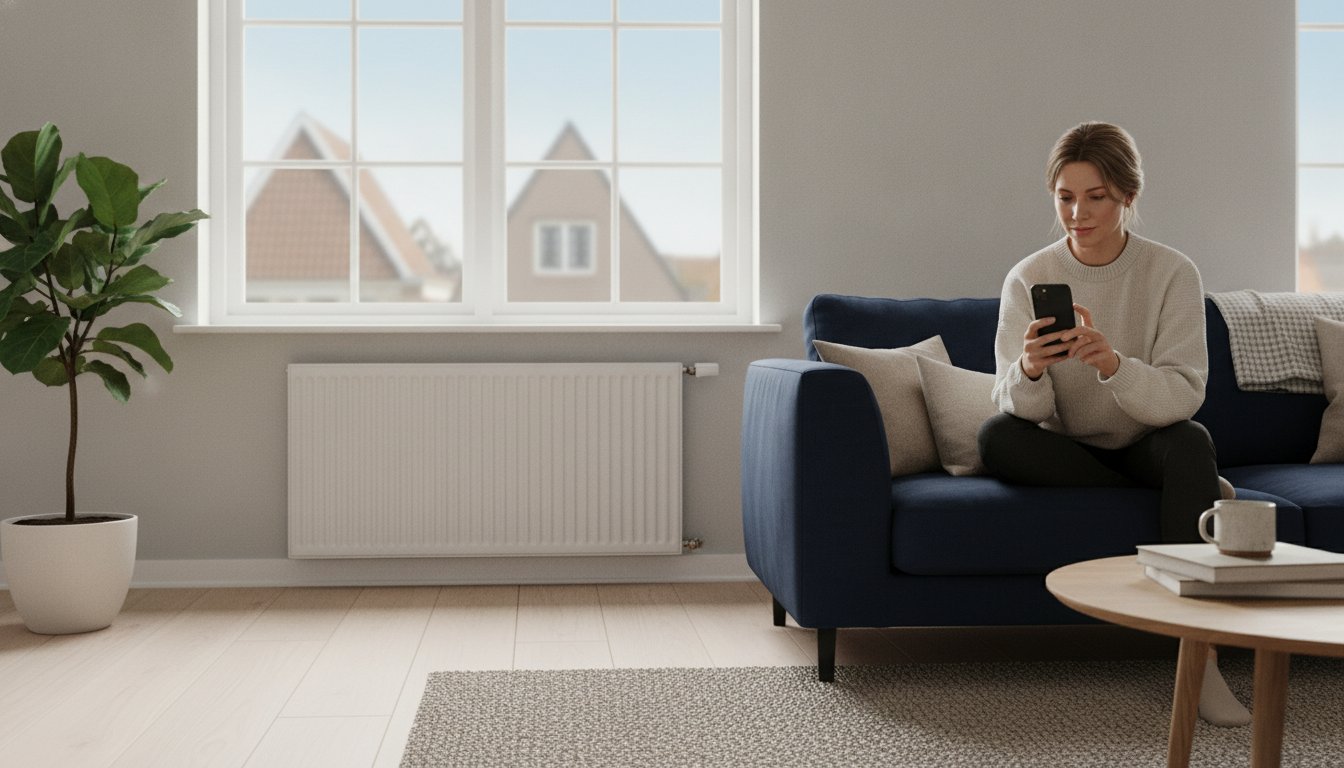
What if you could heat your home faster and quieter without ever having a plumber visit? You probably recognize the frustration of unclear energy bills and the fear of complicated renovations when making your home more sustainable. It is perfectly understandable that there is a great deal of confusion between the different types of radiators. A modern convector radiator offers a surprisingly simple solution here, combining high-quality design with technological superiority.
In this guide for 2026, you will discover exactly how a convector radiator works and why electric heating is the future for every energy-conscious home. We show you how to create a warm house without high heating costs, while enjoying a sleek interior and the ease of operation via an app. From the technical benefits of BEHA 's Norwegian quality to choosing a unique paintable front, you will learn exactly how to responsibly elevate your living comfort.
Key Points
- Discover how natural convection ensures rapid heating of your room without the need for demolition work or pipes.
- Learn why a convector radiator is more efficient than a traditional radiator due to its focus on direct air heating rather than radiation.
- Understand the role of electric heating in a gas-free Dutch household and how to save smartly on your monthly energy bill.
- Gain insight into calculating the correct power and ideal placement, so that you heat every room optimally and comfortably.
- See how modern technology and design come together in smart solutions with Wi-Fi control and unique paintable fronts.
What is a convector radiator and how exactly does it work?
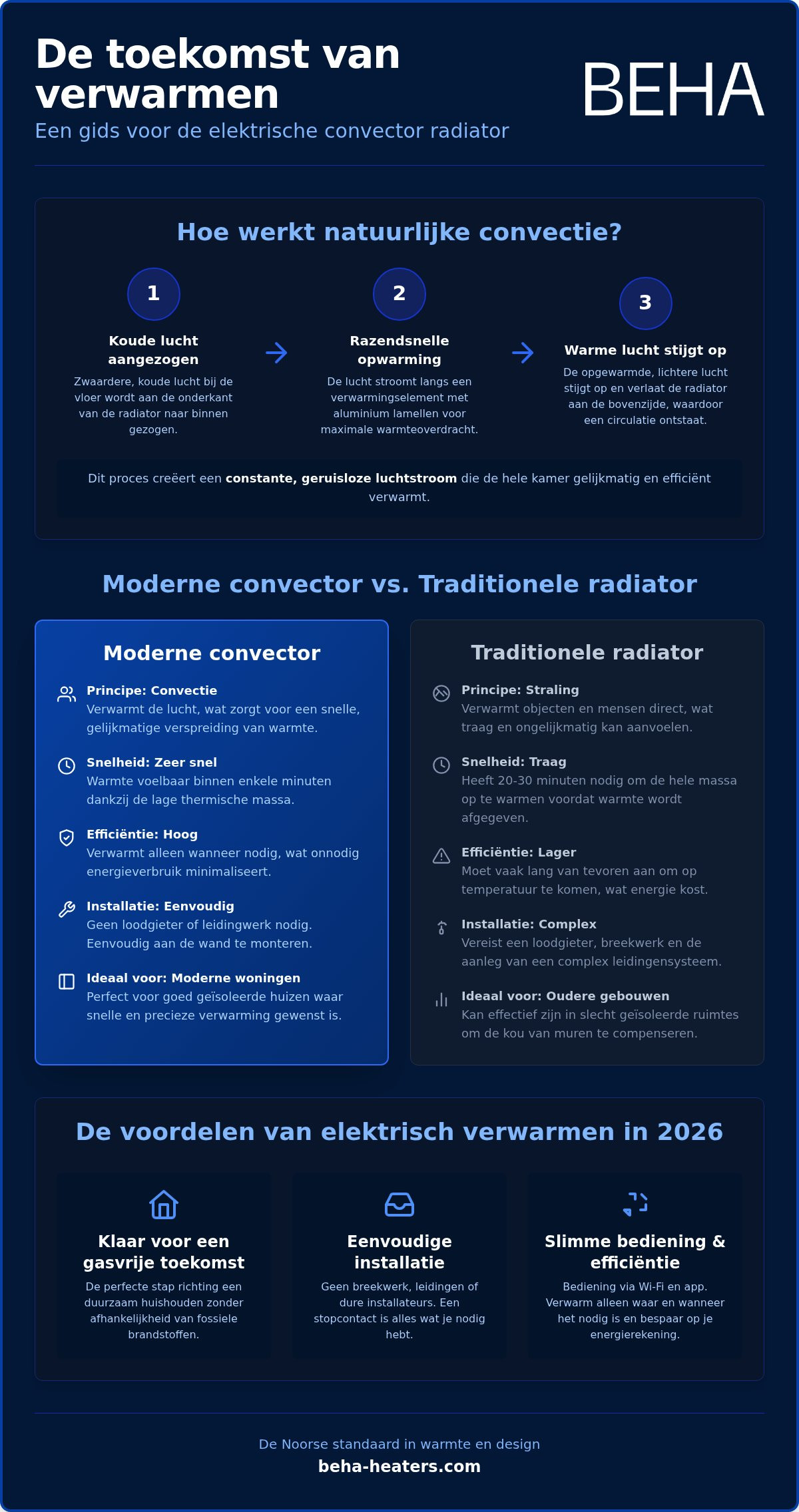
A traditional radiator radiates heat towards nearby objects, but a convector radiator works fundamentally differently. The heart of this system is the heat exchanger, which consists of a heating element topped with countless aluminum fins. These fins significantly increase the contact surface with the ambient air. As a result, heat transfer is extremely rapid. Scientifically speaking, this type of device is often referred to as a convector heater, a technology that has been perfected for decades for optimal living comfort.
The process is based on natural physics. Cold air is heavier and stays close to the ground. The radiator draws this cold air in from the bottom. As soon as the air hits the warm fins, the temperature rises and the air expands. This lighter, warm air then rises and exits the housing at the top. This creates a constant, silent airflow that fills the entire room. You feel the warmth immediately.
Unlike a bulky cast-iron radiator, which must fully heat itself up before emitting radiation, a convector responds almost immediately to the thermostat. Due to the low thermal mass of the material, a huge amount of metal does not need to be heated before the airflow is set in motion. This makes the system extremely efficient for modern homes where you want to control the temperature precisely without unnecessary energy loss.
The science behind convection heat
Air circulation is the key to an even climate in your home. With passive convection, this process occurs entirely naturally, without moving parts or noisy fans. This is ideal for rooms with large windows or high ceilings. The rising warm air forms a 'heat curtain' that effectively blocks the cold air falling off the glass. This prevents that annoying draft across the floor that you often feel with older heating systems.
Different types of convector radiators
You have various options for your interior. Wall-mounted models are the most popular choice for permanent installation in the living room or bedroom. They take up little space and look particularly sleek against the wall. Freestanding models, on the other hand, offer flexibility as temporary supplementary heating in a home office or garage. Nowadays, we are seeing a huge rise in the electric convector radiator as a standalone system. These devices operate completely independently and require no complicated pipework, making them the perfect choice for the transition to a gas-free home.
The difference between a traditional radiator and a convector
To make the right choice for your home, it is essential to understand the fundamental difference in heat transfer. A traditional radiator works largely on the basis of radiant heat. This means that the device emits waves that directly warm objects and people in the room, similar to the sun on your skin. A convector radiator, on the other hand, focuses on the air. By drawing in cold air and heating it via an internal element, a circulation is created that fills the entire room with a pleasant temperature.
The speed of this process is one of the biggest advantages. Whereas a classic radiator often takes twenty to thirty minutes to fully heat up, with a convector you feel the results within just a few minutes. This is due to the low thermal mass; there is simply less material that needs to heat up first. Moreover, these systems are considerably lighter. You can easily mount them to the wall without needing a plumber, which reduces installation costs to zero.
This short response time is immediately beneficial for your wallet. After all, you only heat when it is truly necessary. Instead of turning on the heating hours in advance, you only switch on an electric convector when you enter the room. This prevents unnecessary energy consumption in unused spaces. If you are curious about the possibilities for your specific situation, you can view the various smart convectors that suit a modern interior.
When do you choose which method?
In poorly insulated homes, radiant heat can sometimes feel pleasant because it compensates for the cold from the walls. However, for the modern Dutch home that meets good insulation standards by 2026, the convector is the superior choice. The system offers the flexibility befitting a dynamic lifestyle in which rooms need to reach the desired temperature quickly and efficiently. You can direct the heat exactly where and when you need it.
Maintenance and lifespan
A major advantage of electric models is minimal maintenance. You never have to vent or refill the water again. The only thing you need to do is occasionally dust the louvers with a vacuum cleaner or dust cloth. This maintains efficiency and ensures healthy air quality. Furthermore, thanks to BEHA 's high-quality steel fronts, you enjoy a robust construction that lasts for years without losing aesthetic value. The durability of Norwegian design proves itself in practice here.
Why choose an electric convector radiator in 2026?
In 2026, the transition to gas-free living will have gained momentum. While electric heaters were once often seen as energy guzzlers for occasional use, technological advancements have transformed the convector radiator into a fully-fledged and highly efficient heating system. The ease of installation plays a decisive role in this. You do not need complicated pipework or an expensive installer; a standard power outlet is sufficient to instantly provide a room with comfortable warmth. This makes the system attractive not only for renovations but also as a primary heat source in modern, well-insulated homes.
In addition, modern electric systems offer an accuracy that is difficult to match with traditional central heating installations. Digital thermostats measure the temperature to the degree, ensuring the radiator consumes exactly the required amount of energy to maintain the desired heat. The gains are also significant in terms of safety. Because no combustion takes place and no water flows through pipes, the risk of carbon monoxide poisoning or water damage is completely eliminated. It is a reassuring thought that your home is heated safely and reliably.
Smart features and energy saving
The real savings potential lies in the intelligence of the device. An electric convector with Wi-Fi allows you to monitor and adjust your consumption in detail via a smartphone app. Smart sensors, for example, recognize when a window is open and temporarily switch off the heating to prevent waste. With advanced weekly schedules, you ensure the bathroom is warm when you get up, while the rest of the house remains on an energy-efficient setting. You have complete control over your comfort and your energy bill, wherever you are.
Ready for the future with Ecodesign
All modern BEHA convectors comply with the strict Ecodesign guidelines that will set the standard in 2026. These European standards guarantee maximum energy efficiency and compel manufacturers to continuous innovation. BEHA’s Norwegian roots, with over 100 years of experience, mean that these products are designed to perform under the most extreme conditions. In combination with solar panels, a convector radiator even becomes an almost cost-free way to heat your home. You convert the self-generated electricity directly into usable heat, without being dependent on fluctuating gas prices.
What to look out for when buying a convector
When purchasing a convector radiator, there are several technical aspects that directly influence your living comfort. The first step is always determining the ideal location. Although you can in principle mount an electric convector anywhere, the space under the window remains the most strategic spot. Here, the device captures the cold air seeping in through the glass and immediately converts it into an upward flow of warm air. This prevents the notorious cold draft and ensures a more stable climate throughout the room.
The material of the front is more than just an aesthetic choice. A tempered glass front looks modern and luxurious, fitting perfectly into a sleek interior. A steel front, on the other hand, offers extra robustness, which is often preferred in busy households with children or pets. Also consider the specific requirements of the room where you are installing the heater. For the bathroom, an IP24 certification is essential. This mark guarantees that the unit is splash-proof and can be safely used in damp environments without the risk of a short circuit.
Determining the wattage
An accurate calculation of the capacity prevents you from consuming unnecessary energy or, conversely, being left in the cold. For an average insulated home in 2026, we often use a rule of thumb of 70 to 80 Watts per square meter with a standard ceiling height. In older homes with less insulation, this can rise to 100 Watts. It is wise to opt for slight overcapacity. A convector radiator that does not constantly have to perform at its maximum power has a longer lifespan and maintains the temperature much more accurately. In combination with the built-in Wi-Fi thermostat, you can then use this wattage very specifically for maximum savings.
Design and interior integration
Heating no longer needs to be a disruptive element in your room. A paintable radiator offers the unique opportunity to give the unit the exact same color as your wall, making it virtually invisible. Furthermore, you have a choice of various sizes. Horizontal models are the standard, but a skirting board radiator is an excellent alternative for rooms with low parapets or large floor-to-ceiling windows. Whether you choose classic white, modern black, or a personalized color, the finish sets the mood. For an overview of all options that suit your personal style, you can view our range of smart convectors.
BEHA 's smart solutions for your home
As a Norwegian family business with over 100 years of experience, BEHA understands better than anyone that heating is more than just technology. It is about the assurance that your home is always comfortable, no matter how cold it is outside. This rich history forms the basis for a convector radiator that combines tradition with the technological requirements of 2026. While other manufacturers focus blindly on mass production, BEHA remains true to Norwegian quality standards. This results in products that not only meet the strictest Ecodesign requirements but often even exceed them.
The brand's vision is clear: sustainability and user well-being are central. A modern living environment demands solutions that adapt to your rhythm, not the other way around. By continuously innovating in the field of digital connectivity, BEHA offers a system that contributes to a responsible and smart lifestyle. You are not just investing in a device, but in a future-proof heating concept that will last for generations.
BEHA Smart: steel, glass and paintable
The aesthetic value of a heating system is often underestimated, but BEHA is changing that. For those who appreciate a robust and timeless look, the smart convectors with a steel front are the ideal choice. These panels are extremely durable and fit seamlessly into any classic interior. Are you looking for a luxurious eye-catcher for a modern living room? Then the glass front panels offer a refined finish that exudes class without being intrusive.
A unique innovation within the range is the convector radiator with a paintable front. This gives you the ultimate freedom to fully personalize your interior. You can give the radiator the exact same color as the wall on which it is mounted, allowing the unit to visually blend into its surroundings. This solves the age-old problem of radiators disrupting the visual tranquility of a room. You no longer have to compromise between functionality and design.
Simple operation and installation
Technology should make life easier. That is why the installation of a BEHAsystem has been deliberately kept simple. With the included wall brackets, you mount the convector radiator yourself in the desired location. No complicated pipework is required, allowing you to immediately save on the cost of a professional. Once the unit is mounted, you connect it to the user-friendly BEHAapp via Wi-Fi within minutes. The app guides you step-by-step through the process, so you can immediately start setting up your personal heating schedules.
Via your smartphone, you then have control over the climate in your home from anywhere in the world. Whether you want to lower the temperature in the bedroom or preheat the living room while you drive home, everything is within reach. This combination of ease of use and advanced technology makes BEHA the authority in the field of modern electric heating. You are choosing a brand that knows the market inside out and constantly evolves to meet your highest expectations.
Switch to the heating of the future
In this guide, you have discovered that the modern convector radiator is much more than just a quick heat source. It is an intelligent system that helps you heat in a targeted and energy-efficient manner, in line with the gas-free ambitions of 2026. Through the combination of natural air circulation and smart Wi-Fi control, you create a comfortable climate in every room without unnecessary heating costs. Moreover, the design flexibility ensures that heating is no longer a disruptive element, but an enrichment of your interior.
With the Norwegian quality of BEHA, a family business that has been at the forefront of innovation since 1917, you choose a partner that guarantees reliability and technological superiority. All our solutions meet the strictest European Ecodesign requirements, ensuring you make a sustainable choice for your home. Whether you choose a robust steel front or a unique paintable model, you always maintain full control via our intuitive app. convector radiators BEHA and experience the comfort of smart Norwegian heating in your own home immediately.
Frequently asked questions about the convector radiator
What is the difference between a convector and a radiator?
A convector radiator heats the air directly via an internal element with fins, which creates a vertical airflow. A traditional radiator works largely on the basis of radiant heat, which warms objects and people in the room. The major advantage of a convector is speed. Because no large mass of water or metal needs to be heated, the system responds much faster to changes in the temperature set on your thermostat.
Is a convector radiator more energy-efficient than a standard radiator?
In modern, well-insulated homes, a convector radiator is often more economical due to the short warm-up time and precise control. You heat rooms only when you are actually there. Thanks to smart Wi-Fi functions and compliance with Ecodesign requirements, you prevent unnecessary energy consumption. Unlike traditional systems that continue to glow for a long time, an electric convector gives you complete control over your consumption per minute.
Can I install a convector radiator myself?
Yes, the installation is very simple and requires no technical expertise or a plumber. Because it is an electric system, you do not need any pipework. You mount the included wall brackets to the wall, hang the convector radiator, and plug it into a standard socket. Then, you connect the device to the BEHAapp on your smartphone within a few minutes, allowing you to start saving on your energy costs immediately.
Is a convector heater suitable as primary heating?
In 2026, an electric convector radiator will be perfectly suitable as primary heating, especially in gas-free homes. By strategically placing multiple smart units in your home, you create a modular system that is controllable per room. In well-insulated spaces, these devices provide sufficient power to maintain a stable and pleasant climate. Moreover, the combination with solar panels makes this a highly sustainable and future-proof solution for your entire home.
Does a convector radiator make a lot of noise?
No, BEHA 's high-quality convectors are completely silent. They utilize natural convection, where air circulates due to temperature differences without the need for a fan. This makes them the ideal choice for bedrooms, study rooms, or other spaces where silence is essential. Only dedicated fan heaters produce a soft humming sound, but the standard smart models operate unobtrusively in the background while providing constant heat.
How many watts do I need for my living room?
For an average living room in a modern house, we generally calculate with 70 to 80 Watts per square meter based on a standard ceiling height. If you have an older home with less insulation, 100 Watts per square meter is a safer margin. It is wise to choose a convector radiator with slight overcapacity. This means the device does not have to run at full power constantly, which extends its lifespan and ensures quieter and more efficient heat output.
Are electric convectors safe for children and pets?
Safety is central to the design of BEHA. The surface temperature of the front panel remains within safe limits and the heating elements are fully shielded. Furthermore, the devices are equipped with overheating protection. Because there is no open flame, burns, or pressurized liquids, the risk of accidents is minimal. This makes the electric convector radiator one of the safest heating options for families with young children or curious pets.
Can I use a convector radiator in the bathroom?
Yes, provided the device has the correct IP rating for damp rooms. BEHA 's smart convectors are IP24 certified, which means they are splash-proof and can be safely installed in the bathroom. The fast warm-up time is a major advantage here; you can warm up the room shortly before your morning routine without the heating having to stay on all day. This contributes directly to lower energy consumption and greater living comfort.