
Convector radiator: Heat your home quickly and efficiently
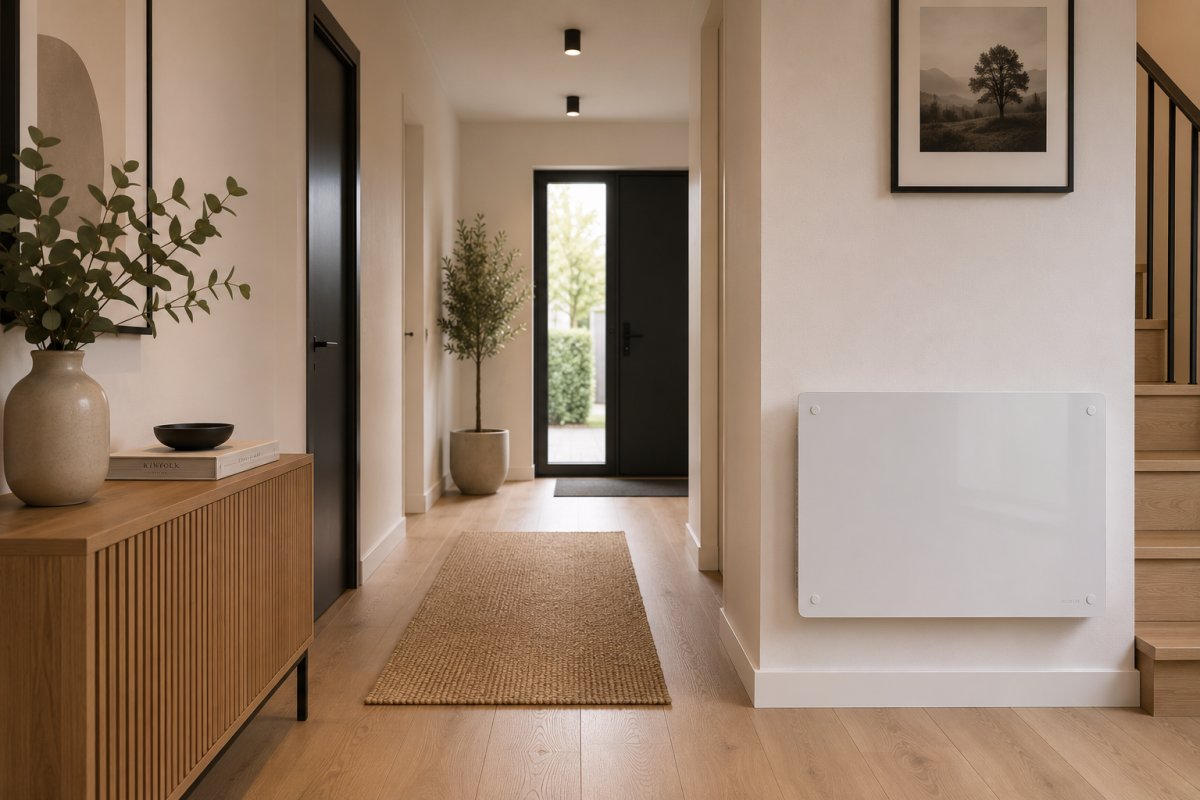
The days when a radiator was a clunky, white block on the wall that heated the room agonizingly slowly are definitely behind us. Nowadays, a modern convector radiator is a smart, almost invisible partner in your interior that effortlessly combines comfort and efficiency.
You probably recognize the frustration of a high energy bill while the house doesn't feel behaeverywhere. It is often difficult to find the right balance between a warm home and an interior that isn't marred by large heating elements. In this article, you will discover exactly how a convector radiator works and why this Norwegian technology is the future of your home. We promise you insight into making the right choice for your interior, from determining the ideal wattage to simple operation via a smartphone. This way, you will soon enjoy a smartly heated home without unnecessary worries about the costs.
Key Points
- Learn how natural air currents ensure fast and even heat distribution in every room of your house.
- Discover why a convector radiator is the ideal solution for rooms you want to heat instantly without complicated pipework.
- Gain insight into the differences between convection and radiant heat, so you can make the most efficient choice for your living comfort.
- Learn how to calculate the required wattage by taking your home's insulation into account instead of just the number of square meters.
- Discover how smart Norwegian technology and app control help you accurately manage and reduce your energy consumption.
What is a convector radiator and how does it work?
Convection is not a complicated science; it is simply the movement of heat via air currents. In a convector radiator, this principle is optimally utilized to quickly bring your living space to the desired temperature. Its operation is based on a logical physical cycle. Cold air is heavier than warm air and is therefore always found close to the ground. The device draws in this cold air from the bottom, after which an internal heating element heats the air rapidly. Because warm air is lighter, it rises immediately and exits the housing at the top. This creates a constant, invisible airflow that fills the entire room.
This process ensures a remarkably even temperature throughout the entire room. Unlike traditional systems, you experience far fewer 'cold corners' or a chilly floor. We make an important distinction here between natural and forced convection. With natural convection, as found in most high-end models, movement occurs completely silently. No moving parts are required. Forced convection uses small fans to accelerate the airflow. Although this speeds up heating slightly, most users opt for the silence and maintenance-free nature of a natural convector radiator.
The physical difference between radiation and convection
To understand why this technique is so effective, you need to know the difference compared to radiant heat. Radiation can be compared to the heat of the sun; it directly heats the objects and people the rays fall on, but not the air itself. Convection heat does the opposite; it heats the entire air mass in the room. In the changeable Dutch climate, where drafts and rapid temperature fluctuations are common, this 'blanket of warm air' often feels much more comfortable. It provides a stable indoor climate where the air is behacomfortable everywhere in the room.
The construction of a modern convector
The efficiency of a modern radiator is hidden in the details of its construction. The heart of the device is the heating element, which nowadays is almost always equipped with aluminium fins. Aluminium conducts heat excellently, and the fins greatly increase the surface area in contact with the air. This allows the radiator to emit more heat without becoming dangerously hot on the outside. The housing is specifically designed to direct and accelerate this airflow via a chimney effect. For the aesthetic finish, you often have the choice between a front made of robust steel or elegant glass, allowing the technology to blend seamlessly into your interior.
The benefits of an electric convector radiator
An electric convector radiator offers a degree of flexibility that traditional water-based central heating simply cannot match. The biggest advantage is its responsiveness. Because the device does not need to heat liters of water before heat output begins, you feel a flow of warm air almost immediately after switching it on. This makes it the ideal solution for rooms you do not use constantly, such as a home office, guest room, or a hobby room in the attic. You only heat the room when you are actually there, which has a direct impact on your energy consumption.
Installation is another aspect where the electric variant excels. You won't have to deal with complicated wiring, leaks, or the risk of pipes freezing. A sturdy wall mount and an accessible power outlet are sufficient to get the heater operational. Moreover, a high-quality convector radiator virtually silent. There are no ticking pipes or bubbling water, making these units perfectly suitable for the bedroom. You enjoy an undisturbed night's sleep in a behaclimate.
Efficiency and energy saving in 2026
Technological advancements have transformed electric heating from a 'energy guzzler' into a highly accurate instrument. Modern systems utilize smart algorithms that continuously monitor room temperature. Instead of large fluctuations where the heating constantly switches on and off, these algorithms keep the temperature stable with minimal energy pulses. A crucial feature here is open-window detection. As soon as the radiator signals a sudden temperature drop due to an open window, the system temporarily switches off to prevent unnecessary heating. By heating only the specific room you are in, you save significantly on your home's total heating costs.
Safety and maintenance
In terms of maintenance, an electric convector requires virtually no attention. Periodically bleeding radiators or refilling a central heating boiler is a thing of the past. Safety is central to the Norwegian design; think of built-in protection against overheating and child locks that prevent settings from being changed unintentionally. For use in damp areas, such as the bathroom, it is essential to pay attention to the IP certification. Models with an IP24 rating are splash-proof and can be safely installed in zone 2 of the bathroom. Are you looking for a heating solution that is both safe and aesthetically pleasing? Then discover the possibilities of smart convectors that seamlessly match your living preferences.
Convector vs. traditional radiator: which suits you?
The choice between a convector and a traditional radiator depends heavily on how you use a specific room and what type of heat you find comfortable. While a traditional cast-iron or thick-walled steel radiator takes time to heat the mass of metal and the water, a convector radiator responds almost immediately. This difference in speed is crucial in a modern household where we often use rooms briefly and intensively. A traditional system often remains warm for a long time after the thermostat has been switched off, which in well-insulated homes can actually lead to unpleasant overheating.
In terms of weight and size, modern convectors win hands down. They are considerably lighter and have a slimmer design, meaning they protrude less deeply into the room. Whereas a traditional radiator often forms a dominant white area under the window, modern convectors blend almost invisibly into the wall. Heat distribution also differs; due to the constant air circulation of a convector, you are less bothered by cold corners. The air remains in motion, causing the temperature at the ceiling and at the floor to be closer together than with static radiant heat.
When looking at the costs, you see an interesting playing field. The purchase price of an electric unit is often lower than that of a luxury water-based designer radiator. However, the biggest difference lies in the installation. For a traditional radiator, an installer must lay pipes, break open walls, and hydraulically balance the system. With an electric variant, these costs are completely eliminated. In the long run, electric heating requires a smart approach, but the initial savings on labor and materials are substantial.
When do you choose a traditional radiator?
Despite the rise of convection, there are situations where a traditional radiator is preferred. In homes with an existing, highly efficient gas central heating system or a district heating network, it is often logical to continue using this. Some people prefer the constant, direct radiant heat in very large open halls where air circulation is more difficult to control. Additionally, the classic radiator in the bathroom remains unbeatable when it also needs to serve as a towel dryer; a function that a convector cannot fulfill due to its air outlet at the top.
The switch to gas-free heating
In the transition to a gas-free home, an electric convector with Wi-Fi the ideal partner for households with solar panels. You use the self-generated electricity directly to heat your home, which shortens the payback period of your panels. These units also offer a solution for a hybrid heat pump setup; they handle peak demand in rooms that the heat pump alone cannot heat sufficiently. This improves the future-proofing of your home without the need for major renovations. It is a modular way of making your home more sustainable, allowing you to tackle room by room whenever it suits you.
What should you look out for when buying a convector?
Purchasing a convector radiator is an investment in long-term living comfort and a lower energy bill. It is therefore essential to look beyond just the appearance of the device. One of the most important factors for optimal results is placement. The most efficient mounting location is still under a window. Cold air sinking down the glass is immediately intercepted and heated by the radiator before it reaches the rest of the room. This prevents unpleasant drafts across the floor and accelerates natural circulation in the space. In addition, ease of use plays a major role; while manual thermostats are simple and reliable, Wi-Fi integration allows you to precisely fine-tune heating schedules to your daily routine via an app.
The importance of wattage and insulation
Older calculation tools often recommend a standard wattage per square meter, but in 2026, the insulation level of your home will be the truly determining factor. A bedroom in a modern new-build home often requires 40 to 60 watts per square meter to create a behaclimate. However, in an older home with less wall insulation, this wattage can rise to 80 or even 100 watts per square meter. It is a common misconception that a lower wattage is always more economical. If you choose a convector with insufficient power for the room, the heating element must operate continuously at full power to reach the target temperature. This leads to higher power consumption than a more powerful model that heats the room quickly and then requires only short bursts of energy to retain the heat.
Design and personalization in your interior
Aesthetics matter too, and the days when heating was a disruptive white block on the wall are definitely behind us. Nowadays, you have the choice between a modern glass front for a luxurious look or a sleek steel plate that almost disappears against a light wall. For those seeking absolute aesthetic freedom and wanting to make the heating completely invisible, a paintable radiator the perfect solution. This allows you to give the housing the exact same color as your wall, ensuring the technology blends seamlessly into your interior design. Whether you choose a horizontal model under a windowsill or a vertical model on a narrow wall, always ensure that the air outlet at the top remains clear of curtains or furniture for unobstructed heat output.
Are you ready to switch to a smarter and more stylish way of heating? Check out the high-quality convectors from BEHA and find the perfect match for your home.
Why choose a BEHA convector radiator?
When you are looking for a heating solution that lasts for decades, you almost automatically turn to Norwegian craftsmanship. BEHA is a family business that has been building experience in the world of electric heating since 1917. More than a century of knowledge is incorporated into every convector radiator that leaves the factory. In a country where winters can be extreme, reliability is not a luxury but an absolute necessity. This Norwegian expert understands better than anyone that a heater must not only provide warmth but also do so in a safe and maintenance-free manner. The tradition of solidity is combined with a constant drive for technological superiority, resulting in products that are both robust and elegant.
Choosing this brand means choosing a partner that contributes to a responsible lifestyle. The company's self-confidence is rooted in a rich history and a strong market position, yet its sights are always set on the future. You are not just investing in a device, but in a piece of Norwegian history adapted to the modern demands of digital connectivity and energy efficiency. The products are designed to blend seamlessly into your interior, while ensuring a perfect indoor climate in the background without requiring any attention.
The smart features of BEHA
Innovation is in the brand's DNA, and you notice this immediately in the ease of use. While many manufacturers still work with complicated hubs or gateways that need to be connected to your router, BEHA units connect directly to your Wi-Fi network. This not only saves space in the meter cupboard but also makes installation much simpler and less prone to errors. Via the user-friendly app, you can manage the heating from anywhere in the world, whether you are on your way home or want to preheat the home office from the comfort of your couch. What truly sets the technology apart is the accuracy of the electronic thermostats; they have a deviation of just 0.2 degrees. As a result, the room temperature remains constant, preventing the energy-guzzling spikes often seen with cheaper alternatives. You can easily program complex weekly schedules so that the heating automatically switches off when you are not at home or are sleeping.
Sustainability and the future
Progressiveness also means taking responsibility for the planet and future generations. BEHA leads the way when it comes to meeting the strictest European guidelines, such as the Ecodesign electric heater standards. This means that the products are not only highly efficient during use, but are also manufactured with a long lifespan and full recyclability in mind. The use of high-quality materials and an environmentally friendly production process are core values that the company has upheld for over a hundred years. After all, a long lifespan is the most effective form of sustainability. Curious which model best suits your specific interior preferences? Discover the full range of electric heaters with steel fronts and experience the perfect balance between Norwegian solidity and contemporary design.
Ready for the future of smart heating
Electric heating is no longer an alternative for the future; it is the smart choice of today. By choosing a convector radiator , you combine the speed of direct heat with the precision of modern technology. In this article, you have discovered how important the right wattage and smart placement are to maximize your living comfort while keeping energy costs precisely under control. Whether you choose a paintable front that blends seamlessly into your interior or a sleek glass model, the basics always remain the same: reliability and efficiency.
With the Norwegian craftsmanship of BEHA, which has been setting the standard since 1917, you bring technology into your home that is fully Ecodesign certified by 2026. Thanks to simple operation via the Wi-Fi app, you have complete control over the climate in your home, anytime and anywhere. It is time to say goodbye to outdated, slow systems and choose a sustainable solution that seamlessly fits your modern way of life.
View the innovative convector radiators from BEHA and experience the difference of more than a hundred years of expertise for yourself. Prepare your home today for a warm, smart, and carefree future.
Frequently asked questions about the convector radiator
How much electricity does a convector radiator consume on average?
Power consumption depends entirely on the wattage of the unit and the insulation level of the room. A 1000-watt model consumes exactly 1 kWh per hour if the heating element burns continuously at full power. In practice, however, a smart convector radiator only switches on when the temperature drops below the set value. Thanks to precise thermostats, the element often runs for only a fraction of the time to keep the room beha, which makes the actual consumption significantly lower than the maximum power suggests.
Is a convector radiator suitable as primary heating?
Yes, you can use a convector radiator perfectly well as primary heating, provided you match the total output well to the size of the room. In modern, well-insulated homes, this is a very efficient way to heat rooms independently of each other without using gas. For larger living rooms, you can choose to install multiple units that work together as a single zone via an app, ensuring optimal heat distribution and that the desired temperature is reached quickly.
Can I install a convector radiator myself?
You can easily install an electric convector radiator yourself without the need for an installer. The process is limited to mounting a supplied wall bracket with a few screws, after which you simply plug the device into the socket. Because no water or plumbing is involved, installation is completed within a few minutes. This not only saves on installation costs but also gives you the freedom to place the heater exactly where you need it.
What is the best way to clean a convector heater?
You keep a convector radiator in top condition by regularly removing dust with a vacuum cleaner or a soft feather duster. It is essential to keep the air vents at the bottom and the exhaust grilles at the top free of dust accumulation. A clean airflow guarantees optimal heat transfer and prevents dust particles from being dispersed throughout the room. The housing itself can be easily wiped down with a slightly damp cloth without using aggressive cleaning agents.
Does a convector radiator make noise while heating?
No, a high-quality convector radiator operates completely silently because there are no moving parts such as fans inside the unit. Air movement occurs naturally through the heating of the air mass. You won't hear ticking pipes or bubbling water, making this heater perfect for bedrooms, study rooms, or other places where silence is important for your concentration or a good night's sleep.
What is the difference between a convector and an infrared panel?
A convector heats the air in the entire room via circulation, while an infrared panel heats objects and people directly with radiant heat. The biggest advantage of convection is that the air temperature rises evenly throughout the room. This feels more natural to many people and ensures that no cold spots develop when you move through the room. Infrared is often pleasant for localized heat in one spot, but convection offers a more complete indoor climate.
Is a convector safe for households with children or pets?
Yes, modern convectors are very safe to use thanks to built-in sensors that immediately switch off the device in the event of overheating. The housing does get warm, but generally does not reach temperatures that are immediately dangerous upon brief contact. Furthermore, many models are equipped with an electronic child lock on the controls, so that the set temperature cannot be easily changed by curious little hands or pets.
How long does an electric convector radiator last on average?
A high-quality convector radiator has an average lifespan of 15 to 20 years. Because the system contains no moving parts or fluids, there is hardly any mechanical wear. The electronic components and the heating element are designed for intensive daily use. By simply keeping the device dust-free, efficiency remains optimal throughout its entire lifespan, making it a very sustainable investment for your home.