
Electric heater with thermostat: Smart and economical
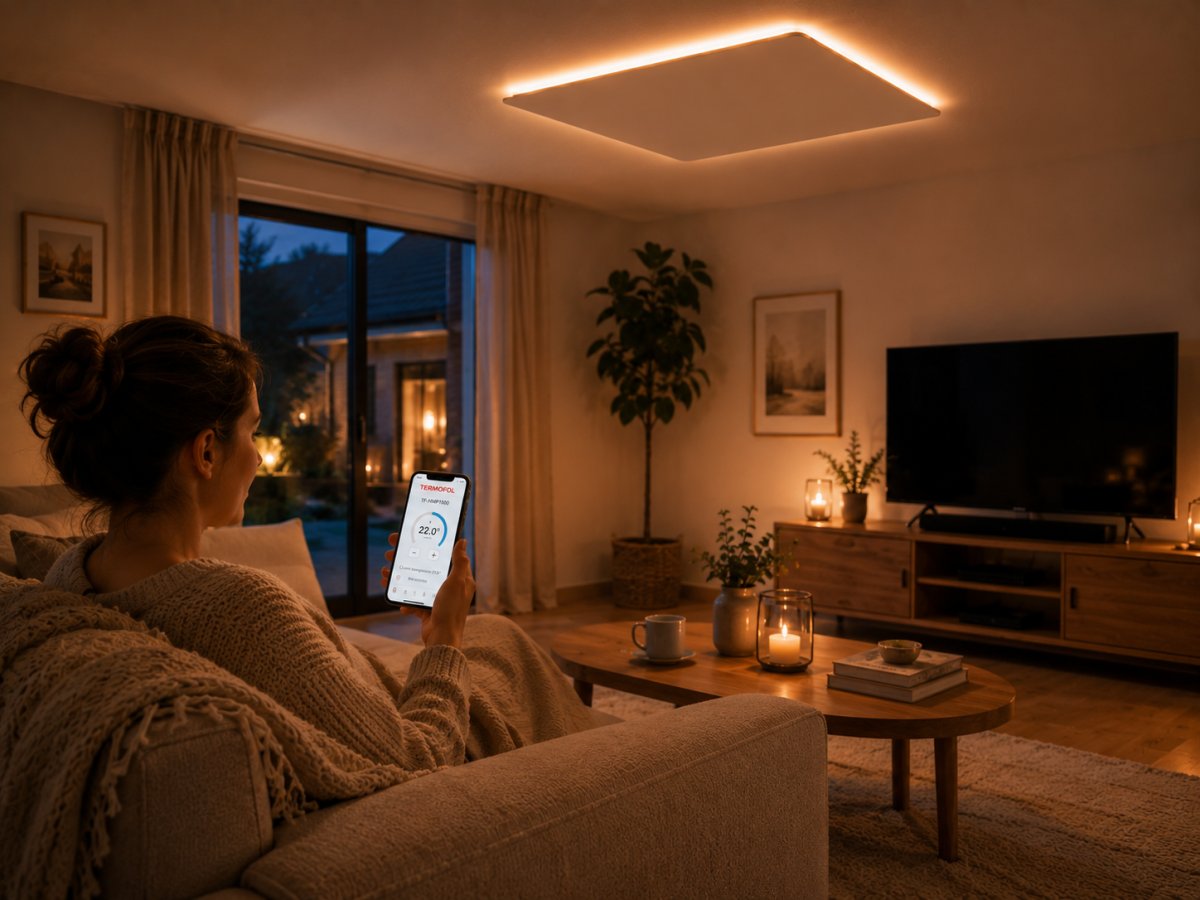
Why does your living room feel like a sauna one minute and a cold room the next? It is a well-known problem often caused by outdated equipment that cannot regulate accurately. At a time when the average electricity price in the Netherlands hovers around €0.273 per kWh, such an inefficient approach is simply too expensive. Fortunately, a modern electric heater with a thermostat is nowadays much more than a simple heating element. It is an intelligent system that knows exactly when heat is needed and when the desired temperature has been reached.
You are probably familiar with the frustration of an unsightly stove that ruins your carefully chosen interior, or the complicated operation of an old model. In this article, you will discover how the right technology can increase your living comfort and finally lower your energy bill. We show you how Norwegian innovation ensures a constant room temperature without fluctuations. Additionally, we discuss the benefits of control via a smartphone app and stoves that become virtually invisible in your home thanks to paintable fronts.
Key Points
- Learn why a modern electric heater with a thermostat is essential to prevent energy waste and guarantee a constant temperature in your home.
- Discover how to manage your heating remotely with Wi-Fi control and a smart app for maximum comfort and lower costs.
- Understand how to calculate the required power in watts per square meter, so that you always choose the right heater for your specific space.
- Get practical tips for the ideal placement of your convector, such as the strategic spot under a window for the best efficiency.
- Discover the aesthetic possibilities of Norwegian design, ranging from steel fronts to unique paintable models.
Why an electric heater with a thermostat is the smartest choice
An electric heater with a thermostat forms the brain of your heating system. Without this smart control, a heater would simply continue consuming power, regardless of whether the desired temperature has been reached. At a time when the average electricity price in the Netherlands is around €0.273 per kWh, every minute of unnecessary consumption is a direct drain on your wallet. Modern convectors from BEHA use advanced electronics to control this process down to the last detail. This not only ensures a lower bill but also a safer home; the thermostat acts as a guardian that prevents overheating by immediately switching off the system if the temperature rises too high.
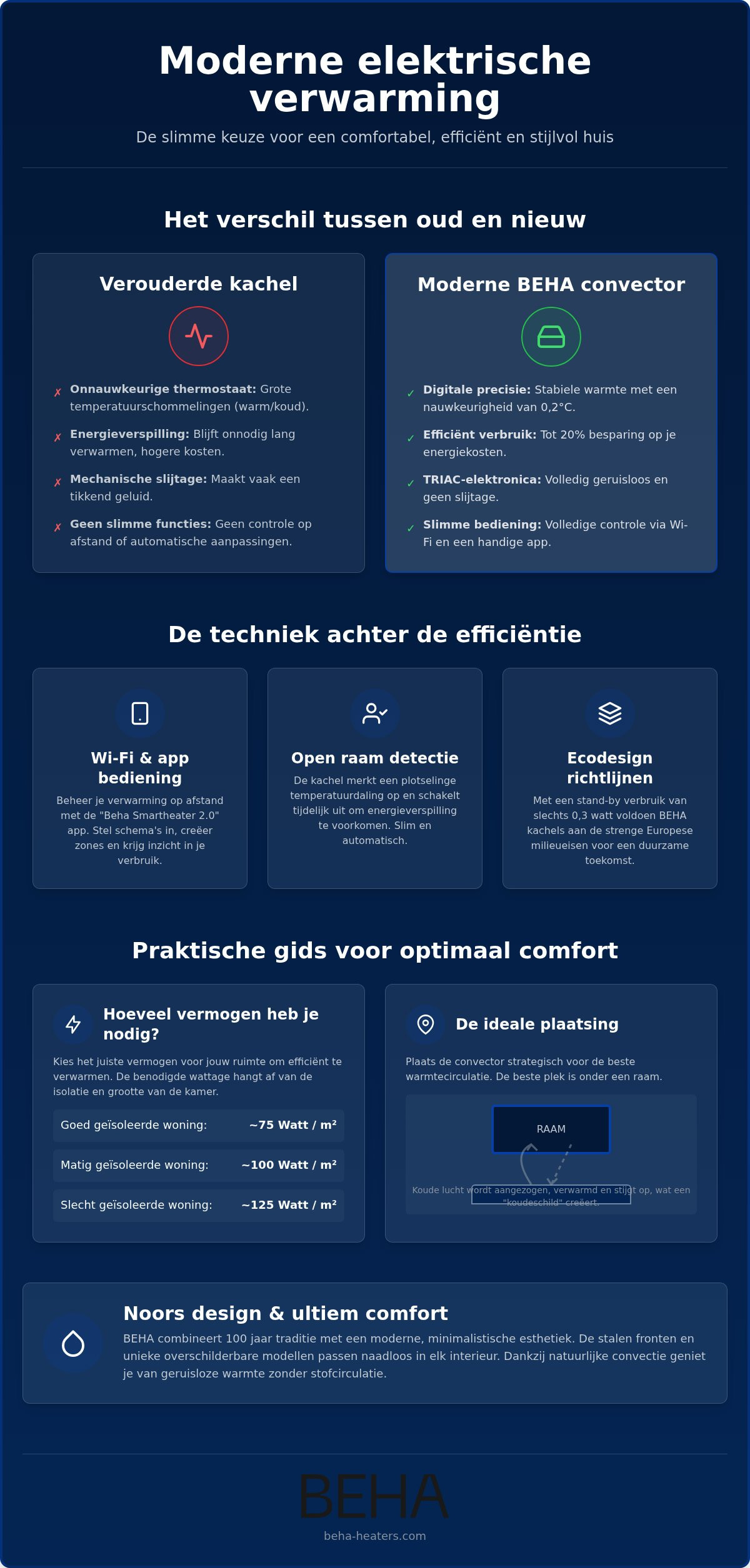
The biggest difference lies in the technology behind the knob. Older heaters often use a mechanical thermostat with a bimetal. This technology is inaccurate and reacts slowly to temperature changes in the room. This results in large fluctuations, where it is too hot one minute and too cold the next. A modern digital thermostat, equipped with TRIAC electronics, continuously measures the ambient temperature. As soon as the room cools down by just 0.2 degrees, the heater briefly switches on. This results in stable heat that feels much more comfortable and also extends the lifespan of the appliance because there are no mechanical parts to wear out or make a ticking sound.
Saving on your energy bill
With accurate digital measurement, you can save up to 20% on your electricity costs compared to outdated appliances. In 2026, a heater without a thermostat will be virtually unthinkable, simply because you waste too much energy. By setting smart day and night programs, you ensure that the heater automatically turns down a few degrees when you are sleeping or away from home. This means you only heat when it is truly necessary, without having to worry about it yourself.
Comfort in every room
Comfort revolves around an even distribution of heat. While you often aim for a beha21 degrees in the living room, 16 to 18 degrees is ideal for a good night's sleep in the bedroom. A high-quality electric heater with a thermostat utilizes natural convection. Cold air is drawn in at the bottom, heated by an aluminum element, and then rises silently. This creates a quiet airflow without the need for a fan. This is not only pleasant for your ears but also prevents unnecessary dust from being blown around the room.
The technology behind a modern thermostat and Wi-Fi control
The days when a heater had only a simple rotary knob are long gone. Nowadays, advanced electronics determine how efficiently your home is heated. The European Ecodesign directives play a crucial role in this. These strict rules force manufacturers to design equipment that minimizes energy waste. A modern electric heater with a thermostat from BEHA goes beyond the standard in this regard. With a standby consumption of just 0.3 watts, these devices exceed current environmental requirements, which directly contributes to a lower energy bill in the long run.
One of the most innovative features is 'open window detection'. Imagine you want to quickly air out the room while the heating is on. Without smart technology, the heater would start heating at full power to compensate for the incoming cold. However, the sensors in a BEHA convector immediately detect a sudden drop in temperature. The system then temporarily switches itself off to save energy. Only when the window is closed again and the temperature stabilizes does the thermostat resume operation. This prevents you from literally paying for the outside air.
The BEHA app: complete control in your pocket
With the “Beha Smartheater 2.0” app, you have complete control over the climate in your home, whether you are sitting on the couch or still at work. Setting up a detailed heating schedule is much easier via your smartphone than on a small display on the heater itself. In the app, you can link different rooms and create zones. This ensures that the bathroom is behawarm early in the morning, while the heater in the living room only switches on later in the day. You get real-time insight into the status of each room, so you never again waste power unnecessarily in rooms where no one is present.
Ecodesign and sustainability
sustainability is BEHA a technical foundation firmly rooted in Norwegian tradition. The combination of a highly accurate electronic thermostat and a programmable weekly timer ensures a minimal CO2 footprint. Because the heater calculates exactly when to stop heating, not a single gram of energy is wasted. This is an essential step for Dutch households making the switch to a sustainable, gas-free future. For those seeking this perfect balance between technology and aesthetics, the smart convectors with steel fronts a reliable solution that meets all modern requirements.
How much power does your electric heater need?
Choosing the right wattage is the most important step when purchasing your new heating system. An electric heater with a thermostat only works efficiently if the power output is perfectly matched to the cubic meters of the room. Many people make the mistake of choosing a model that is too low, thinking that this saves electricity. Nothing could be further from the truth. A heater with insufficient power must constantly operate at 100% to get the room even remotely up to temperature. As a result, the thermostat never switches off, and your energy consumption actually skyrockets. Overcapacity is therefore always smarter; the heater reaches the desired temperature faster and then immediately switches back to an energy-saving mode.
To make the right choice, you must first determine whether the convector serves as primary or supplementary heating. If the heater is the only heat source in the room, you will need more power to ensure a comfortable climate even during cold winter days. Are you using the heater only to provide supplementary heating to a chilly corner of the living room alongside your existing system? Then a lower wattage will often suffice. In Dutch practice, for an average insulated room, we often calculate with 60 to 80 watts per square meter at a standard ceiling height of 2.5 meters.
Calculation per room type
Not every room in your house has the same heating requirements. You spend most of your time sitting in the living room, making a constant temperature of 21 degrees desirable. Therefore, you should opt for a more generous calculation here. For bedrooms or a home office, the ideal temperature is often lower, around 18 degrees, meaning you can manage with less power. In the bathroom, however, you want it to behacomfortable quickly after stepping out of the shower. There, don't just focus on the wattage, but specifically choose a model that is safe for damp areas.
Insulation as a decisive factor
The condition of your home is the determining factor in your final choice. A modern new-build house with HR+++ glass and high-quality wall insulation retains heat exceptionally well. In such a situation, you need significantly less wattage than in a charming but drafty 1930s home. Large windows cause additional heat loss, even with double glazing. We therefore always advise allowing an extra margin of 10% in your calculation. This power reserve ensures that your electric heater with thermostat effortlessly keeps the cold out, even during an extreme Dutch freezing night.
Tips for optimal efficiency of your electric heating
A high-quality electric heater with a thermostat only performs optimally if the environmental factors in your home are right. Even the most advanced Norwegian technology cannot fully compensate for unfavorable placement or inadequate maintenance. The golden rule for convectors is still installation under a window. Glass, even with modern double glazing, is often the coldest point in the facade. By installing the heater here, you directly capture the downward cold airflow and convert it into a warm airflow that draws into the room. This prevents annoying drafts across the floor and ensures a much more even temperature distribution throughout the entire space.
In addition, unobstructed air circulation is essential for the efficiency of the appliance. Always keep the air intake at the bottom and the outlet at the top completely clear. Dust accumulation is the biggest enemy of an efficient heating element. Dust acts as an insulating layer, which reduces the effectiveness of heat transfer to the air. Therefore, make it a habit to run the vacuum cleaner along the vents during cleaning. This ensures maximum heat transfer and prevents that typical burning smell of scorched dust at the start of the heating season.
Smart placement in the room
Never hang a convector heater behind a thick curtain or directly behind a sofa. The warm air becomes trapped, causing the built-in thermostat to register that the desired temperature has been reached while you are still sitting in the cold in the rest of the room. Maintain a minimum distance of 5 to 10 centimeters from the floor for unobstructed airflow and ensure that surrounding furniture does not block the heater. Although freestanding models are flexible, fixed wall mounting usually offers the best efficiency because the airflow along the wall promotes natural, constant circulation.
Save with smart schedules
You save the most by smartly lowering the temperature when you are not at home or are sleeping. A night-time reduction of 3 to 4 degrees is ideal in most Dutch homes. Do not let the house cool down any further than that; it consumes an unnecessary amount of electricity to fully reheat an ice-cold room. For rooms you rarely use, such as a storage room or guest room, frost protection is a godsend. This setting keeps the temperature constant at 5 degrees to prevent pipes from freezing without your consumption skyrocketing. In this electric convectors with Wi-Fi, you can read exactly how to set these schedules down to the minute via your smartphone.
Do you want to immediately benefit from a lower energy bill and more comfort in your home? View our full range of smart electric heaters and choose the solution that perfectly matches your interior and heating needs.
Norwegian design and innovation from BEHA
BEHA is not just any manufacturer; it is a Norwegian family business with a history stretching back more than 100 years. In a country where winters can be mercilessly cold and temperatures regularly drop well below freezing, reliable heating is not a luxury but a dire necessity. This decades-long expertise is immediately reflected in every electric heater with a thermostat that leaves the factory. While many brands focus purely on price, BEHA opts for technological superiority and aesthetic perfection that effortlessly stand the test of time. Whether you choose the sleek, industrial look of a steel front or the modern, luxurious appearance of a glass front, the underlying technology remains of the very highest standard.
Norwegian design does not stop at the choice of materials, but is about how an appliance functions in a living space. The designers at BEHA understand that heating is an integral part of your interior and should not distract from your personal style. For those striving for a minimalist style, there is the unique option to make the heater virtually invisible by choosing a paintable front. This is an innovation rarely seen with other brands and perfectly caters to the modern desire for a calm, harmonious living space without disruptive technical elements.
The paintable radiator: a revolution in design
's paintable fronts, BEHA you no longer have to compromise on your carefully curated interior design plan. You can easily paint the heater in exactly the same color as the wall it hangs on, allowing the appliance to blend seamlessly into its surroundings. Use high-quality water-based wall paint for this and apply it with a fine roller for a sleek and professional result. The major advantage of this innovative solution is that the special coating does not impede heat output, ensuring the full efficiency of your electric heater with thermostat remains guaranteed. For a detailed step-by-step plan and inspiration, consult our complete guide on paintable radiators.
Quality that lasts for generations
A BEHA convector is built as a sustainable, long-term investment. The robust steel casing and high-quality finish ensure that the units last for decades without compromising on power or aesthetic appeal. Safety is always a priority for this Norwegian brand; every smart convector is equipped with essential features such as a child lock and automatic shutdown in the event of tipping over or overheating. This provides peace of mind, especially in households with young children or enthusiastic pets. By choosing Norwegian reliability, you opt for a carefree winter and a responsible solution that contributes to a smart lifestyle every day.
Ready for a sustainable and comfortable future
Choosing a high-quality electric heater with a thermostat is an investment that pays for itself in living comfort and a lower energy bill. We have seen how smart features such as open window detection and precise Wi-Fi schedules effectively prevent unnecessary consumption. Whether you choose a sleek glass front or a paintable radiator, the technology ensures stable heat without the fluctuations you experience with older systems.
As a Norwegian family business since 1917, BEHA combines tradition with technological superiority. Our convectors comply with all European Ecodesign standards and are specifically designed for easy installation in any room. With the assurance of a 5-year warranty, you choose a partner who knows the cold inside out and constantly evolves to meet your needs.
View all BEHA electric heaters with thermostat and experience for yourself how Norwegian innovation transforms your home into an oasis of peace and warmth. Enjoy a carefree winter with heating that does exactly what you want.
Frequently asked questions about electric heating
What is the energy consumption of an electric heater with a thermostat?
Consumption depends entirely on the power output and how often the heater switches on to maintain the room temperature. An electric heater with a thermostat only consumes power when the temperature drops below the set value. With an average electricity price of €0.273 per kWh in the Netherlands, you can control costs by using smart schedules. The thermostat ensures that the element does not remain on constantly, which can save up to 20% compared to models without precise control.
Can I safely leave an electric heater on all night?
Yes, modern BEHA convectors are designed for continuous use and prolonged load. They are equipped with thermal protection that immediately switches off the power in the event of accidental overheating. Thanks to the highly accurate thermostat, the temperature in the bedroom remains stable without the device becoming unnecessarily hot. For an optimal night's sleep, we recommend setting the temperature to 16 or 17 degrees via the app, which is both safe and energy-efficient.
How many watts do I need for a 20m² room?
For a standard room of 20 square meters, you usually need between 1200 and 1600 watts of power. This is based on the Dutch practical standard of approximately 70 watts per square meter for average insulation and ceiling height. In a very well-insulated new-build house, a lower power output is often sufficient. We recommend choosing a model with slightly more capacity rather than a standard, so that the heater warms the room faster and switches back to low consumption more quickly.
What is the advantage of a Wi-Fi heater compared to a normal heater?
Is an electric heater with a thermostat suitable as primary heating?
Certainly, in modern, well-insulated homes, an electric heater with a thermostat is an excellent and maintenance-free alternative to gas. The system can precisely regulate the heat demand for each individual room, which is much more efficient than a centrally controlled system. Especially in combination with solar panels, it is a very sustainable choice. For larger living rooms, we recommend installing multiple units for even heat distribution and optimal thermal efficiency.
How do I install a BEHA wall convector?
Installation is very simple and can be carried out by virtually anyone themselves without the help of a professional. Each heater comes with a robust wall bracket that you attach to the wall with a few screws. Then, you simply click the convector onto the bracket. Because our heaters come standard with a cord and plug, a nearby power outlet is sufficient. Therefore, you do not need complicated wiring or demolition work to enjoy the warmth immediately.
What should I do if my heater's thermostat is not responding properly?
First, check that the heater is not positioned in a draft or too close behind a piece of furniture. Cold drafts from a window or trapped heat can adversely affect the internal measurement. If the heater is controlled via the app, you can often enter a temperature correction to calibrate the measurement. Also, ensure that the grilles at the top and bottom are completely dust-free so that the airflow past the sensors is not obstructed.
Are electric heaters with a glass front just as efficient as steel models?
Yes, the internal technology and the high-quality heating element are identical in both cases. The difference between a glass and a steel front is purely aesthetic and has no impact on power consumption. Both materials release heat to the natural airflow via convection in the same way. Glass can retain heat slightly longer after the thermostat has switched off, while steel reacts more quickly to temperature changes. Your choice therefore depends mainly on your personal taste.