
Sustainable electric heating: the complete guide to a gas-free home in 2026
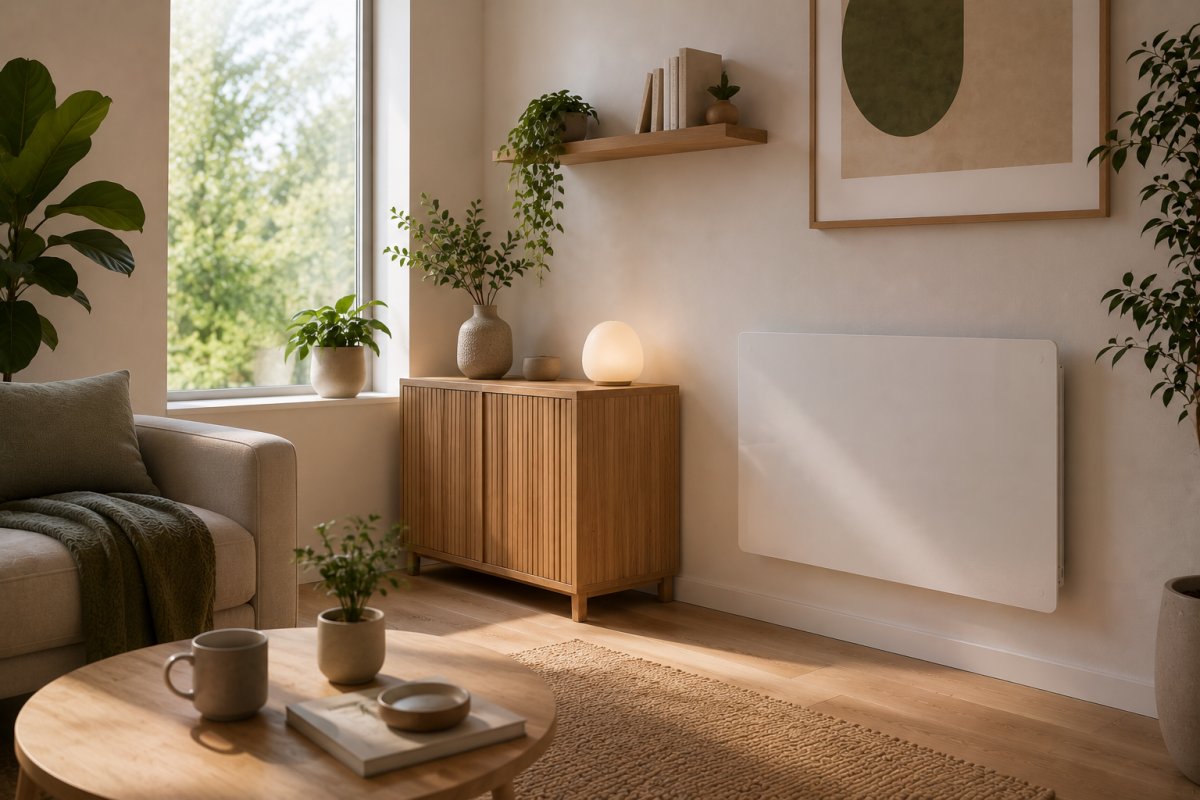
Did you know that by 2026, heating your home with electricity will no longer be an expensive stopgap solution, but could actually be the key to a lower energy bill? As the tax on gas continues to rise to an average price of €1,459 per m³, switching to sustainable electric heating is becoming increasingly attractive for those who make smart choices. You probably recognize this: the desire to live completely gas-free is strong, but the uncertainty about which systems are truly efficient and the fear of unsightly radiators hold you back.
In this guide, you will discover how to heat your home efficiently and stylishly using the latest Norwegian technology and smart Wi-Fi control. We show you that a comfortable home goes perfectly hand in hand with an interior where the heating blends in seamlessly. You will get a clear overview of the possibilities for 2026, from paintable fronts to the impact of the falling energy tax on electricity. This way, you will learn exactly how to keep your energy costs low without compromising on the warmth and quality you deserve.
Key Points
- Understand why switching to sustainable electric heating forms the basis for a gas-free future and how modern efficiency standards help you save.
- Discover how smart Wi-Fi control and convection technology ensure a precise temperature in every room without unnecessary energy consumption.
- Learn why the low installation costs and lack of maintenance of electric convectors are a smart long-term investment compared to gas.
- Follow our step-by-step plan to calculate the ideal wattage per room, so that you always enjoy optimal efficiency in a well-insulated home.
- See how minimalist Norwegian design and paintable fronts ensure your heating blends seamlessly into your personal interior style.
What exactly is sustainable electric heating?
Sustainable electric heating is more than just plugging something into a socket. It involves an interplay between three crucial factors: maximum efficiency, a long lifespan, and intelligent control. In a world where we are moving away from fossil fuels en masse, the way we generate heat has fundamentally changed. The technology behind electric heating has taken off enormously in recent years. We are no longer looking at devices that simply consume electricity, but at advanced systems that convert every watt into usable heat exactly when you need it.
True sustainability also lies in the hardware itself. A stove that ends up on the scrap heap after three years is never sustainable, no matter how efficient it is. That is why the Norwegian tradition of BEHA is so relevant. With over 100 years of experience, we build appliances that last for decades. This significantly reduces the ecological footprint because fewer raw materials are needed for replacement. It is a down-to-earth approach to quality that is essential for a truly gas-free home.
The role of electricity in the Dutch energy transition
The Netherlands is undergoing a major shift. The government is encouraging the switch from gas to electricity by substantially increasing the tax on natural gas. In 2026, the energy tax on gas will amount to no less than €0.7268 per m³, while the tax on electricity has actually been reduced to €0.1108 per kWh. This makes the financial choice for electricity more logical than ever.
Do you have solar panels? Then 2026 is a crucial year. It is the last year that you can still fully net meter under the current scheme. By choosing an electric system now, you use your self-generated electricity directly to heat your home. That is good for the climate and immediately noticeable in your wallet. You become independent of fluctuating gas prices and build a future-proof home.
Ecodesign and efficiency: what to look out for?
If you are looking for a new heater, you will come across the term Ecodesign everywhere. These are strict European guidelines that require heating appliances to meet minimum efficiency standards and have smart features, such as open-window detection and accurate weekly timers. A modern ecodesign electric heater is therefore incomparable to the old radiant heaters of the past that wasted unnecessary amounts of energy.
This new generation of convectors responds lightning-fast to temperature changes. Whereas a traditional radiator heats up slowly and continues to emit heat long after it is no longer needed, electric convection offers immediate control. This prevents energy waste and ensures that you only pay for the heat you actually use. It is the most efficient way to manage every room in the house individually and smartly.
The technology behind energy-efficient electric heating
Many people still label electric heaters as 'energy guzzlers' without considering technological advancements. That is a missed opportunity. sustainable electric heating operates with a precision unknown in the past. The heart of this efficiency is the electronic thermostat. Whereas old systems often overshot and made the room unnecessarily warm, modern sensors measure the temperature accurate to within a tenth of a degree. This prevents the so-called 'overshoot effect,' where a room unintentionally becomes too warm and energy is lost.
This brings us to the concept of zone heating. Instead of heating your entire house with a single central thermostat, you regulate the temperature per room. Why heat the living room if you sit in your home office all day? By heating only where and when it is needed, you significantly reduce your energy consumption. It is a method that perfectly aligns with the needs of a modern household in 2026, where we are more mindful of every kilowatt of electricity.
Smart thermostats and app control
The real revolution lies in digital connectivity. With a Wi-Fi controlled heater, you have complete control in your pocket. You can easily set weekly schedules that seamlessly fit your personal rhythm. Leaving home unexpectedly early? Then simply turn down the heater with a tap on your smartphone. You never have to worry again about the heating being on unnecessarily while no one is home.
An indispensable feature in these smart systems is 'open window detection'. As soon as the heater detects a sudden temperature drop due to a draft, it temporarily switches itself off. This prevents you from literally heating the outside air. Together, these small automatic interventions result in a noticeably lower annual bill and increased ease of use.
Convection technology vs. other forms of heating
Modern heaters utilize advanced convection heating. This principle relies on the natural circulation of air: cold air is drawn in at the bottom of the heater, heated by a large aluminum element, and directed back into the room at the top. This process is completely silent because no fans are involved. Furthermore, no dust burns on the element thanks to the low surface temperature, which is better for the air quality in the home.
Convection is ideal for a constant room temperature without bothersome temperature fluctuations. The heat spreads evenly throughout the room, ensuring a high level of comfort. Would you like to delve deeper into the technical specifications? Then read more about the electric convector with Wi-Fi and how it improves your living comfort. Combining these technologies makes electric heating a full-fledged and reliable alternative to gas. Curious which solution best suits your home? Then take a look at the various smart convectors from BEHA for a first impression.
Electric heating versus traditional systems
When considering the total cost of a heating system, people often fixate on the monthly energy bill. While this is important, it doesn't tell the whole story. A traditional central heating system brings with it a hidden burden: complex installation and ongoing maintenance. With sustainable electric heating, these concerns disappear almost entirely. There are no pumps that can seize up, no filters that clog, and no annual inspections by a technician are required.
This simplicity also makes electric systems ideal for renovations. While a traditional central heating boiler often requires extensive demolition work to run pipes throughout the house, a convector only requires a sturdy wall and a power outlet. This saves you thousands of euros in installation costs, which you can immediately invest in better insulation or solar panels. It is a no-nonsense way to make your home more sustainable that delivers immediate results without turning your entire house upside down.
Cost overview: purchase, installation, and consumption
The purchase price of a set of high-quality electric convectors is significantly lower than the investment for a complete central heating boiler with associated pipework. In their report on energy-efficient electric heating, , you pay BEHA no subscription fees for maintenance, and you are not burdened by wear-prone parts that need to be replaced after a few years.
Of course, the price per kilowatt-hour of electricity is a factor, but thanks to the smart control we discussed earlier, you limit consumption to the absolute minimum. After all, you only heat the places where you are actually present. In a well-insulated house, the sum of a low purchase price, zero maintenance, and smart consumption is often more favorable than maintaining an outdated and expensive gas system.
The hybrid solution: electricity as a smart complement
Many households will opt for a combination of systems in 2026. A heat pump, for example, is excellent for basic heating in the living room via underfloor heating, but these systems are often slow to respond. For the professional installation of these systems, you can turn to Nice and Cool Inc., an expert in residential HVAC solutions.
In the bathroom, for example, you want immediate comfort when you step out of the shower. An electric heater with a steel front is ideal here due to its fast warm-up time and robust design. This prevents you from having to keep the underfloor heating on the upper floor running all day for those few moments you are in the bathroom. It is this strategic use of electricity that ensures maximum savings and optimal comfort. Curious how to apply this in your home? The experts at BEHA are happy to help you make an accurate calculation for your specific situation.
How to make your home more sustainable step by step with electricity
The switch to a gas-free home is a process that requires a smart approach. You don't start by haphazardly hanging up heaters. The foundation of sustainable electric heating is a well-insulated home. Figures from 2025 show that over two-thirds of people who successfully switched to electric heating first invested in insulation. This makes sense: the less heat that escapes, the more efficiently your system works. Therefore, check your energy label first. In March 2026, only 21.3% of Dutch homes had a label B or higher, which means that there is still room for behafor many regarding the walls and windows.
Once the insulation is in order, you determine the strategy for each room. Consider the function of the room and the desired temperature. A bedroom often requires less power than a living room where you sit still all evening. The goal is a system that is exactly large enough to heat the room on the coldest days, without taking up unnecessary wall space. A well-thought-out plan prevents you from having to add heaters later or incurring unnecessarily high bills.
Calculate wattage: how much power do you need?
To determine the correct wattage, use a simple calculation. For a modern, well-insulated house, calculate with approximately 60 to 70 watts per square meter. Do you live in an older home with energy label C or D? Then take into account 90 to 110 watts per square meter. It is smart to allow for some overcapacity. A heater with more power is not less efficient; it simply reaches the desired temperature faster and then switches off sooner. This is gentler on the system and often more comfortable.
The best place for your new convector is under a window. This ensures that the cold air 'falling' down from the glass is immediately heated and circulated into the room. This prevents drafts across the floor and ensures the most even heat distribution in the space. Make sure there are no curtains hanging in front of the heater, as this blocks the airflow and reduces efficiency.
Installation and configuration for beginners
The beauty of BEHA 's Norwegian quality is the ease of installation. You don't need a plumber. With the included wall brackets, you can hang the heater in fifteen minutes. Ensure there is a free power outlet and sufficient distance from furniture for unobstructed airflow. Once the heater is mounted, connect it to the Wi-Fi app on your smartphone. You can group heaters in different rooms into 'zones'. This allows you to control all bedrooms with the touch of a button, for example, or set a specific program for your home office.
behaAre you ready to take control of your own heating? Discover the possibilities for your home at and start making it more sustainable today.
Why BEHA is the smart choice for your interior
Making your home sustainable is often associated with technology and complex installations, but in your own home, aesthetics naturally matter too. You don't want a bulky, industrial radiator to disrupt the atmosphere in your carefully designed living room. BEHA strikes the perfect balance here. Our heaters are designed with the Norwegian philosophy of minimalism: clean lines, high-quality materials, and a finish that exudes tranquility. It is sustainable electric heating that doesn't scream for attention, but subtly contributes to a modern and peaceful interior.
This aesthetic approach goes hand in hand with functional superiority. Where traditional systems often require a compromise between appearance and performance, the Norwegian school proves that these two worlds can seamlessly merge. You choose a solution that not only reduces your ecological footprint but also increases the value and appearance of your home.
Design that deserves to be seen (or perhaps not)
For those who love a luxurious and modern look, our smart convectors with a glass front are an excellent choice. The tempered glass adds elegant depth to the design and is also very easy to keep clean. Do you have a striking color on the wall and want the heating to blend completely into the background? Then the paintable radiator the solution interior enthusiasts have been waiting for. You simply give the front the same color as your wall for a fully integrated look.
We have also considered the design for the smaller corners of the home. In the hallway or toilet, wall space is often limited, yet a pleasant temperature is essential for living comfort. Our compact models offer the same technological power in a modest package. Whether you choose the robust steel fronts for a timeless look or the refined glass panels, every appliance is built to last for decades without visually becoming outdated.
Quality from Norway: built to last
The foundation of our reliability lies in the extreme conditions of Norwegian winters. With over 100 years of experience, we know better than anyone what is required to safely heat a home when it is extremely cold outside. This history translates into products that meet the strictest international safety requirements. We use only the highest quality components, resulting in a system that is virtually maintenance-free. This is a crucial part of truly sustainable electric heating; after all, a device that does not break down does not need to be replaced.
In a busy household, that maintenance-free status is a huge reassurance. You don't have to worry about leaks, ticking pipes, or annual inspections by a technician. The combination of technical soundness and a timeless design makes BEHA a long-term partner. You are investing in a system that continues to deliver the same comfort year after year. It is the most logical step for anyone serious about creating a gas-free, safe, and stylish home by 2026.
Ready for a gas-free and stylish future?
In 2026, the switch to a gas-free home will no longer be a distant dream, but an achievable reality. By choosing sustainable electric heating, you combine technical precision with a substantial reduction in energy waste. The core of a smart transition lies in control: heating only where and when you need it. You no longer have to worry about rising gas prices or unsightly radiators. Instead, you enjoy the peace of mind of a system that blends seamlessly into your interior and your daily routine.
's expertise, BEHA you bring Norwegian quality since 1917 into your home. Our stoves are fully Ecodesign certified and offer the convenience of simple Wi-Fi control via your smartphone. This ensures you always have a safe, efficient, and maintenance-free system that lasts for generations.
's sustainable heating solutions BEHA and experience for yourself how easy it is to heat your home efficiently and stylishly. You are just one step away from a future-proof and comfortable home.
Frequently asked questions about electric heating
Is electric heating more expensive to run than a gas central heating boiler?
Fundamentally, the price per unit of heat for electricity is often higher, but due to the rising gas tax of €0.7268 per m³ in 2026, this picture is changing rapidly. Because a convector heats each room very precisely, you avoid the waste that often occurs with a central system. With smart control and solar panels, sustainable electric heating can ultimately even turn out to be more cost-effective than keeping an outdated central heating boiler.
Can I heat my entire house with only electric heaters?
Yes, it is absolutely possible to heat your entire home electrically, provided your house's insulation is up to standard. For a comfortable result, it is essential to accurately calculate the required wattage for each room. In a well-insulated home with at least energy label B, modern convectors can cover the entire heating demand. This offers a reliable path to a completely gas-free home without major renovations.
Do I need a dedicated electrical circuit for an electric convector?
For a single convector, you usually do not need a separate circuit; a standard socket suffices. However, if you connect multiple high-wattage heaters to the same circuit in one room, the total load can become too high. When making a complete switch to electric heating, it is wise to have your fuse box checked by an expert. This ensures that your network can safely handle the simultaneous demand of all appliances.
What is the difference between a convector and an infrared panel?
A convector heats the air in the room by means of natural circulation, while an infrared panel emits direct radiant heat to objects and people. Convection heating ensures an even temperature throughout the entire room, which feels more comfortable to most people as primary heating. Infrared is often more suitable as local supplementary heating at a desk or seating area, because the air itself remains cooler with this technology than with convection. Although infrared often serves as supplementary heating in the home, it is actually the standard for large commercial buildings; discover Infrared heaters for industrial halls to see how this works in practice.
How much do I save with a Wi-Fi controlled electric heater?
You can save up to 20% to 25% on your running costs by choosing a Wi-Fi controlled system instead of traditional heaters. The savings result from accurate weekly scheduling and smart features such as open-window detection. Because you can easily switch off the heaters via an app if you are unexpectedly away, the heating never runs unnecessarily. This digital precision makes sustainable electric heating one of the most efficient choices for your wallet.
Are electric heaters safe to leave on in the bedroom at night?
Yes, BEHA 's modern electric convectors are completely safe and designed to stay on silently all night long. They are equipped with advanced overheating protection that immediately cuts off the power if the temperature becomes too high. Because no combustion takes place and no dust burns on the element, the air quality in the bedroom remains optimal. This makes them a reliable partner for a healthy and warm night's sleep.
Can I install an electric radiator myself or do I need a professional?
You can very easily install an electric convector yourself without needing a professional. The process consists of mounting the included wall bracket with a few screws and plugging the power cord into the socket. No wiring needs to be laid, so you run no risk of leaks or water damage. Configuring the Wi-Fi app is self-explanatory, so you can enjoy a working system within fifteen minutes.
What happens to my electric heater if the power goes out?
In the event of a power outage, the heating stops temporarily, but BEHA heaters remember their settings thanks to internal memory. As soon as the power supply is restored, the Wi-Fi models automatically reconnect to your network and resume their set program. It is good to know that a well-insulated house often retains heat for hours. So, you won't be left in the cold immediately during a brief interruption of the electricity grid.