
Wall-mounted shoe dryer: how to choose in 2026
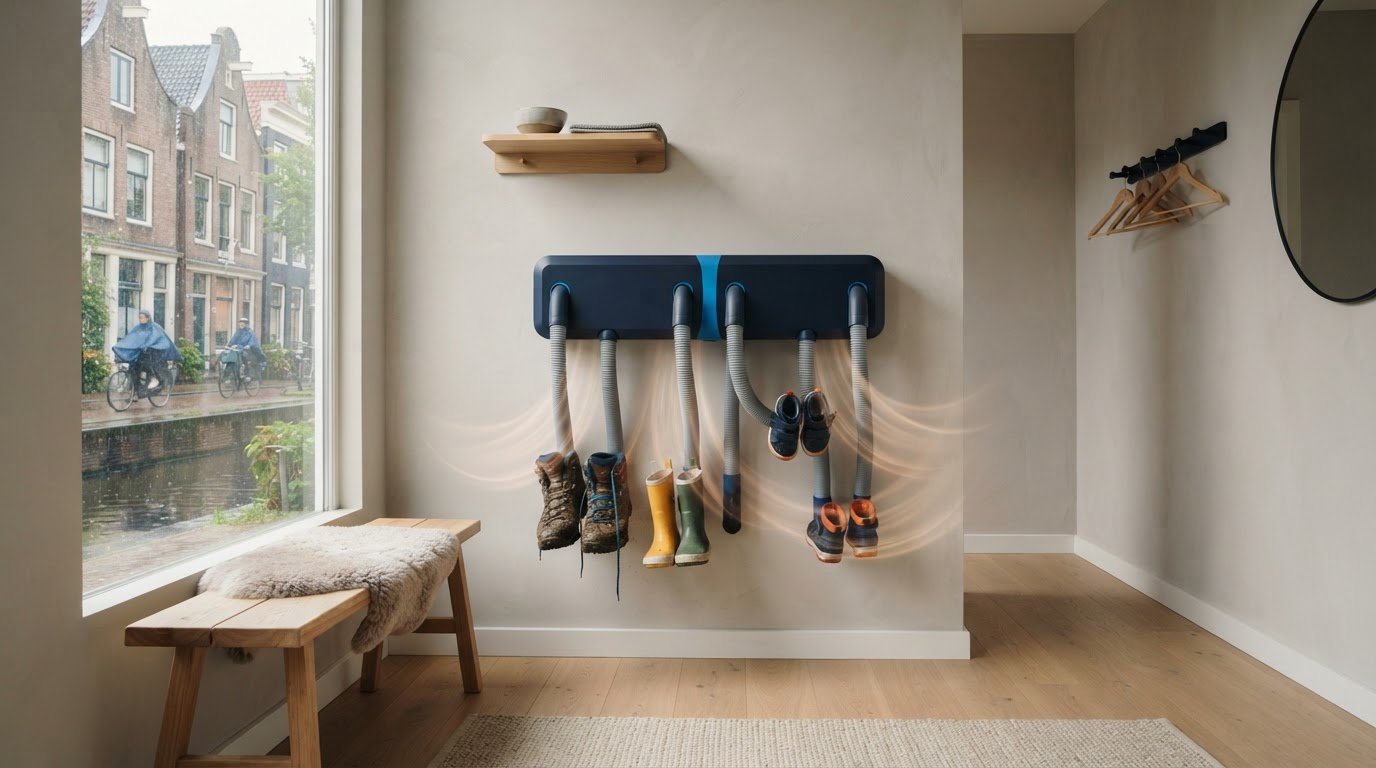
The best shoe dryer is not automatically the most powerful. For a wall-mounted shoe dryer, your choice depends mainly on the location, the type of shoes you want to dry, and how often you use the appliance. A wall-mounted model keeps the floor clear, but the drying method and placement must also suit your shoes. Therefore, compare more than just power.
You want to dry wet shoes practically without losing unnecessary space or exposing the material to an unsuitable drying method. In this buying guide, you will read which features to compare before purchasing, how a wall-mounted model differs from a freestanding device, and what questions to ask yourself about your daily use. This way, you can make a more informed choice, whether you are drying shoes after a rainy walk or regularly use multiple pairs.
We examine the installation location, capacity, operation, and suitability for various shoe types. You will also learn how to compare product specifications and what to look for to dry shoes carefully. BEHA sells shoe and textile dryers. The brand's experience with electric heating and drying helps you better assess the product category and available features.
Key Points
- A wall-mounted shoe dryer can free up floor and storage space, but the best choice also depends on your shoes and drying routine.
- Compare the drying method, capacity, and operation. These features vary by appliance.
- Weigh a wall-mounted model against a freestanding model based on space utilization, portability, and the need for a fixed location.
- Measure the available wall space before purchasing and take into account accessibility, obstacles, and the mounting instructions.
- BEHA sells shoe and textile dryers. Compare the product information with your own routine to determine which features are important to you.
Why choose a wall-mounted shoe dryer?
Wet shoes are unpleasant to put back on and can quickly get in the way in the hallway or utility room. A wall-mounted shoe dryer is attached to a wall, keeping the floor clear for shoes, bags, or other items. This can be especially handy if you have limited floor space and usually dry your shoes in the same spot.
The installation itself says nothing about the drying method or speed. Models can use heat, air circulation, or a combination of both. Capacity and operation also differ. Therefore, a wall-mounted model does not automatically dry faster than a freestanding appliance. Compare operation and product specifications instead of using placement as an indicator of performance.
Wall mounting saves floor space but requires a suitable installation location. Do not just check if there is enough free wall space. Also consider how you place and remove shoes from the device, and check that a door, cupboard, or walkway does not get in the way. Take the space around the device into account and follow the installation instructions.
For a general overview of models and the operation of a shoe dryer, you can consult Wikipedia. That overview helps you recognize various terms and methods. For the use of a specific device, the accompanying instructions are the guiding principle.
When is a wall-mounted model practical?
A wall-mounted model can be practical in a hallway, utility room, or storage area where the floor is already in use. A fixed spot is also convenient if you regularly dry wet shoes: you don't have to take a device out of the cupboard and put it away again after use every time. Do check, however, that it is easily accessible and that you can place shoes on it without moving other items first.
Walk through the route from wet shoes to the dryer. Can you access it comfortably, even when the space is crowded? Is there enough room to place shoes or line them up according to the model's instructions? It is precisely these daily actions that determine whether a fixed setup fits your routine.
Which expectations are realistic?
Distinguish between drying, heating, and odorbeha. Drying means that the device helps remove moisture from shoes. Depending on the design, heat, airflow, or a combination thereof can contribute to the process. Heating is not the same as a promise that shoes will be dry within a fixed time.behatreatment is a separate function and is not automatically included in every shoe dryer.
The time required depends on the device and how wet the shoes are, among other things. Therefore, do not assume a single fixed drying time without model-specific information. Follow the product instructions and care advice for your shoes, especially for materials that may be sensitive to heat. This will prevent you from using the device differently than intended or putting unnecessary strain on your shoes.
How does a wall-mounted shoe dryer work?
A wall-mounted model helps remove moisture from shoes. Depending on the design, it uses heat, air circulation, or a combination of both to do so. With air circulation, air moves along or through the shoe. In a model that uses heat, that heat contributes to the drying process. The wall mounting determines where the device hangs, not how the moisture is removed.
The description "wall-mounted shoe dryer" therefore does not yet explain exactly how a device works. The drying method, the number of shoes you can dry at the same time, and the operation vary by model. Look for the drying method in the product information and read how to place shoes on or attached to the device. Also pay attention to instructions regarding lifespan and suitable materials.
A specified function is a product feature. The expected drying result also depends on your shoes, the amount of moisture, and how you use the device. This prevents you from confusing a specification with a promise of a fixed drying time or the same result for every pair. A daily routine with slightly damp shoes requires something different than shoes that are soaked after a wet walk.
What determines heat and air circulation?
Check the product information to see if a model uses heat, moves air, or does both. Do not rely solely on the temperature rating: warmer is not automatically better. Sensitive materials may react differently to heat than sturdy, everyday shoes. Therefore, follow both the dryer's instructions and the care advice for your shoes. If the label or care information mentions limitations, take these into account when making your choice.
The placement of shoes can also be important. Check how the design brings air to the shoes and whether the instructions indicate how to position them. Do not cover openings and do not use the device other than described. This way, you base your choice on the operation of the model, not on assumptions about what heat or airflow does automatically.
What influence do shoes and humidity have?
Lightweight everyday shoes that are only slightly damp may have different drying needs than thick shoes or boots with a higher upper. In the latter, moisture can penetrate deeper into the material or further inside the shoe. The effect depends on the material, the construction, and how wet the shoes are. Therefore, a device designed for one type of shoe is not automatically the most convenient choice for all your shoes.
Do not squeeze or wring shoes to speed up the drying process, especially if this could deform the material. Follow the operating instructions for the model and adhere to the care advice for your footwear. Also, do not use the drying time of another device as a starting point: methods and conditions differ.
BEHA sells dryers for shoes and textiles. View 's shoe and textile dryers BEHA to explore the product categories.
Wall-mounted or freestanding shoe dryer: which suits you?
The choice between a wall-mounted and a freestanding model depends primarily on where you dry your shoes and how much flexibility you want. A fixed setup can be convenient if you always use the same spot. A portable appliance is a better fit if you want to dry shoes in different places or store the appliance after use. Neither type is automatically the best choice for every home.
| Consideration | Wall model | Freestanding model |
|---|---|---|
| Space utilization | Keeps the floor free, but takes up wall space. | Uses floor or storage space when you place it down or store it. |
| Portability | Usually remains at the chosen mounting location. | You can move it if the location changes. |
| Assembly | Requires a suitable location and securing according to the instructions. | Does not require permanent wall mounting, but does require a practical location during use. |
| Fixed routine | Can be handy if you often dry in the same spot. | Suitable for use in varying locations or when you want to store the device. |
Space doesn't disappear, but is used differently. A wall-mounted model requires free wall space and an accessible setup. A freestanding model requires space on the floor or in a cupboard when not in use. Therefore, consider your entire routine, from putting down shoes to storing the device or clearing the space.
When is a fixed wall mount more suitable?
If you regularly dry shoes in the same spot, for example after coming home, a fixed setup can make the process easier. You don't have to get the appliance out every time and keep the floor clear. However, the space does not automatically feel larger as a result: the dryer takes up wall space and may compete with coat racks, shelves, or doors. Measure beforehand and consider whether you can comfortably reach the appliance.
A wall-mounted shoe dryer is particularly suitable when the location makes sense for your routine and is compatible with the mounting. Consider who uses the appliance, how shoes are placed on it, and whether there is enough room to move. Include the mounting instructions in your planning. This way, you choose not only a spot where the dryer fits, but also one that is practically accessible.
When is portability more important?
A freestanding model can be attractive if you dry shoes in different locations or want to store the device after use. You can move it around, but that flexibility does require a fixed storage spot. Otherwise, the device still takes up space when you are not using it. Also consider whether you find it convenient to set it up and take it away every time.
Decision rule: choose a wall-mounted model if you have sufficient suitable wall space and want a fixed drying spot. Choose a freestanding model if you primarily need flexibility and have storage space available. If you also want to compare other features, the buying guide for electric shoe dryers you get an overview of the broader product selection.
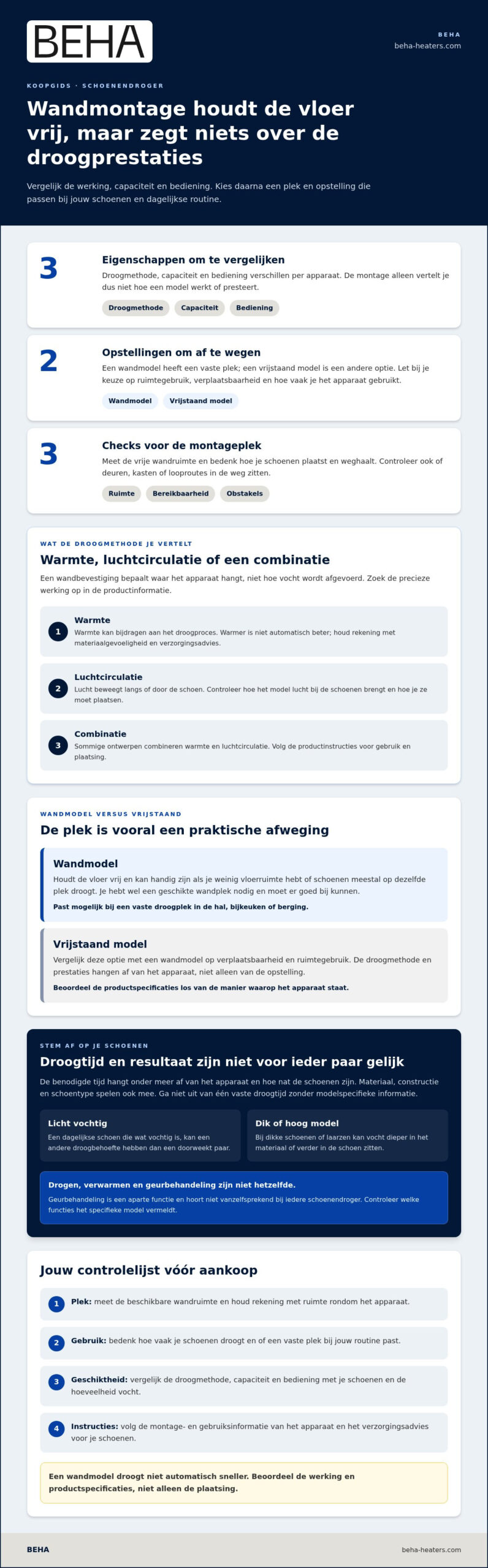
This is how you assess a wall-mounted model before purchase and installation
A model might seem suitable on paper but turn out to be inconvenient at home. Therefore, evaluate not only the dryer, but also your routine, the shoes you want to dry, and the location where the appliance will be placed. With these five steps, you can compare the most important practical requirements before making a choice.
- Determine how you use the dryer. Consider how often you dry shoes and whether you usually want to beha. Your routine helps you determine the desired capacity and prevents you from choosing a device that does not suit your daily use.
- Inventory your shoes. Note which types you usually want to dry, such as low everyday shoes, sturdy shoes, or boots. Also look at the materials and care information. This will allow you to assess whether the drying method and the way shoes are placed are suitable for your footwear.
- Measure the intended location. Measure the available wall space and compare it with the dimensions of the model. Take doors, cabinets, shelves, and walkways into account. Also consider accessibility: you must be able to place and remove shoes without awkward maneuvers.
- Compare the product specifications. Look at the mounting method, capacity, drying method, and operation. Evaluate the capacity based on the number of shoes you usually want to dry at the same time, not just an exceptional situation. Compare models based on the same features so you can see which differences matter for your usage.
- Read the instructions before assembly and use. The product information describes how the device is intended to be mounted and used. Follow the instructions for the chosen location and also take into account the care advice for your shoes. Do not rely on a general mounting method that deviates from the instructions for the model.
Which location and product specifications are you comparing?
A good spot is not only large enough but also practically accessible. Compare the measured space with the dimensions of the model and pay attention to obstacles in the immediate vicinity. Then check how the dryer is mounted, how many shoes fit on it, and which drying method is used. This way, you prevent a suitable size from actually leading to inconvenient daily use.
How do you carefully keep shoes in good condition?
Shoes made of different materials can react differently to heat. Therefore, consult both the product instructions and the care advice for your shoes, especially if you are unsure about a drying method. Use a dryer only as prescribed by the product instructions. This way, you base your routine on the intended use rather than on assumptions about temperature or drying time.
BEHA sells shoe and textile dryers. View 's shoe and textile dryers BEHA for an overview of the range.
Shoe dryers from BEHA: choose a solution that fits your routine
You now have a clear picture of the key considerations: where you want to dry your shoes, how many pairs you usually use at the same time, and which drying method suits your footwear. With these criteria, you can evaluate the product information in a targeted manner. Do not look at a single feature, but at the combination of your usage, the available space, and the instructions for safe use.
What role does your daily usage play?
Start with what actually happens at home. If you often dry your shoes in the same spot, a fixed setup might fit your routine. If space is limited, measure the available wall space and consider whether you can easily reach the device. If your drying needs vary between different shoe types or textiles, compare what a product is intended for according to the product information.
Compare your usage with the product specifications. Check the capacity based on the number of shoes you typically want to dry at the same time. Also, compare the drying method and how the device is used with the types of shoes you have. A wall-mounted shoe dryer is only suitable if both the location and the product features match your situation. Wall mounting alone does not determine which shoes are suitable or how to dry them.
Also take the care information for your shoes into account. Materials can react differently to heat, so do not base your usage solely on general expectations. The product instructions and the care advice for your shoes remain the guiding principles. This way, you take into account both daily use and the footwear you wish to care for when making your choice.
From selection guide to a suitable dryer
BEHA sells shoe dryers and textile dryers. You determine which model suits you based on the product information and your own routine. Check features such as mounting method, capacity, and operation for each product. This way, you avoid assuming features that are not listed in the description.
BEHA has over 100 years of experience. This brand history provides context to the range, but does not replace product specifications. Therefore, please review the information and usage instructions for each product. Once your criteria are clear, you can specifically determine which solution suits your shoes, the available space, and your preferred drying method.
products BEHA to compare shoe and textile dryers based on your usage.
Turn your choice into a practical routine
A good choice starts with one concrete question: where do you want to put wet shoes from now on? Look at the spot you use daily and consider whether a fixed setup is truly practical there. A wall-mounted shoe dryer might be suitable if you have wall space available and dry shoes in a fixed location. If flexibility is more important, take that need into account in your choice.
Before you decide, compare the product information with your own shoes and habits. This prevents an attractive feature from outweighing what you actually need at home. When using the device, always follow the instructions for the chosen device and the care advice for your shoes.
BEHA sells shoe dryers and textile dryers and has over 100 years of experience with electrical products. View the range and choose the solution that suits your needs: discover the shoe dryers from BEHA. With the right choice, you make drying shoes easier and keep your space organized.
Frequently Asked Questions
Is a wall-mounted shoe dryer suitable for every type of shoe?
No, not every drying method is suitable for every material or shoe model. Before use, check the dryer's instructions and the care advice for your shoes. Suede, leather, and shoes with special linings may require different care than sturdy athletic shoes. Also, check if the shape of the shoe matches the way the device supports the shoes. Do not use the dryer in a way that deviates from the product instructions.
Can I hang a wall-mounted shoe dryer myself?
That depends on the model, the mounting instructions, and the wall to which you want to attach it. Read in advance which mounting method is prescribed and whether the necessary materials are included. The construction of the wall can affect the mounting, so do not assume that the same approach is suitable everywhere. Follow the manual precisely and do not improvise with fasteners or a placement not described therein.
How long does it take to dry shoes with a shoe dryer?
There is no fixed drying time that applies to every device and pair of shoes. The required time may vary depending on the drying method, the material, and the amount of moisture in the shoes. Slightly damp shoes after daily use may dry differently than shoes that have become completely wet. Follow the time indication or instructions for the chosen model, if provided, and do not exceed the prescribed usage time.
How many pairs of shoes can a wall-mounted model dry at the same time?
This varies by model. Check the product specifications for the stated capacity and compare it to the number of pairs you usually want to dry at the same time. Also, consider the shape and size of the shoes: wide or high-top models may take up more space than low-top shoes. Do not place more shoes than the instructions allow. A fuller setup may deviate from the intended use.
Is a wall-mounted shoe dryer more energy-efficient than a freestanding model?
Not automatically. Wall mounting describes the placement, not the energy consumption. To determine this, compare the power consumption and the operating time of the devices. For example, if a model lists a power output in watts, you can combine this with the operating time to estimate the consumption: power in watts × hours, divided by 1,000, gives kilowatt-hours. The actual result depends on the device and how you use it.
Can I also use a wall-mounted model for boots?
Only if the model and operating instructions are suitable for boots. Check whether the dimensions, shape, and placement of shoes provide space for the higher upper. A boot may fit the device differently than a low shoe, which can alter the intended airflow or support. Follow the manufacturer's instructions and do not force a placement that is not described in the manual.