
Why electric heating is the smart choice: 9 insights
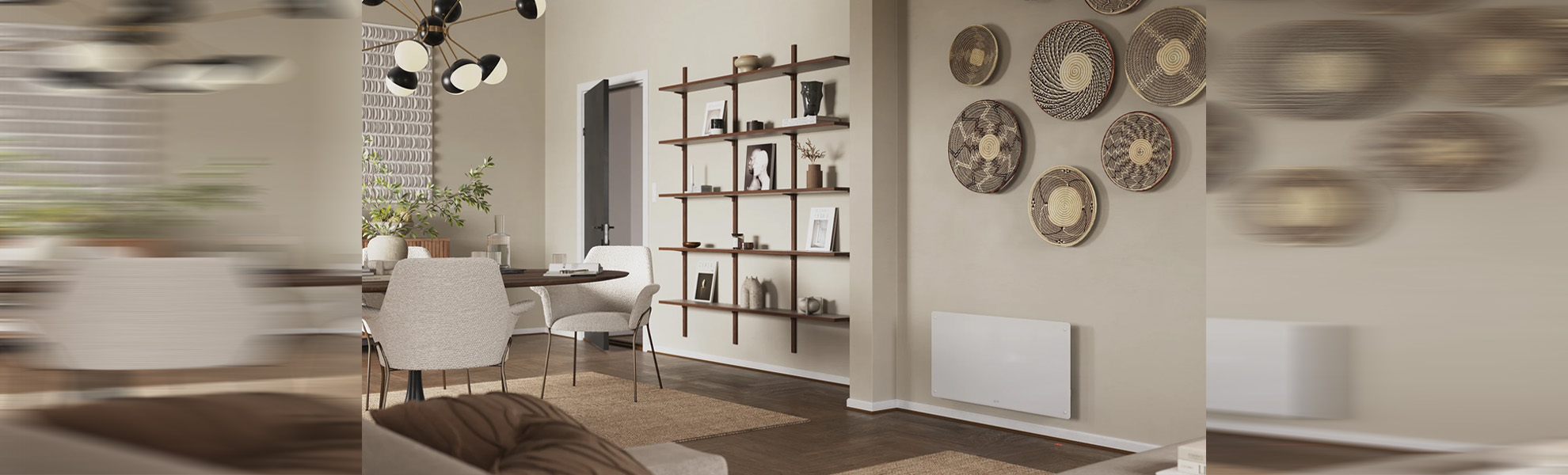
Why electric heating is the smart choicedepends entirely on your home and usage. For a well-insulated room, targeted supplementary heating, or a renovation without water pipes, an electric convector can be simple and precisely controllable. For long-term primary heating of a large, poorly insulated home, a heat pump typically uses much less electricity. A credible answer therefore mentions not only the benefits but also the limitations.
In this comprehensive guide, we compare direct electric heating, infrared, and heat pumps. You will discover nine strong benefits, calculate power and hourly costs, assess sustainability, and choose a suitable solution for homes in Belgium and the Netherlands. This way, you can determine based on facts whether electric heating is truly smart for your room, apartment, holiday home, or business.
Key points
- Direct electric resistance heating generates approximately one kWh of heat from one kWh of electricity at the point of use.
- The biggest practical advantage is room-by-room control: you only heat where and when comfort is needed.
- Purchase and installation can be simple because no central heating boiler, chimney, or water pipes are required.
- A thermostat, timer, or app only saves when it actually lowers the temperature or operating time.
- For many hours of daily use or an entire home, a suitable heat pump is usually more energy-efficient.
Why electric heating is the smart choice — and when it isn't
Electric heating is a collective term. A convector, fan heater, oil-filled radiator, and infrared panel convert electricity into heat via resistance. A heat pump works differently: it transfers heat from the air, soil, or water. As a result, a heat pump can deliver several kWh of heat with one kWh of electricity, whereas direct resistance heating works on an approximately one-to-one basis.
That does not automatically make a direct electric radiator a bad choice. In fact, it can be a strong choice when low installation costs, fast zone control, and limited use are more important than the lowest annual consumption. Think of a home office, bedroom, small extension, well-insulated apartment, or holiday home. The smart choice is the technology that suits usage hours, heat loss, and budget.
Electric heating is often smart when:
- you want to heat one room independently;
- the room is well insulated and not too large;
- you do not want to or cannot install central heating pipes;
- the number of heating hours remains limited;
- you want precise temperature programs per room;
- low acquisition and installation complexity is important.
Compare a heat pump first when:
- the entire home must be heated for extended periods daily;
- the heat demand is high due to poor insulation or large surfaces;
- you want to heat permanently gas-free with low electricity consumption;
- cooling is also desired in the summer;
- there is budget and space for professional installation.
Milieu Centraal explains that an electric resistance heater generates approximately one kWh of heat from one kWh of electricity and that a heat pump utilizes ambient heat. Therefore, use the independent explanation regarding sustainable electric heating when choosing your primary heating system.
Why electric heating is the smart choice: 9 benefits
1. Temperature control per room
Each radiator can have its own thermostat and program. As a result, the bedroom does not need to be at the same temperature as the living room. Zone control can save energy when unused rooms are actually set to a lower temperature. However, if you still heat everywhere to the same temperature, this benefit disappears.
2. Easy installation
A plug-and-play wall-mounted model requires no water connections, boiler, or flue. This makes installation attractive for renovations, extensions, or in a room outside the existing central heating circuit. Fixed wiring, a new circuit, and installation in damp areas remain work for a qualified electrician.
3. Quick response
A fan heater provides almost immediate, palpable heat; a convector brings a room up to temperature gradually. A quick response is useful for rooms that are used briefly. For a continuously heated living room, however, stable control and heat loss matter more than the first few minutes.
4. No local burning
Direct electric heating has no flame and no flue in the room. Therefore, no local combustion gases are produced by the appliance. However, the climate impact depends on the electricity generated, the total consumption, and the lifespan of the product.
5. Limited technical maintenance
A simple convector has no burner, pump, or water circuit that requires annual maintenance. Clean air vents of dust according to the manual and check the cable, plug, mounting, and operation. “Low-maintenance” does not mean that inspection or proper use is unnecessary.
6. Quiet comfort
A convector without a fan produces no constant fan noise and is therefore well-suited for bedrooms and offices. A soft sound may sometimes occur due to material expansion or switching. Fan and heat pump systems have moving parts and are more audible.
7. Flexible and scalable investment
You can start room by room and expand later. This avoids one major installation decision. However, do calculate the total electrical load in advance: multiple heaters can create a significant power demand together and may require adjustment of circuits or connections.
8. Smart control
An electronic thermostat, weekly schedule, open-window detection, and app can limit waste. Wi-Fi does not make the element itself more efficient. Savings are achieved by switching off on time, scheduling absences, and choosing a lower target temperature.
9. Many design and placement options
There are compact, vertical, glass, steel, and specially paintable models. Wall mounting saves floor space. Always maintain the prescribed distance from the floor, furniture, and curtains; a beautiful appliance that cannot dissipate its airflow heats the room less effectively.
Why electric heating is the smart choice by type
| Type | Operation | Best application | Strong point | Limit |
|---|---|---|---|---|
| Convector | Heats room air through natural convection | Bedroom, office, living room | Quiet and smooth | Free air circulation required |
| Fan heater | Actively blows heated air around | Brief, quick reheat | Immediately palpable | Sound and air displacement |
| Infrared panel | Radiates towards people and surfaces | Fixed seating or work zone | Targeted comfort | Position and line of sight are decisive |
| Oil-filled radiator | Element heats liquid buffer | Longer temporary heating | Quiet and residual warmth | Slow reaction and heavy |
| Electric underfloor heating | Resistance cable or mat heats floor | Bathroom or renovation zone | Even radiant heat | Installation and slow adjustment |
| Heat pump | Displaces ambient heat | Main heating and high usage hours | More heat per kWh of electricity | Investment, sound and installation |
Is one resistance heater more energy-efficient than another?
With the same power consumption and duty cycle, direct resistance heaters deliver approximately the same amount of heat locally. Differences in comfort and actual consumption are due to heat distribution, thermostat accuracy, placement, and the size of the heated zone. Therefore, “ceramic,” “oil-filled,” or “infrared” is no guarantee of a lower energy bill.
Calculate costs and consumption fairly
You can only judge why electric heating is the smart choice based on your own usage figures. The formula is: power in kW × actual duty cycle × your price per kWh . Use the current rate of your Belgian or Dutch contract; national averages can quickly become outdated.
| power output | Consumption at 1 hour continuous | Current at 230V | Cost formula |
|---|---|---|---|
| 500W | 0.5 kWh | approximately 2.2A | 0.5 × your kWh price |
| 1000W | 1.0 kWh | approximately 4.3A | 1.0 × your kWh price |
| 1500W | 1.5 kWh | approximately 6.5A | 1.5 times your kWh price |
| 2000W | 2.0 kWh | approximately 8.7A | 2.0 × your kWh price |
The thermostat reduces the operating time
A 1500W appliance available for three hours does not automatically consume 4.5 kWh. If the element is switched on for half the time on average after heating, the example is approximately 2.25 kWh. The actual percentage depends on insulation, outside temperature, ventilation, and settings. Measure over several comparable days with a suitable energy meter.
How much power do you need?
Calculate the volume of the room and assess insulation, glazing, exterior walls, and desired temperature. As a rough guideline, approximately 25–50W per m³ is often used, ranging from very well to moderately insulated. This is not a standard or a substitute for a heat loss calculation.
| Space at 2.5m height | Contents | Indication 25W/m³ | Indication 35W/m³ | Indication 50W/m³ |
|---|---|---|---|---|
| 10m² | 25m³ | 625W | 875W | 1250W |
| 20m² | 50m³ | 1250W | 1750W | 2500W |
| 30m² | 75m³ | 1875W | 2625W | 3750W |
An undersized appliance cannot reach the target temperature and remains switched on for a long time. Unnecessarily high power increases the load on the connection and can result in uncomfortable temperature fluctuations. Have fixed main heating or a large open living space professionally calculated.
Sustainability, green energy and solar panels
Electric heating causes no combustion emissions in the room. The total climate impact depends on power production, materials, lifespan, recycling, and how much electricity you use. Green power can make the usage phase more sustainable, but does not automatically reduce the number of kWh.
Solar panels: useful, but the seasons matter
Solar panels generate electricity annually, while the greatest demand for heat usually falls during the dark winter hours. Self-generated summer power is not the same as direct winter coverage. Feed-in conditions, grid tariffs, and contracts differ between Belgium and the Netherlands. Therefore, calculate based on simultaneous production and consumption, not just annual totals.
Ecodesign and regulation
Local space heaters sold in the European Union are subject to Ecodesign requirements regarding efficiency, control, and product information, among others. Consult the current information from the European Commission on local space heaters. An Ecodesign listing does not prove that a model is correctly sized for your room.
Why electric heating is the smart choice per room
Living room
A convector provides even, quiet heating. For a single fixed seating area, infrared can be more focused. For a large living room that needs to be warm for extended periods daily, compare a heat pump. Also read the guide on electric heating in the living room.
Bedroom
Choose a quiet device without a fan, a dimmable display, and a program for the hours around sleeping and waking up. Keep bedding and curtains out of the prescribed distance. See the points to consider for electric heating in the bedroom.
Home office
Zone control is key here: heat the study while other rooms remain cooler. A convector heats the room; infrared or a foot warmer focuses on a single user. Compare the total energy consumption before and after the adjustment.
Bathroom
Use only a device that is explicitly suitable for the selected bathroom zone. The degree of protection, distance to the bath or shower, and the electrical installation are determining factors. Have fixed installation carried out by a qualified electrician in accordance with the regulations in Belgium or the Netherlands.
Holiday home, garage or outbuilding
A frost mode and remote control can be practical. “Frost-free” does not mean that the appliance always uses little power: as soon as heat is needed, the element can switch on at full power. Insulate pipes and the building if failure could cause major damage.
Safe electric heating
- Read the manual and respect the mounting position and clearances.
- Never cover the device or block air vents or sensors.
- Connect a powerful heater as prescribed, preferably directly to a suitable grounded outlet.
- Do not use a damaged cord, an unsuitable power strip, or a coiled extension cord.
- Include other heavy appliances on the same circuit.
- Stop if there is heat, discoloration, or damage to the plug and socket.
- Choose tip-over and overheating protection and a child lock where necessary.
- Only operate the device at night or unattended when the manufacturer permits such use.
- Ensure that the smoke detectors are working.
Why electric heating is the smart choice: 3 real-life situations
Situation 1: a home office outside the CV scheme
During the day, one resident uses only a 10m² office, while the central thermostat is located in the empty living room. Why electric heating is the smart choice in this scenario: a small convector can run exclusively during working hours, and the rest of the home can remain cooler. At a height of 2.5 meters and average insulation, the rough orientation yields approximately 875W. Measure total gas and electricity consumption over comparable days to determine whether zone control provides a financial benefit.
Situation 2: a well-insulated extension without pipework
A compact extension is used a few evenings a week and is located far from the existing central heating circuit. A plug-and-play wall convector avoids demolition work and can regulate the temperature using its own program. The limited hours of use make a low installation investment potentially more attractive than a completely new heating system. If the extension is used daily later on, compare the annual costs again with a small air-to-air heat pump.
Situation 3: heating an entire home gas-free daily
A family wants to keep all rooms electrically warm from morning till evening. In this case, direct resistance heating is not necessarily the smartest choice: the kWh consumption can become very high. The reasons why electric heating is the smart choicemust be viewed from a broader perspective in this instance. A heat pump is also electric heating and can deliver much more heat per kWh. Have heat loss, electrical connection, noise levels, and the distribution system professionally assessed.
The comparison shows that purchase price and return should not be viewed in isolation from operating hours. A simple unit may make financial sense for a few hundred hours per year, while a more expensive heat pump becomes more attractive after thousands of heating hours. Therefore, always calculate both the investment and the expected annual consumption.
Why electric heating is the smart choice with BEHA
A BEHAconvector is suitable if you are looking for quiet, even wall heating and room-by-room control. For just a few minutes of direct heat, a fan heater might be a better fit; for many hours of use in an entire home, a heat pump is worth comparing. Honestly positioning one's own product helps make a better choice.
What do you compare a BEHAmodel to?
Check wattage, dimensions, thermostat, app functions, installation, cord or fixed connection, surface temperature, and warranty conditions. View the current range of electric heating from BEHA and match the technical data sheet to the room's heating requirements.
10 steps before purchase
- Decide whether you want to heat locally, per room, or the entire home.
- Note the expected number of hours per day and days per year.
- Measure volume, glass, exterior walls, and open connections.
- Assess insulation and reduce unnecessary drafts.
- Choose convection, radiation, fan heat, or a heat pump.
- Calculate the power and load of the electrical group.
- Compare thermostat, program, app, and sound.
- Calculate hourly and annual consumption with your own kWh price.
- Read the installation, safety, and warranty conditions.
- Measure the consumption after commissioning and adjust the schedule or temperature.
Conclusion: smart when application and technology align
Why electric heating is the smart choiceis primarily the combination of simple installation, room-by-room control, quiet comfort, and flexibility. These advantages are significant for well-insulated rooms, supplementary heating, and limited use. They do not automatically make direct electric resistance heating the cheapest primary heating option.
Calculate heat loss and operating costs, compare a heat pump for high heating hours, and be realistic about winter solar power. Do you want to compare a quiet wall convector with smart control? Then check out the models at BEHA Benelux.
Frequently asked questions about why electric heating is the smart choice
Why electric heating is the smart choice for supplementary heating?
You can quickly and independently control a single room without turning up the entire central system. This approach is only efficient when other rooms actually remain cooler and the local unit does not run unnecessarily long. A thermostat and a measurable usage schedule are therefore more important than just the maximum wattage.
Is electric heating really energy-efficient?
Direct resistance heating converts virtually all electricity into heat locally, but delivers approximately one kWh of heat per kWh of electricity. Practical savings are achieved through zone control, shorter operating times, and a lower temperature. A heat pump typically delivers more heat per kWh of electricity.
How much does one hour of electric heating cost?
Multiply the power in kW by the actual duty cycle and your kWh price. A 2000W appliance uses 2 kWh per hour if the element is on continuously. A thermostat can reduce the average duty cycle.
Can electric heating replace my central heating boiler?
Technically, direct electric heating can heat a home if the capacity and installation are sufficient. However, operating costs can become high for a large or poorly insulated home. For complete replacement, be sure to compare heat pumps and have the heat demand calculated.
Are electric radiators maintenance-free?
They are generally low-maintenance, but not exempt from checks. Keep grilles clean according to the manual, inspect the cable and plug, and check the mounting and adjustment. Have any damage repaired by a professional.
Does Wi-Fi control save energy?
Only when you heat for a shorter period or at a lower temperature. Wi-Fi does not change the conversion of electricity into heat. A well-configured weekly schedule and an accurate thermostat are the practical benefits.
Can I use an electric heater at night?
Only if the manufacturer declares the specific device suitable for this purpose. Maintain clear distances, do not cover anything, use a suitable electrical connection, and provide smoke detectors. Safety devices do not replace correct use.
Is electric heating with solar panels free?
No. Panels have purchase costs and often produce less than the heat demand during dark winter hours. The contract, feed-in, grid tariffs, and simultaneous self-consumption determine the financial result.