
Ecodesign electric heater: everything about the standards in 2026
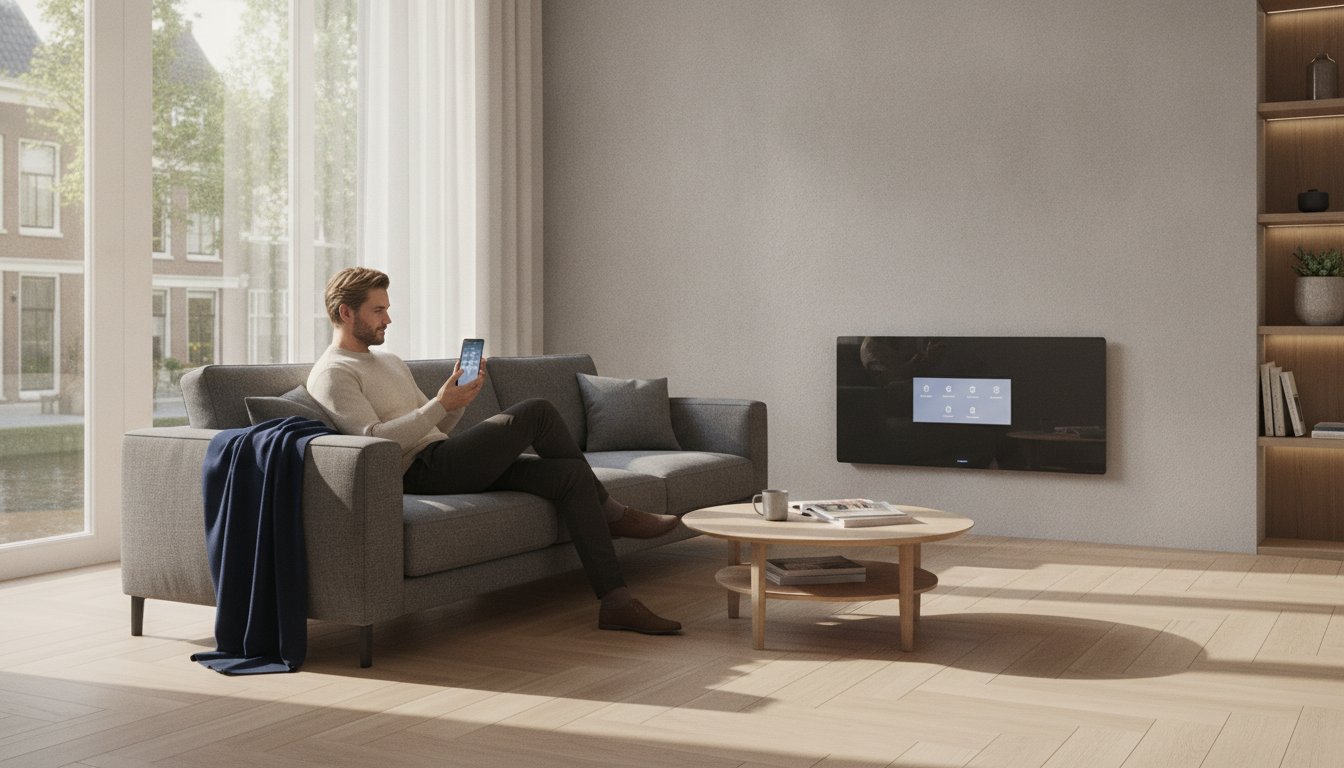
Did you know that from 2026, an electric heater will no longer be a 'power guzzler', but one of the most regulated and efficient appliances in your home? Many people are rightly concerned about rising energy costs and get lost in the jungle of labels and European regulations. It is understandable that you doubt whether an eco-design electric heater is the right investment for your wallet and the environment, especially given the confusion with the strict regulations that have long applied to wood stoves.
In this article, you will discover how this new generation of heating drastically reduces your energy consumption and meets the strictest environmental standards of the European Union. We provide insight into the complex legislation surrounding Regulation 2024/1103 and explain what the transition on July 1, 2025, means for you. You will learn exactly what to look for when purchasing an energy-efficient heater, so that you can choose with peace of mind a future-proof and smart way of heating that is both comfortable and responsible.
Key Points
- Understand the impact of the European Lot 20 Regulation and how it sets the standard for modern, energy-efficient heating.
- Discover the technical requirements for an ecodesign electric heater, such as the mandatory electronic temperature control for maximum efficiency.
- Learn how to avoid unnecessary electricity costs through smart algorithms that prevent 'overheating' and accurately optimize your consumption.
- Get practical advice on calculating the correct wattage and the aesthetic choice between a steel or glass front for your interior.
- See how BEHA 's Norwegian expertise surpasses standard norms with innovative technologies that contribute to a sustainable lifestyle.
What is an ecodesign electric heater and why is it important?
climate goals beha. The basis for this lies in the Ecodesign Directive (2009/125/EC), a legal framework that forces manufacturers to design products that consume less energy and are less harmful to the environment. For consumers looking for an ecodesign electric heater, 'Lot 20' is of particular importance. This is the specific regulation that lays down the technical requirements for local space heating. The goal is clear: to remove appliances that waste unnecessary amounts of electricity from the market and make way for intelligent, sustainable solutions.
The Dutch government enforces these strict requirements to accelerate the national energy transition. A certified ecodesign model distinguishes itself from a standard electric heater by the mandatory presence of smart features. Examples include accurate weekly timers, open-window detection, and adaptive start control that predicts when the heating needs to switch on. Without these technological additions, a heater simply may no longer be sold as a primary heating source, because the waste is simply too great for modern standards.
The objectives of the European Union for 2026
The ambitions for 2026 are substantial; the European Union aims to reduce household energy consumption by at least 20 percent. In the Netherlands, the ecodesign electric heater plays a crucial role in the transition to gas-free living. In this context, electric heating serves as a reliable partner for homes equipped with heat pumps or solar panels. As a Norwegian pioneer BEHA has been at the forefront of this development for decades. Our technology has been developed not merely to comply with regulations, but to offer optimal comfort in the harshest Scandinavian conditions. Here, energy efficiency is not a requirement, but a natural result of superior technical design.
The difference between yield and energy efficiency
It is a persistent misconception that all electric heaters perform the same because almost all of them have an efficiency of 100 percent. However, this efficiency only indicates that the electricity from the socket is almost entirely converted into heat. Seasonal energy efficiency looks much further; it assesses how effectively that heat is used to maintain a room's temperature without energy loss. A heater that continues to heat while a window is open or that allows the room to become unnecessarily warm is inefficient. Smart control reduces actual consumption by operating the heater only when strictly necessary.
Efficiency tells you how much heat the heater produces, but seasonal efficiency tells you how many euros you actually save on your energy bill.
The technical requirements of the Ecodesign Directive for electric heating
The technical requirements of the Ecodesign Directive go far beyond simple quality control. To be classified as a certified Ecodesign electric heater, the appliance must meet a minimum seasonal energy efficiency index. This index calculates how effectively the heater heats a room over an entire heating season. Manufacturers achieve these standards by integrating advanced features that were previously optional but are now mandatory for every modern convector. This ensures that you are not just buying an appliance that emits heat, but a system that intelligently manages every kilowatt-hour consumed.
One of the most important requirements is the presence of electronic room temperature control. Unlike older models, an ecodesign convector must feature a weekly timer. This allows you to set precise schedules so that the heater never runs unnecessarily when you are not at home. Additionally, 'open window detection' is a crucial addition. As soon as the heater detects a sudden temperature drop of a few degrees, for example due to an open door or window, the system automatically switches itself off to prevent energy waste.
Smart remote operation and control
Although a Wi-Fi connection is not explicitly mentioned in every legal text, in practice it is the most effective way to meet ecodesign requirements. With an app-controlled electric heater, you manage multiple rooms simultaneously from your smartphone. This significantly increases efficiency; you can immediately see where heating is unnecessary. Another indispensable feature is adaptive start control. This technology learns how long your specific room needs to warm up. Do you want it to be exactly 20 degrees at seven o'clock in the morning? The heater calculates the ideal start time itself, so that no energy is lost by preheating too early.
Would you like to experience for yourself how this technology works in practice? Then take a look at the smart solutions from BEHA that effortlessly exceed these standards.
Safety and sustainability in the design
In addition to efficiency, the directive also sets requirements for physical safety and the impact on the indoor climate. The housing must be designed so that the maximum surface temperature remains within safe limits, which is essential in households with children or pets. Furthermore, modern eco-design stoves use heating elements with a large surface area. This prevents dust from burning on the element, which improves air quality and eliminates the familiar 'burning smell' of old stoves.
An electronic thermostat responds immediately to temperature fluctuations of just 0.1 degrees, whereas an outdated mechanical thermostat often only intervenes when there is a difference of several degrees, which inevitably leads to a higher energy bill.
Why an eco-design stove is the smart choice for your wallet
Investing in an ecodesign electric heater seems at first glance more expensive than purchasing a simple model without this certification. However, experience shows that a cheap heater is often a costly mistake. These simple devices lack the intelligence to effectively regulate your power consumption. They usually operate with a crude mechanical thermostat that causes large temperature fluctuations. This leads to 'overheating', where a room becomes unnecessarily warm before the device switches off. An ecodesign model uses smart algorithms to prevent this; the thermostat anticipates the heat demand and keeps the temperature stable with minimal energy pulses.
The Norwegian quality of BEHA is a decisive factor here. In Scandinavia, electric heating has been the standard for decades, resulting in products built for an extremely long lifespan. While a budget model breaks down or loses efficiency after a few seasons, a high-quality convector continues to perform consistently for decades. This makes it a sustainable investment that not only lowers your monthly costs but also reduces your household's ecological footprint through less waste and lower consumption.
Save on heating costs with electric supplementary heating
Many households in the Netherlands are looking for ways to turn off central heating more often. By turning down the main heating and heating only the room you are actually in with an eco-design electric heater, you will see immediate results on your energy bill. This synergy is even more powerful if you have solar panels; you then use your own generated electricity for targeted heating instead of expensive gas. Want to dive deeper into the numbers? Read more about saving on electric heating costs in our knowledge base.
Maintenance-free and future-proof
A major financial advantage of electric heating is that the systems are completely maintenance-free. You will not be burdened by annual inspection costs, expensive burner repairs, or filter replacements. Although there will be no direct national subsidies in the Netherlands in 2026 for the purchase of an ecodesign electric heater, the system does contribute to the transition to a gas-free home. This is a smart move for the market value of your house. The market is irrevocably moving towards full electrification, and with this technology, you are ready for the strictest environmental standards of the future.
Although you save on maintenance with an electric heater, it is essential to periodically call in an expert for your vehicles. For a thorough service or MOT of your car, camper, or caravan, you can count on the services of Thurton Auto Centre.
How to choose the right eco-design stove for your home
Selecting the right eco-design electric heater begins with a thorough analysis of your living space. While the design often attracts the first attention, the technology under the hood determines the ultimate comfort and the structural savings on your energy costs. A crucial first step is determining the required power output. In an average insulated home, we often calculate with a wattage between 60 and 100 watts per square meter. If you choose a power output that is too low, the heater will have to run at full load constantly to heat the room, which negatively affects efficiency.
The placement of the convector is at least as important for optimal air circulation. Because a convector operates based on natural airflow, the heater needs space to draw in cold air from the bottom and distribute warm air from the top. Preferably, place the heater under a window to immediately neutralize the cold draft from the glass. Ensure that curtains or furniture do not block the airflow so that the system can utilize its full potential.
Design and personalization in heating
Modern heating no longer needs to be a disruptive element in your interior. For those striving for a minimalist look where the technology is almost invisible, a paintable radiator the ideal solution. These radiators can be finished in exactly the same color as your wall, allowing them to blend seamlessly into the room.
Are you looking for a statement piece for the living room? Then smart convectors with a glass front provide a luxurious, modern look that perfectly complements a sleek interior. However, for busy households or commercial spaces, an electric heater with a steel front the most durable choice. The steel can withstand impact and retains its high-quality finish for years without compromising on quality.
Installation and ease of use
A major advantage of these systems is the simplicity of installation. Unlike traditional central heating systems, no drilling or breaking is required; a sturdy wall mount and a power outlet suffice. Once the heater is mounted, you simply connect it to the BEHAapp. This gives you immediate control over the energy consumption of each individual room.
Setting an efficient weekly schedule is the key to a low energy bill. Program the heater to lower the temperature during the hours you are sleeping or away from home. Thanks to adaptive start control, you do not have to calculate yourself when the heater needs to turn on; the system learns how long the room needs to warm up and ensures that it is at exactly the right temperature at the desired time.
Are you ready to make your home more sustainable with the latest technology? View our full range of eco-design stoves and find the model that suits your lifestyle.
BEHA 's innovative approach to sustainable heating
BEHA believes that an ecodesign electric heater must be more than a device that simply meets legal requirements. For us, it is the culmination of more than a century of Norwegian innovation and craftsmanship. Where the European Union sets a minimum efficiency standard with new regulations, BEHA views this as a starting point to raise the bar even higher. Our approach combines decades of experience with proprietary technological patents that ensure heat output not only meets the 2026 standards but, in many cases, far exceeds them. This results in heating solutions that are as reliable as they are progressive.
Professionals in the Netherlands are increasingly choosing BEHA for large-scale renovations and new construction projects. This choice is based on the proven reliability and simplicity of the system. An installer knows that a BEHAconvector stands for quality without fuss; a product designed to last for decades without compromising efficiency. Our focus is always on the trinity of safety, user-friendliness, and technological superiority. This makes our heaters a partner in a smart and responsible lifestyle, where comfort never comes at the expense of the environment.
Quality from Norway
The history of BEHA Fabrikker AS dates back to 1917. Over the past 100 years, we have perfected our products in the most extreme Scandinavian climates. This history forms the basis for the worldwide reputation of Norwegian stoves for reliability. A crucial part of our design is the use of high-quality materials, such as extruded aluminium for the heating elements. This material provides a significantly larger surface area for heat transfer. As a result, the stove can operate at a lower temperature, which not only extends its lifespan but also protects the air quality in your home from dust combustion.
Ready for the future with BEHA
We are fully aware of our role in global climate goals. Our commitment is reflected in climate-friendly production processes and the continuous development of digital connectivity. The integration of our smart convectors into modern smart home ecosystems enables users to manage their energy consumption down to the degree. This is not a distant prospect, but the current BEHAstandard. Would you like to know which solution best suits your specific living situation? Then contact a local dealer for personal advice on an eco-design electric heater and experience the tranquility and quality of Norwegian heating for yourself.
Choose the heating standard of tomorrow today
Switching to an ecodesign electric heater is more than just a response to new regulations; it is a conscious choice for a smarter and more energy-efficient home. We have seen how features such as open-window detection and adaptive start control are not only mandatory but also contribute directly to a lower energy bill. By choosing a system that complies with Lot 20 standards, you are optimally prepared for the gas-free future of 2026 and beyond.
With over 100 years of Norwegian experience BEHA offers you the assurance of a product built for the long term. Our stoves fully comply with eco-design standards and offer maximum ease of use thanks to simple operation via the BEHAapp. This combines technological superiority with a timeless design that fits seamlessly into any interior, whether you choose a steel or glass finish.
View our range of eco-design electric heaters and discover how you can elevate your living comfort with Norwegian precision. Heat your home with peace of mind, knowing that you are choosing the highest European quality standards and a sustainable lifestyle.
Frequently asked questions about ecodesign electric heaters
What exactly is the ecodesign standard for electric heaters?
The Ecodesign standard is a set of European requirements, known as Lot 20, that forces manufacturers to make heating appliances more energy-efficient and environmentally friendly. For an Ecodesign electric heater, this means that the device must feature intelligent functions that prevent unnecessary power consumption. These regulations ensure that only the most efficient technologies enter the market, which directly contributes to the European climate targets for 2026.
Is an eco-design electric heater really more economical than an old heater?
Yes, a modern eco-design model is significantly more economical due to the integration of smart sensors and algorithms that minimize heat loss. While old stoves often continue burning without regard for the environment, a new stove responds immediately to an open window or a reached target temperature. This precision prevents you from paying for heat you do not use, which makes a big difference in daily consumption.
What does Lot 20 mean for my current electric heating?
Lot 20 has no impact on the heaters you already have in your home; you are not required to replace them. The regulation applies only to new products placed on the market from the effective date. However, it does provide you with the assurance that, when making a new purchase, you are choosing an appliance that meets the latest standards in terms of efficiency and sustainability.
Are all BEHA stoves ecodesign compliant?
All BEHAsmart convectors, both the models with steel fronts and those with glass fronts, fully comply with the applicable ecodesign requirements. We even go a step further by implementing technologies that exceed the statutory minimum requirements. This ensures you have a heating solution that is not only legal but also ranks among the best on the market in terms of technological superiority.
How do I recognize a real eco-design electric heater?
You can recognize a genuine eco-design electric heater by the presence of an electronic thermostat, a programmable weekly timer, and additional energy-saving features. Always check the technical specifications or the manual for mention of Lot 20 or specific EU regulations. Reliable manufacturers like BEHA always clearly state this conformity in their product information, so you know exactly what you are purchasing.
Will I save money on my energy bill with an eco-design stove?
Thanks to precise control, you indeed save on your monthly energy costs compared to older models. Because the heater knows exactly when to stop heating, you avoid the peak consumption characteristic of mechanical thermostats. In combination with a well-configured weekly schedule via the BEHAapp, you can tailor consumption specifically to your daily routine and avoid unnecessary costs.
Which features are mandatory for an ecodesign stove?
For electric convectors, electronic room temperature control and a weekly timer are the most important mandatory components according to the directive. In addition, the device must feature at least one extra option, such as open-window detection, a remote control, or adaptive start control. These functions work closely together to raise seasonal energy efficiency to the legally required level for optimal performance.
Can I install an ecodesign stove myself?
The installation of our convectors is very simple and requires no professional installer or extensive demolition work in your home. You mount the included wall bracket with a few screws and simply plug the power cord into the socket. Connecting to your Wi-Fi network via the app is self-explanatory, allowing you to enjoy smart and sustainable heating that is ready for the future within minutes.