
Fan heating: everything you need to know about fast supplementary heating
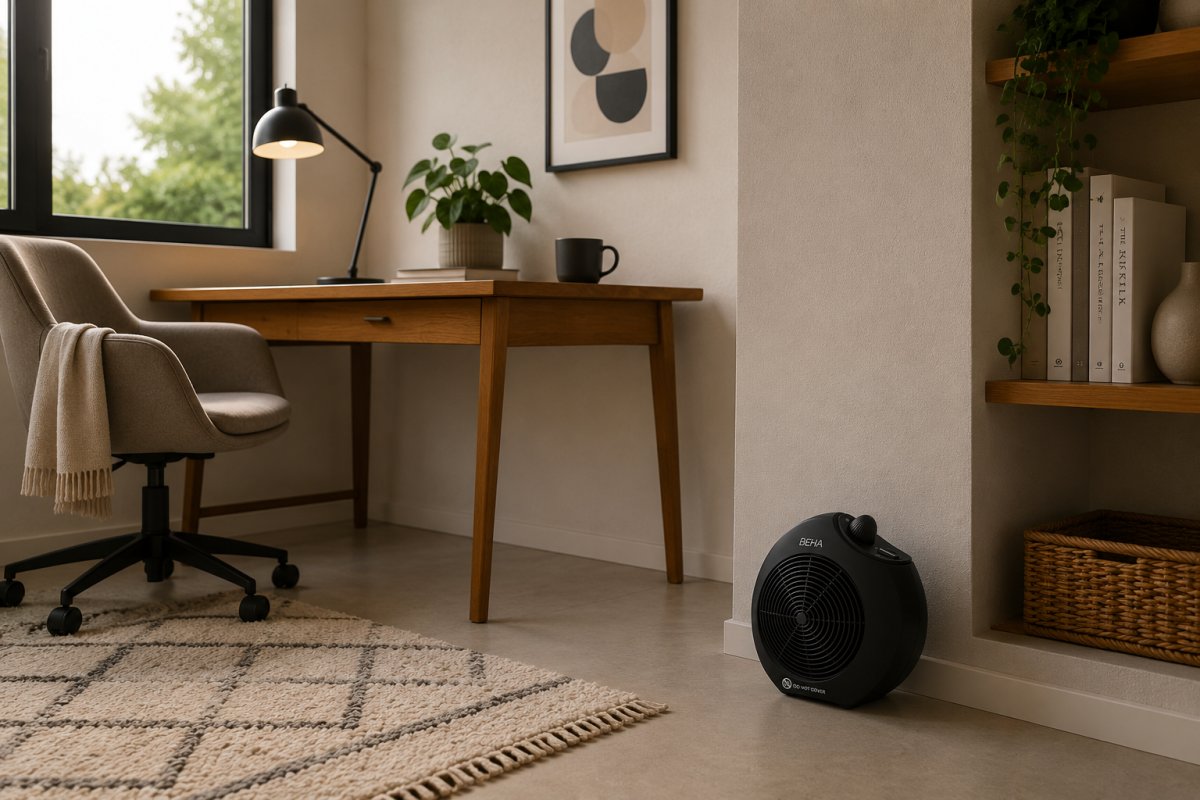
What if you could transform that chilly office into a comfortable space within sixty seconds without having the central heating blasting all day? You are certainly not the only one looking for a smart way to specifically dispel the cold. With rising electricity rates, which rose to €0.2691 per kWh in July 2026 at major suppliers like Essent, it makes sense to scrutinize any form of electric heating. In that regard, a fan heater is the sprinter among heaters, indispensable for a quick boost at moments when you need warmth immediately.
You probably recognize the doubts regarding power consumption, noise levels, or safety during intensive use. We understand those concerns and share our expertise to help you find the right balance between speed and lasting comfort. In this article, you will discover exactly how a fan heater works and how it differs from the stable heat of a convector heater. We provide insight into how to make a safe choice for your home, so that from now on you know exactly which solution best suits your specific needs and living situation.
Key Points
- You will learn how a fan heater creates a comfortable temperature in small or uninsulated spaces at lightning speed through active air circulation.
- Discover the crucial difference between the instant burst of heat from a fan and the silent, constant heating of a convector.
- Learn what to look out for when installing a heater in damp rooms and which safety features are crucial for your peace of mind.
- Gain insight into determining the ideal power for your room, so you can provide targeted supplementary heating without wasting energy.
What is fan heating and how does it work?
When the temperature outside drops significantly, you don't want to wait inside for the entire home to slowly warm up. A fan heater is essentially an electric auxiliary heater that uses active air circulation to provide a room with targeted heat. Unlike passive systems, which rely on natural convection, this device forces air past a heating element. This element often consists of a metal heating coil or a modern ceramic block. The built-in fan then blows the heated air directly into the room. Speed is its greatest asset here. Within a few minutes, you will feel the temperature around you rise, making fan heating ideal for short-term use.
The difference between radiator fans and fan heaters
There is sometimes confusion regarding terminology in the Dutch market. A radiator fan is a small device that you clip onto your existing central heating system. The goal is simple: to help the heat from your radiator into the room faster. A fan heater, on the other hand, operates completely autonomously on electricity. You do not need gas or central heating to generate heat. For households that want to quickly heat an ice-cold attic room, bathroom, or garage without letting the boiler run for hours, the standalone fan heater is the most logical choice. It is an independent heat source that you simply plug into the socket.
The technology behind the warm airflow
The effectiveness of the heater depends on the type of fan and the heating element used. Most compact models use an axial fan, similar to a propeller. This moves a lot of air but builds up little pressure. More powerful models sometimes use radial fans that blow the air away more forcefully.
The material of the element also plays a major role. Traditional metal elements become very hot and can cause dry air. Ceramic elements (PTC) are self-regulating and safer. They maintain a lower surface temperature while still achieving a high heat output. A constant, unobstructed airflow is essential for the lifespan of the fan heater. If the flow is interrupted, the internal heat cannot escape, which is harmful to the components. Therefore, modern heaters are always equipped with sensors that monitor the airflow.
BEHA understands that technological superiority is the foundation of comfort. Although our focus is on sustainable convectors, we apply the same strict safety standards to all our heating solutions. A good fan heater is more than a simple fan with a filament; it is a well-thought-out piece of engineering that combines safety and speed.
Fan heater versus convector: which one do you choose and when?
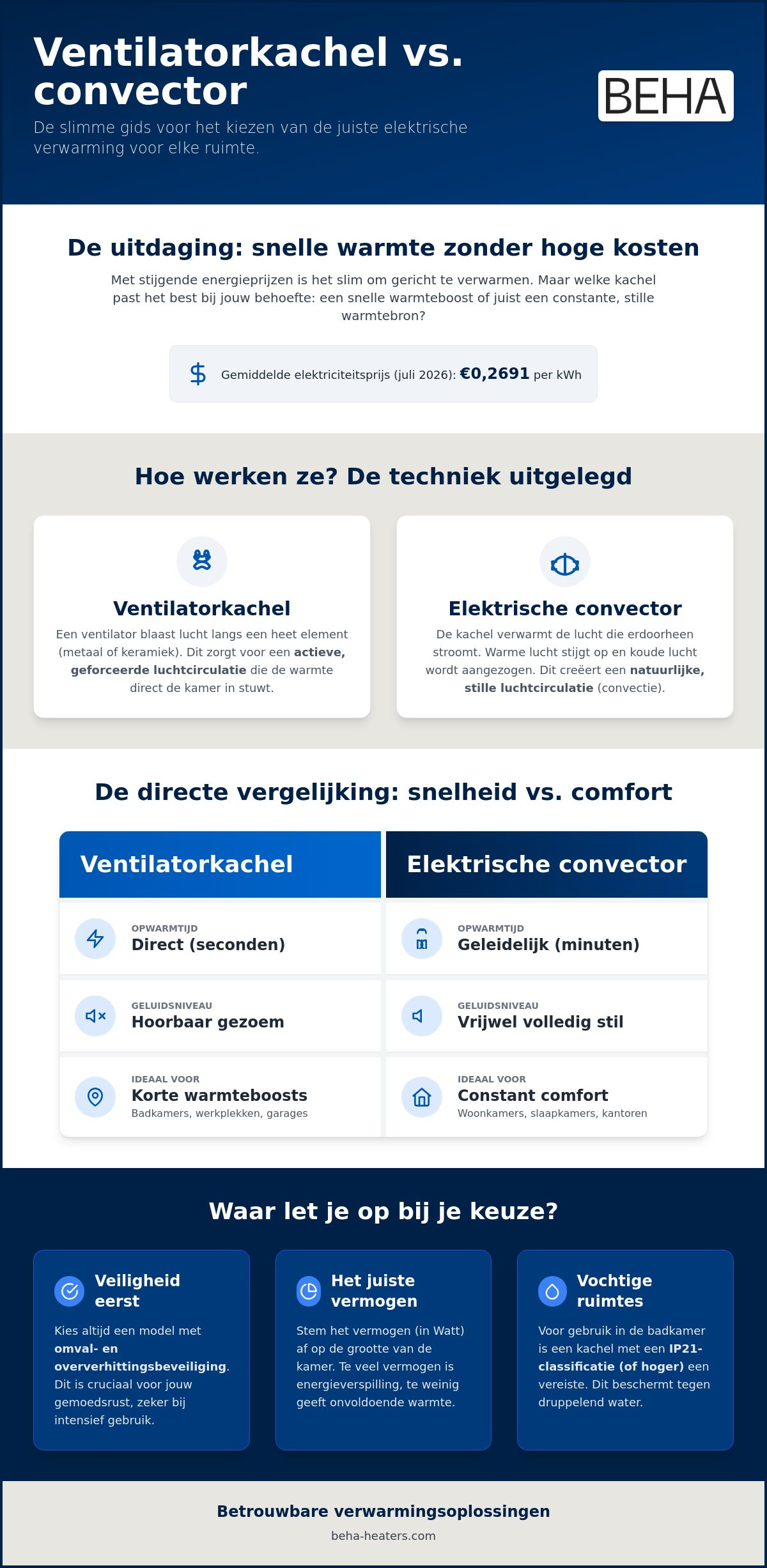
The choice between a fan heater and a convector seems simple at first glance, but the impact on your living comfort and energy bill is significant. While one solution excels in brute speed, the other offers serene tranquility. A fan heater is designed to deliver immediate results by forcing warm air into the room. A convector, on the other hand, works based on natural air rising, ensuring even and silent heating. For efficient and safe use of electric heaters, it is essential to match the type of device to the duration of use of the room.
The table below clarifies the key differences for an informed choice:
| Feature | Fan heater | Electric convector |
|---|---|---|
| Warm-up time | Instantly (within seconds) | Gradually (minutes) |
| Sound | Audible hum from the fan | Almost completely silent |
| Airflow | Forced and targeted | Natural and widespread |
| Ideal for | Short boosts, bathrooms | Living rooms, bedrooms |
Speed versus comfort
Imagine walking into the bathroom early in the morning. You don't want to wait for a heater to slowly warm up; you want warmth now. Here, fan heating is unbeatable. However, for rooms where you spend longer periods, such as a home office or the living room, this type falls short. The constant hum and directed airflow can become disruptive over time. In those cases, an electric convector with Wi-Fi much more comfort. You set a stable base temperature that the convector maintains without causing any noise disturbance. The smartest approach? Use a fan for the initial quick burst of heat and then let the convector take over for a stable climate.
Dust and allergies with active heating
For people with allergies to dust mites or pollen, the operation of the heater is a critical point. Because a fan heater moves air with force, dust particles lying on the floor or furniture are constantly blown throughout the room. In a bedroom, this can lead to irritation of the airways. A convector heater moves the air much more gently, resulting in less dust circulation. Do you still want to use a fan? Then clean the grille and filter weekly with a vacuum cleaner. This prevents the device from becoming a source of allergens and extends the lifespan of the motor.
Are you looking for a solution that combines speed with a modern design? Then take a look at our smart convectors with a steel front for a sustainable and quiet way to heat.
The best places for a heater with a fan in the house
Not every room in the house requires the same heating approach. While a convector is ideal for maintaining a constant base temperature in the living room, fan heating excels in areas where you only stay briefly or where insulation leaves something to be desired. Think of the garage, the attic, or that one guest room that usually stays cold. It is a flexible solution that you deploy exactly where the cold is currently dominant. By distributing the heat directly, you create a comfortable zone in no time without having to heat the entire house.
In the garage or workshop, the power of the fan really comes into its own. Because these spaces are often large and poorly insulated, a passive heater struggles to noticeably raise the temperature here. The forced airflow of a fan heater mixes the air faster, allowing you to work comfortably even in a drafty environment. In the attic or a guest room, the device primarily serves as a quick solution for occasional use, for example when unexpected guests stay over or when you are working in the attic for an hour.
However, it is preferable not to use this type of heater as the primary heating source in the living room. The constant air movement and audible hum detract from living comfort in the long run. Furthermore, the energy efficiency during prolonged use in large rooms is lower than that of a modern convector.
Safe heating in damp rooms
In the bathroom, speed is essential during your morning ritual, but safety is absolutely paramount here. When purchasing for this room, always pay attention to the IP rating of the device. An IP24 certification means that the heater is drip-proof and can be safely used in damp environments, provided you maintain the correct distance from water sources such as taps and showers. For a permanent and stylish solution in the bathroom, an electric heater with a steel front often a safer alternative. These are specifically designed for fixed wall mounting and comply with strict Norwegian safety standards. Additionally, always consult the official safety guidelines for electric heaters to prevent fire hazards and accidents caused by improper use.
Temporary heating for the home office
Do you work from home a lot? Then it is a waste of energy to turn up the central heating for the entire floor. A compact fan heater under your desk keeps your feet and legs warm specifically during the coldest moments of the day. It is of great importance that the device features an accurate thermostat. This prevents the heater from running unnecessarily once the immediate surroundings are at the right temperature. By heating only the specific spot where you are at that moment, you save significantly on your monthly energy costs without compromising your concentration due to the cold.
What should you look out for when buying a fan heater?
When purchasing a fan heater, it is tempting to look solely at the price tag. However, the technology under the hood determines whether your purchase is a smart investment or a source of frustration. Safety and control are paramount here. A solid fan heater must at a minimum feature of tip-over protection and overheat protection. These functions ensure that the device switches off immediately if it is knocked over or if the internal temperature rises too high due to a blocked airflow. Additionally, the noise level is a factor that is often underestimated; for a home office, you should ideally look for models with a low decibel rating or a specific “silent mode”.
While these built-in features are essential for home security, business environments often require a more comprehensive risk management plan. For professional support with security issues in a business context, visit Vita Secure.
The adjustability of the device is also crucial for ease of use. Choose a model with multiple power settings and an adjustable thermostat. This allows you to adjust the heat output to the cold of the day, preventing unnecessary energy consumption. A heater that only has an on/off button will often overheat the room unnecessarily.
Calculate power for your space
How much power do you really need? In Dutch practice, we use a rule of thumb of approximately 100 Watts per square meter for rooms with average insulation. For a 5 m² bathroom, a compact model suffices, while a 20 m² garage requires a powerful 2000-Watt unit. It is a waste of money to install an oversized heater in a small space; this leads to rapid temperature fluctuations and an unstable climate. Incidentally, it is good to know that a smart thermostat convector measures and regulates the ambient temperature much more accurately than the simple mechanical thermostats found in most cheap fan heaters.
Certifications and the Ecodesign Directive
Quality is recognized by its certifications. The European Ecodesign Directive sets strict requirements for the efficiency and functions of electric heating. Appliances that meet these standards are designed to prevent energy waste. Cheap imported heaters often ignore these guidelines, resulting not only in higher energy bills but sometimes also in poor build quality. A reliable heater has a solid casing that does not become dangerously hot on the outside. This “cool touch” principle is an essential quality feature that ensures safety in a busy household.
Are you looking for a powerful solution that meets the strictest safety standards? Browse our collection of fan heaters and choose Norwegian quality for your home.
Discover the reliable heating solutions from BEHA
BEHA has been a household name in Norway since 1917, a country where extreme cold is the norm and reliable heating is a basic necessity. We translate that decades of experience directly to the Dutch market. We understand that fan heating plays a specific role in your home for those moments when speed counts, but we also look at the bigger picture of your living comfort. Our focus is on creating a healthy indoor climate with equipment that is not only functional but also contributes to a sustainable future. Climate-friendly production and the use of high-quality materials are not marketing terms to us, but the core values of our family business.
Quality that lasts for generations
When you choose BEHA, you invest in technology designed to function trouble-free for years. Our heating solutions are manufactured from materials that do not discolour due to heat or wear out from intensive use. This durability ensures that you do not have to purchase a new device every few years, which is good for both your wallet and the amount of waste. We are proud of our history, and that pride is reflected in the finish of every product. Furthermore, we offer the assurance of an extensive network of local dealers. This means you always have an expert nearby who can advise you on the best configuration for your specific living situation and support you with our comprehensive warranty conditions.
Prepare your home for the future
The switch to a gas-free household requires a well-thought-out plan in which different types of heating complement each other. While a fan heater is perfect for a quick warmth boost in the garage or bathroom, a stable foundation with convectors is the key to true comfort and a low energy bill. Our paintable radiator is the perfect aesthetic partner in this regard. You integrate it seamlessly into your interior by painting it the same color as your wall, without compromising on efficient heat output.
For complete winter convenience, you can also take a look at our electric shoe dryer. With this, you combine the power of active air circulation with care for your precious footwear, so you leave the house dry and warm every morning. At BEHA , you choose a total solution that exudes tranquility, quality, and Norwegian progressiveness. We invite you to discover our innovative systems and transform your home into a smart, warm, and responsible place.
Choose the ideal balance in your home
You now know that a fan heater is the perfect solution when you need an immediate flow of warm air in specific rooms such as the bathroom, home office, or garage. While speed is the biggest advantage of this type of heater, a smart combination with silent convectors provides the healthiest and most stable climate. By paying attention to essential safety features and the right power output for your square footage, you avoid unnecessary energy costs and create a safe environment for your entire family.
At BEHA we build on over 100 years of Norwegian expertise to provide you with solutions that meet the strictest European Ecodesign requirements. Whether you choose a quick heat boost or the constant, silent warmth of our convector heaters with a 5-year warranty, you are always choosing technological superiority and durability. Our products are designed to last for generations, even under the most challenging conditions.
View the full range of electric heating from BEHA and discover how to keep your home comfortable in a smart and responsible way. We wish you success in making the right choice for a warm and inviting interior.
Frequently asked questions about fan heating
Is a fan heater economical to use?
A fan heater is particularly economical when used briefly for a targeted, quick heat boost. However, with prolonged use, costs rise rapidly due to the relatively high wattage required to constantly heat the air. With the variable electricity price of €0.2691 per kWh in July 2026, it is financially wiser to use a convector for continuous heating. Therefore, use the fan only to ward off the initial chill.
Can I leave a fan heater on all night?
It is not advisable to leave a fan heater running unattended in a bedroom all night. Although modern models feature tip-over protection, it remains a device with mechanical parts and a glowing element. For nighttime heating, a silent convector is a much safer and more comfortable choice. This way, you avoid fire hazards and are not woken up by the sound of the running motor.
What is the difference between a ceramic heater and a regular fan heater?
The main difference lies in the type of heating element that heats the air. A standard fan heater uses metal filaments that become extremely hot, while a ceramic heater uses ceramic plates. Ceramic is safer because it has a lower surface temperature and distributes heat more evenly. This makes a ceramic fan heater more sustainable and better for the air quality in the home, as significantly fewer dust particles are burned.
How much noise does an average fan heater make?
Most fan heaters produce between 40 and 60 decibels of noise during operation. This is comparable to the hum of a modern refrigerator or a quiet conversation in the background. In a quiet office, this constant noise can eventually be perceived as disruptive. Are you looking for a solution for a room where concentration is essential? Then a completely silent convector heater is a better alternative to active airflow.
Is a fan heater safe for children and pets?
A fan heater is only safe if it is placed out of direct reach and is equipped with modern safety features. The grilles can become very hot, and the moving fan poses a risk to curious fingers or noses. Preferably choose a model with a “cool touch” housing that remains lukewarm on the outside. For maximum safety in family homes, we often recommend the stable wall mounting of our smart convectors.
Can I use a fan heater to cool a room in the summer?
Many models have a specific setting where only the fan runs without the heating element being activated. This creates a light breeze that helps evaporate moisture from the skin, providing a cooling effect. However, keep in mind that a fan heater does not actually lower the air temperature like air conditioning. It merely moves the air around, which can be a welcome and flexible addition during hot summer days.
How do I maintain my electric heater with a fan?
Maintenance is mainly limited to periodically keeping the intake and exhaust grilles dust-free. Use a vacuum cleaner with a soft brush head monthly to remove accumulated dust while the plug is disconnected. This prevents dust particles from burning and spreading an unpleasant odor in your room. A clean appliance operates more efficiently and has a longer lifespan because the motor does not have to work under unnecessary strain due to internal obstructions.
Why does my fan heater smell like burning when I turn it on for the first time?
This specific odor is caused by a thin protective layer or minute residues from the manufacturing process that are heated for the first time. This is a normal phenomenon with new appliances and usually disappears on its own after thirty minutes of intensive use. To be on the safe side, open a window for extra ventilation during the first use. If the odor persists after a few hours, switch off the appliance immediately and check for any blockages.