
Electric convector consumption: myths and facts about energy-efficient heating in 2026
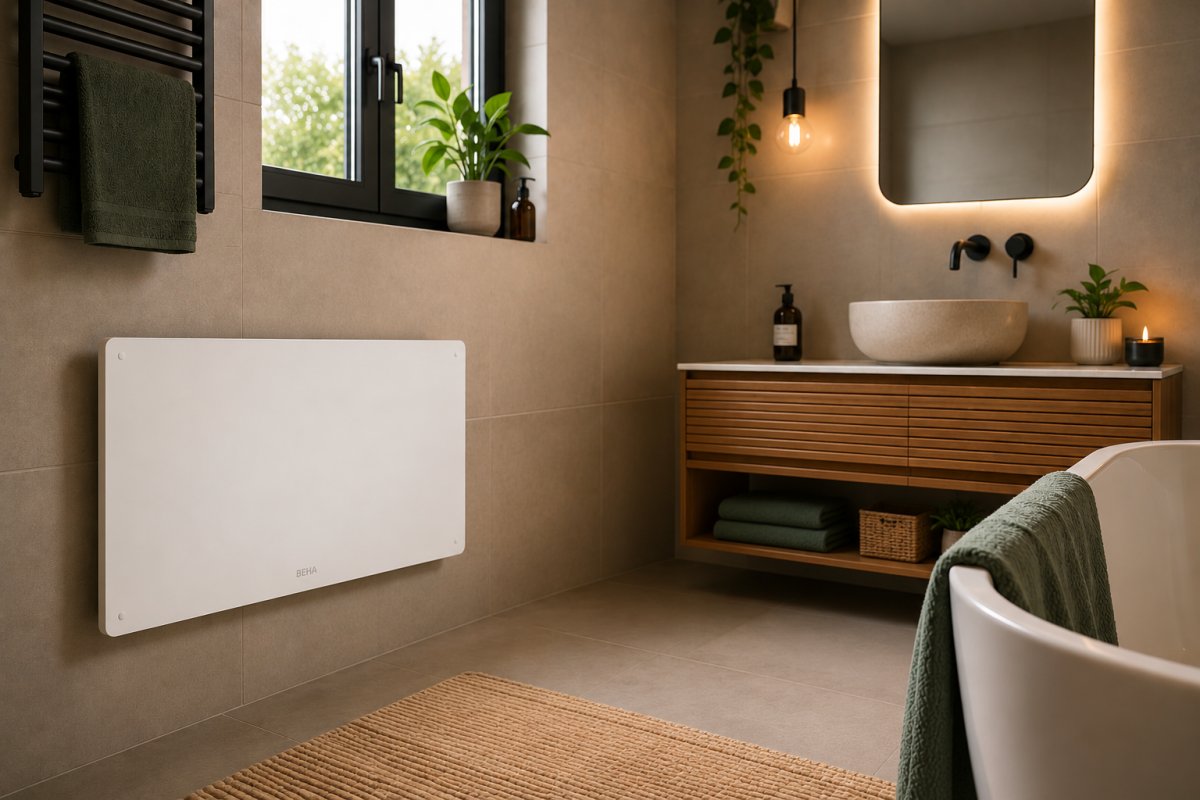
Is an electric heater really the power guzzler you've always been warned about, or will it actually be your smartest ally against rising gas prices in 2026? With an average gas price of around €1.42 per m³, many households are looking for alternatives, but the fear of an unpredictable energy bill remains high. After all, you don't want electric convector consumption to cause an unpleasant surprise at the end of the month because you miscalculated the wattage.
We understand that uncertainty. It is true that electricity is expensive per unit, but by combining the current average electricity price of €0.263 per kWh with modern technology, the calculation looks very different than it did ten years ago. In this article, you will discover how to accurately calculate the consumption of an electric convector and why smart Wi-Fi control and precise thermostats are the key to a lower bill. We dive into the facts of 2026, from the impact of the phasing-out net metering scheme to the benefits of the latest Ecodesign standards, so you know exactly which solution fits your specific situation.
Key Points
- Discover why high wattage doesn't automatically mean a high bill and how an accurate thermostat effectively controls electric convector consumption.
- Learn how you can immediately save up to 6% on your energy costs through good insulation and lowering the temperature by just one degree.
- Get an honest insight into the total costs of electric heating compared to gas, including the benefits of nearly 100% efficiency.
- Discover how, with a Wi-Fi app and zone heating, you can heat only the rooms where you are actually present, preventing unnecessary energy loss.
- Understand why high-quality Norwegian materials and a steel front are essential for optimal and energy-efficient heat output in your home.
Is an electric convector a power guzzler? The truth about consumption
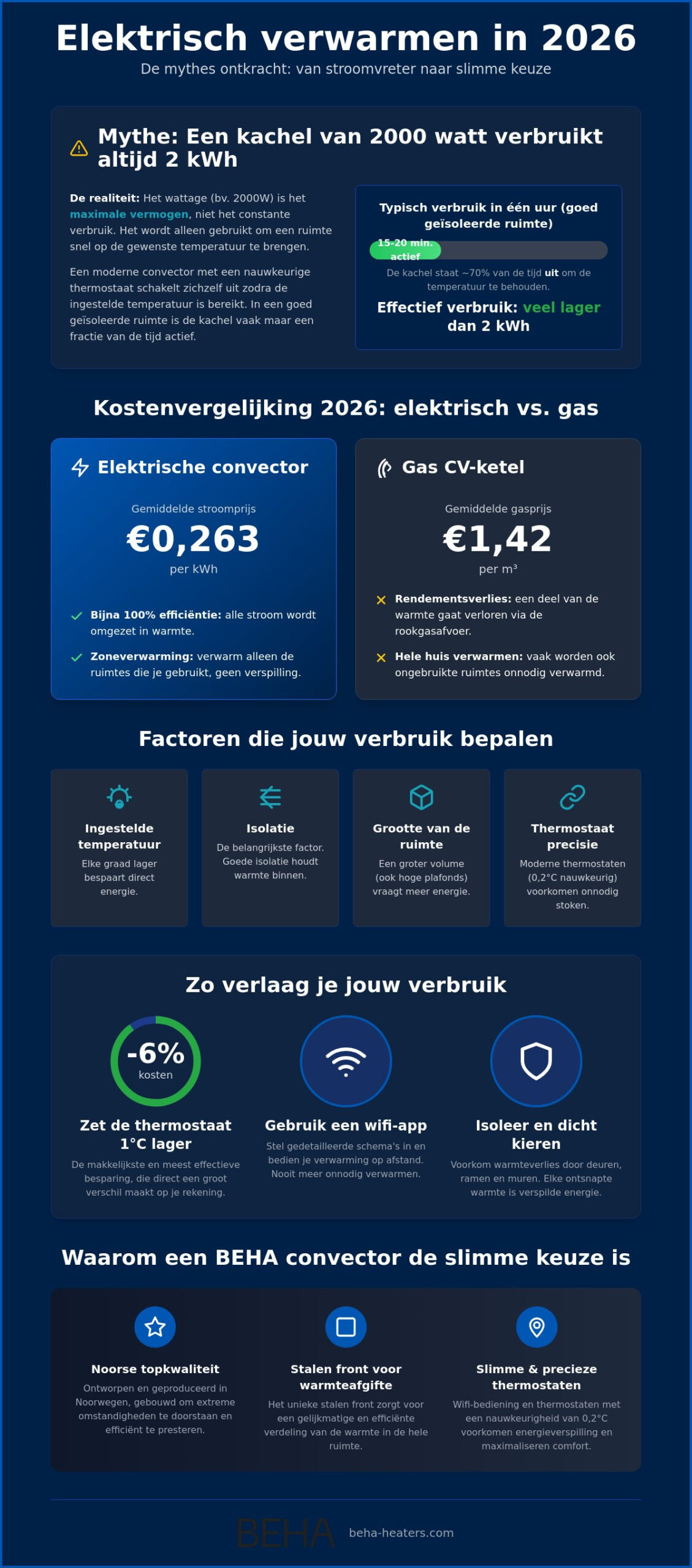
The label "energy guzzler" has stuck to electric heating for decades. Many people blindly assume that a high-wattage device automatically results in an unaffordable energy bill. However, in 2026, with an average electricity price of €0.263 per kWh, it is time to debunk this myth. The truth is that the consumption of an electric convector is not determined by the number on the box, but by the intelligence of the thermostat and the quality of the insulation in your home.
A 2000-watt convector does not typically consume 2 kWh per hour. That would mean the heater roars at full power continuously for sixty minutes. In practice, the nominal power is merely the maximum capacity available to heat a room quickly. The fundamental operation of a convector relies on the natural circulation of air. As soon as the room reaches the set temperature, a modern heater switches itself off. In a well-insulated room, the heating element is often active for only fifteen to twenty minutes per hour to retain heat. Consequently, the average consumption is many times lower than the maximum wattage would suggest.
The difference between power and actual consumption
The best way to compare a convector is to a modern car. Just because an engine can deliver 200 horsepower doesn't mean you're constantly driving through the residential area at full throttle. The power is there for when you need it, such as quickly warming up an ice-cold office. A powerful convector reaches the desired temperature faster than a variant with insufficient power. This allows the thermostat to intervene sooner and switch off the system. Therefore, high wattage is no cause for concern; on the contrary, it ensures faster comfort and a shorter operating time, which is beneficial for the total consumption of the electric convector over the entire day.
Why wattage doesn't tell the whole story about your energy bill
Ambient temperature and control accuracy play a crucial role. Old heaters with a mechanical rotary knob often have an inaccuracy of several degrees. As a result, the heater stays on unnecessarily long or the temperature fluctuates uncomfortably. Modern systems use electronic thermostats that measure with an accuracy of up to 0.2 degrees. This prevents overshoot, where the room becomes warmer than you actually want, which immediately saves energy. For those who truly want control over costs and want to plan consumption down to the minute, an electric convector with Wi-Fi the most logical step. Smart heating means letting technology do the work, so you only pay for the heat you actually use.
Which factors determine the consumption of your electric convector?
The actual consumption of an electric convector is not a static figure that you simply read from a sticker. It is a dynamic result of how the heater interacts with the environment in which it is located. In 2026, now that the average electricity price hovers around €0.263 per kWh, understanding these factors is essential to keeping your energy costs under control. The greatest influence comes not from the heater itself, but from the thermal envelope of your home and your own heating habits.
A crucial factor that is often underestimated is the set temperature. Every degree you lower the thermostat results in an average saving of 6% on your consumption. If you keep the living room at 19 degrees instead of 21 degrees, you will see this reflected immediately on your annual bill. In addition, the physical characteristics of the room play a role. A room with a high ceiling requires more energy because warm air rises; after all, you have to heat a larger volume of air before the heat reaches the living area. The location of the room, such as a corner room with three exterior walls versus a terraced house, also determines how hard the convector has to work to compensate for heat losses.
The role of insulation and space utilization
Insulation is the most important ally of an energy-efficient electric heater. Heat that does not escape through cracks, walls, or single glazing simply does not need to be replenished. In homes with double glazing and good wall insulation, heat lingers longer, meaning the convector needs to switch on less often. Open doors and stairwells, on the other hand, are real energy guzzlers; they allow precious heat to escape into rooms where you do not need it. By consistently opting for zone heating, where you only heat the room you are actually in, you maximize the efficiency of your system.
The importance of an accurate thermostat
What is often overlooked is the precision of the control. BEHA deliberately chooses advanced electronic thermostats with a minimal deviation of just 0.2 degrees. This is a technical detail with significant consequences for consumption. Cheap heaters with mechanical thermostats often overshoot the set temperature, the so-called overshoot effect. This is pure waste. An accurate sensor ensures that the heater stops immediately once the target value is reached and only switches on again briefly when the temperature drops minimally. This constant, precise control is one of the reasons why a modern eco-design electric heater performs so efficiently in today's energy market. Would you like to experience for yourself how precision enhances comfort? Then discover our smart convectors designed for this type of accuracy.
Electric heating versus gas: is it really more expensive?
The comparison between gas and electricity is often reduced to a simple calculation of the price per unit. However, those who look only at the bare energy price miss the bigger picture of total operating costs. In July 2026, the average gas price will be €1.423 per m³, of which no less than €0.73 consists of taxes. Electricity costs an average of €0.263 per kWh. Although gas appears cheaper per thermal unit on paper, an electric convector compensates for this with nearly 100% efficiency; every watt you pay for is directly converted into heat in the room, without loss through exhaust pipes or a central piping system.
The real savings lie in the avoided costs. A central heating system requires a costly connection, periodic maintenance by a certified technician, and has a complex network of pipes that lose heat. With the use of an electric convector, you only have to deal with the electricity you actually consume. For households with solar panels, 2026 is a crucial year; it is the last year that the net metering scheme is fully in effect. This makes it financially extremely attractive to use surplus solar power directly for heating, instead of feeding it back into the grid at a low rate while gas prices remain volatile due to geopolitical tensions. If you want a complete overview of the costs of electric heating vs. gas and how to make the switch to a gas-free home step by step, our complete guide for 2026 offers all the information you need.
The shift to gas-free living in 2026
We are in the midst of an energy transition in which the government is actively discouraging the use of gas by raising taxes on gas and slightly lowering those on electricity. Electric convectors play a key role in this, especially in well-insulated homes or as targeted supplementary heating in home offices. In addition to functional efficiency, aesthetics are playing an increasingly important role in this transition. People no longer want bulky metal boxes obstructing their view. That is why more and more interior-conscious users are opting for a paintable radiator, allowing the heating to blend seamlessly into the wall while the energy transition takes shape indoors. If you are unsure which type of electric heating best suits your home, a comparison of convector heating vs. infrared heating valuable insights to help you make the right choice.
Maintenance-free and long lifespan
Maintenance is an often overlooked item in the budget. While a central heating boiler often requires replacement after fifteen years and must be checked annually for carbon monoxide safety and leaks, a convector is virtually maintenance-free. There are no moving parts to wear out and no fluids to leak. The Norwegian quality we stand for translates into a lifespan of more than twenty years. When you spread the initial purchase price and the absence of maintenance costs over this period, the energy consumption of an electric convector often more competitive than many traditional systems, especially at a time when professionals for central heating maintenance are becoming increasingly scarce and expensive.
This is how you reduce the consumption of your electric convector
Lowering energy costs starts with the realization that you don't need to keep the entire home at the same temperature. While traditional systems often heat the whole house as a single block, an electric solution excels in zone heating. By heating only the active living spaces, you prevent valuable energy from being lost in rooms where no one is present. This is the most direct way to electric convector consumption without compromising on comfort.
In addition to zone heating, the technological intelligence of the heater plays a major role. Our convectors are equipped with smart sensors, such as open window detection. As soon as the heater detects a sudden temperature drop caused by an open window for ventilation, the system temporarily switches itself off. This prevents the convector from attempting to heat the outside air, one of the biggest causes of unnecessary waste in modern households.
Smart control via Wi-Fi and apps
With the BEHAapp, you transform a standard heater into an intelligent system that adapts to your rhythm. You set a specific weekly schedule for each room, allowing the heater to automatically switch to energy-saving mode when you are sleeping or working. The major advantage is the flexibility; if you arrive home unexpectedly late, you can adjust the schedule with a single tap via your smartphone. This prevents the heater from roaring for hours in an empty room. Want to know more about these smart strategies? Then read our comprehensive guide on saving on electric heating costs.
Strategic placement for optimal airflow
The physical location of the heater in the room determines how efficiently the heat spreads. Preferably, place a convector under a window to block the so-called cold draft. It is essential that the airflow remains completely unobstructed at the top and bottom. Leave at least 5 to 10 centimeters of space at the bottom for the intake of cold air and ensure that no curtains or furniture hang directly in front of or over the heater. A blocked airflow forces the heater to run longer to reach the same room temperature, which unnecessarily increases the energy consumption of the electric convector . By giving the heater space, you make optimal use of natural convection.
Are you ready to manage your heating costs smartly with Norwegian precision? Check out our smart convectors with Wi-Fi and start optimizing your energy consumption today.
Why a BEHA convector is the smart choice for low consumption
When you look at the origins of a heating system, that often tells the whole story about its efficiency. BEHA originates in Norway, a country where winters are extreme and reliable warmth is a basic necessity. Since 1917, we have been developing solutions that are not only powerful enough for the Scandinavian climate but also utilize every precious kilowatt-hour as effectively as possible. This decades of experience with harsh conditions has led to a philosophy in which electric convector consumption has been optimized down to the smallest detail.
The choice of high-quality materials is decisive in this regard. While many manufacturers opt for cheaper alternatives, we use a robust steel front. Steel has the unique property of conducting and radiating heat very evenly, ensuring natural and rapid air circulation without unnecessary energy losses. This technical design, combined with a timeless aesthetic, ensures that a BEHA convector is not only a functional device but a sustainable investment that will last for decades in your interior.
Norwegian quality and Ecodesign standards
In 2026, meeting basic standards will no longer be enough. Our systems are fully compliant with the strictest 2026 Ecodesign standards, which means they are equipped as standard with features that prevent energy waste. As a Norwegian family business, we bear a responsibility for the future; we build products that are repairable and have a very long lifespan. This reduces the ecological footprint and ensures that you do not have to purchase a new system every few years. The certainty of more than a hundred years of innovation means choosing a partner who knows the market inside out and constantly evolves to further reduce electric convector consumption
Innovative features for maximum control
The power of our convectors lies in the harmony between hardware and digital intelligence. We offer a total solution where Wi-Fi control, highly accurate electronic thermostats, and aesthetic versatility come together. Consider our smart convectors with paintable fronts, which give you the freedom to change your interior without replacing your heating system. It is this combination of user-friendliness for the consumer and technical reliability for the professional that sets the industry standard. By choosing BEHA, you choose the peace of mind of a system that independently watches over your comfort and your energy bill, so you can focus on what is truly important in your home.
Take the step towards efficient heating today
It is clear that the fear of high energy consumption by electric convectors in 2026 is no longer justified, provided you choose the right technology. Through the combination of zone heating, highly accurate thermostats, and smart Wi-Fi control, you maintain full control over your energy bill. You no longer heat your entire home by guesswork, but instead make targeted adjustments where and when necessary. This makes electric heating a precision instrument that fits perfectly with a modern, conscious lifestyle.
With the Norwegian quality of BEHA, which has been setting the standard since 1917, you bring home a system that is technically superior and extremely reliable. Our convectors are fully Ecodesign 2026 certified, giving you the assurance of a sustainable and responsible choice for the long term. Whether you choose a paintable front or a classic steel model, you are investing in years of comfort without surprises on the bill.
Are you ready to heat your home smartly and efficiently? Discover the energy-efficient electric convectors from BEHA and experience the benefits of Scandinavian innovation for yourself. We wish you a comfortable and energy-efficient future.
Frequently asked questions about the consumption of electric convectors
How many kWh does a 2000-watt electric convector consume per day?
A 2000-watt convector consumes on average between 4 and 12 kWh per day, depending on the insulation and the desired temperature. Although the maximum output is 2 kW, this does not mean that the heater operates constantly at this level. In a well-insulated room, the thermostat switches on the element for only a fraction of the time to maintain the heat. At an average electricity price of €0.263 per kWh, you therefore only pay for the active minutes.
Is an electric convector more energy-efficient than a fan heater?
Yes, an electric convector is significantly more efficient and economical for heating rooms than a fan heater. Fan heaters are primarily intended for short-term, localized heat and often have less accurate thermostats. A convector distributes heat more evenly via natural airflow and maintains the temperature much more constantly. As a result, the energy consumption of an electric convector lower in the long run because less energy is lost to temperature fluctuations.
Can I save on my consumption by using a convector with Wi-Fi?
You can save significantly by choosing a model with Wi-Fi control. With the BEHAapp, you can set precise schedules per room, ensuring you never heat an empty space. By automatically lowering the temperature when you sleep or work, you prevent waste. This form of zone heating ensures that the heater only consumes energy when you actually need comfort.
How much does electric heating cost per month for an average living room?
For an average living room, the costs in 2026 will range between €45 and €95 per month during the winter period. This amount is an estimate based on an electricity price of €0.263 per kWh and a normal usage pattern in a reasonably insulated home. The exact costs depend heavily on factors such as the outside temperature and whether you use solar panels to generate your own electricity before the net metering scheme changes in 2027.
Does the insulation of my house have a significant impact on the heater's consumption?
Insulation is the most critical factor for the efficiency of your electric heating. In a home with double glazing and good wall insulation, the generated heat lingers much longer, meaning the convector needs to switch on less often. With poor insulation, the heat escapes immediately to the outside, the electric convector's consumption because the heater has to constantly run to top up the heat to reach the set temperature.
Is it cheaper to leave the convector on or to keep turning it on and off?
It is generally cheaper to leave the convector at a low base temperature than to switch it off completely. When a room becomes ice cold, the heater has to run at full power for hours to warm up the mass of the walls and furniture. By maintaining a minimum temperature of, for example, 15 or 16 degrees, the heater consumes less energy to bring the room back to a comfortable level.
How do I calculate the consumption of my electric convector myself?
You calculate consumption by multiplying the wattage of the heater by the number of hours it actually heats. A 1,500-watt (1.5 kW) heater that is on for a total of 20 minutes per hour consumes 0.5 kWh per hour. If you multiply this number by your energy tariff, you get the cost per hour. Smart devices often provide this insight directly via an app, so you don't have to do complicated calculations yourself.
Are Norwegian electric heaters really more energy-efficient than other brands?
Norwegian heaters are specifically designed for a climate where efficient heating is crucial for the wallet. BEHA distinguishes itself by using thermostats with a minimal deviation of just 0.2 degrees. Many cheaper brands have a larger deviation, often making the room warmer than necessary. This precision, combined with high-quality steel fronts for optimal heat conduction, makes Norwegian convectors significantly more economical in practice.