
From gas to electric heating: the complete guide to a gas-free home in 2026
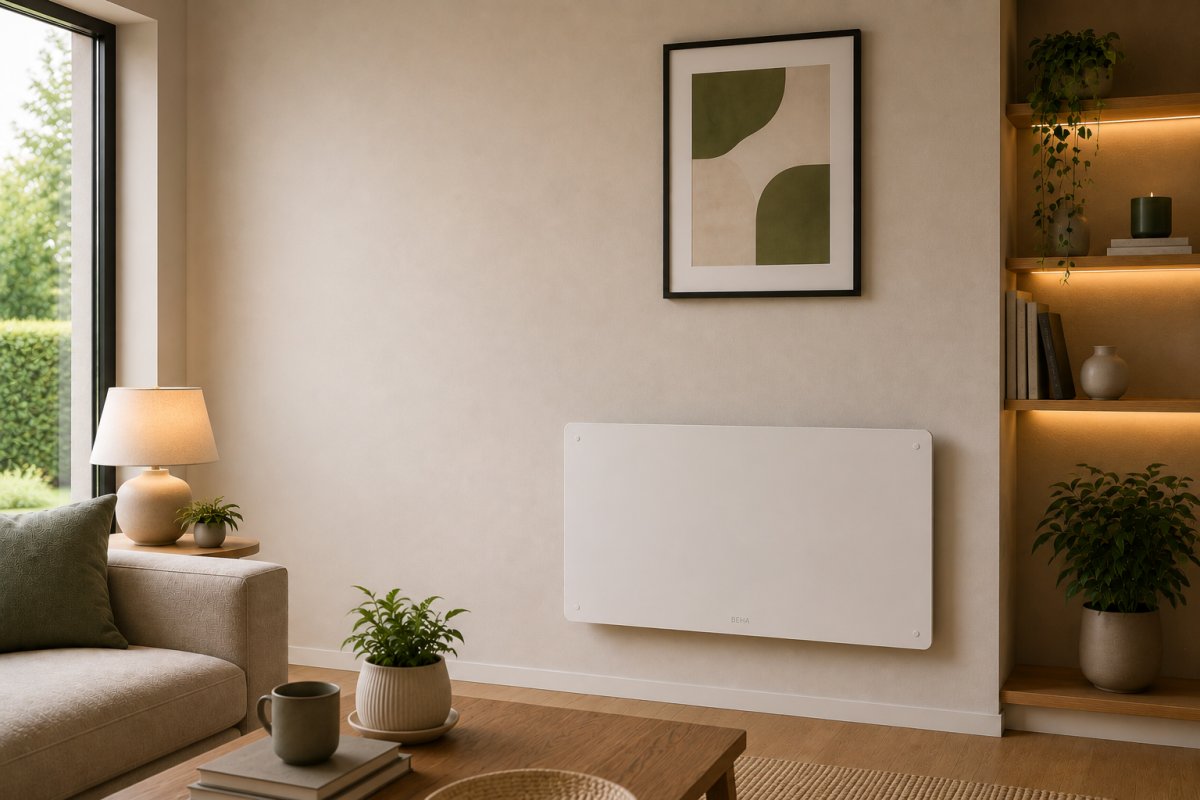
Did you know that scrapping the heat pump requirement actually gives you more freedom to switch to a gas-free home at your own pace and within your own budget? You probably notice from your monthly direct debits that the average gas price of €1,431 per m³ is weighing heavily on your budget. Uncertainty about the actual costs of electric heating versus gas often causes doubt, especially if you are apprehensive about a major renovation that turns your entire home upside down.
It is perfectly understandable that you are looking for a solution that is both comfortable and financially feasible. In this article, you will discover how to make the switch to electric heating step by step and save immediately with smart control. We provide clear insight into the most efficient electric systems for 2026 and present a concrete plan to structurally reduce your monthly costs. This way, you can easily transform your home into a future-proof and warm haven.
Key Points
- Discover why the switch to gas-free living in 2026 is essential and how you benefit from a safer system with minimal maintenance.
- Get a transparent overview of the costs of electric heating vs. gas and learn how to lower your monthly expenses with smart zone heating.
- Learn the functional difference between convector heating and infrared panels, so you choose the most efficient heat source for every room.
- Follow a concrete step-by-step plan to make your home more sustainable room by room, without the need for major renovations.
- Discover how Norwegian technology and paintable fronts from BEHA create a smart, energy-efficient, and aesthetic heating solution.
The switch from gas to electric heating: why now?
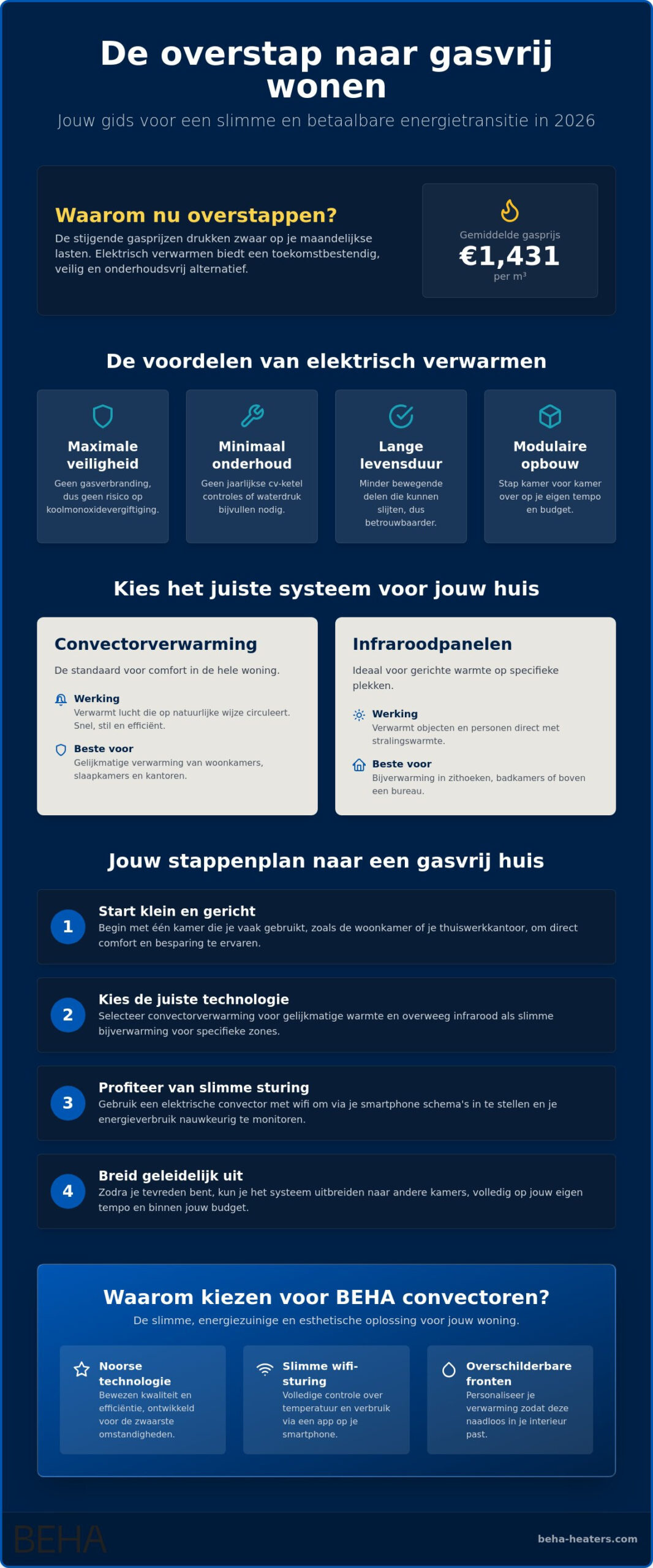
The Netherlands is in the midst of a far-reaching energy transition. Although the obligation for a (hybrid) heat pump has been scrapped in 2026, the move towards gas-free living remains as relevant as ever. The reason is simple: the average gas price of €1,431 per m³ in July 2026 weighs heavily on household budgets. At the same time, barriers to electric alternatives are decreasing due to technological innovations and a growing range of smart solutions. When analyzing the costs of electric heating versus gas, it is striking that the focus is shifting from pure fuel costs to total convenience and efficiency.
The technology behind electric systems has improved spectacularly in recent years. Whereas old radiant heaters mainly consumed electricity, modern systems work with precise thermostats and advanced heating elements. The benefits are immediately noticeable in daily life:
- Maximum safety: Without gas combustion, there is absolutely no risk of carbon monoxide poisoning.
- Minimal maintenance: No annual inspections of the central heating boiler or topping up water pressure.
- Long service life: Electrical systems contain fewer moving parts that can wear out.
- Modular design: You can decide per room whether to switch completely or use electric as smart supplementary heating.
The role of electricity in the modern home
The traditional central heating boiler is slowly but surely disappearing from our homes. We see a strong correlation between generating your own energy via solar panels and the demand for heat. By converting electricity directly into heat, you increase your independence from fluctuating market prices. Moreover, with an electric convector with Wi-Fi, you gain immediate control over your consumption. You can see exactly how much energy each room consumes and regulate the temperature down to the degree via your smartphone, which is essential for favorably influencing the costs of electric heating versus gas
Comfort and ease of use without a gas connection
To fully understand what electric heating entails, it is important to look at the speed of heat transfer. Unlike water-filled radiators, which heat up slowly, electric convectors provide heat almost instantly. This ensures a high level of comfort without the hissing pipes or ticking tubes often associated with gas-fired systems. It is a quiet, clean way of heating that fits perfectly with a modern lifestyle. Because the system is completely maintenance-free, in the long run you save not only money but also the time and effort of periodic technician visits.
Different types of electric heating compared
Anyone taking the step towards a gas-free home soon discovers that electric heating is a broad concept. The final costs of electric heating versus gas are largely determined by the technology used. While a heat pump with a COP of 4 to 5 operates very efficiently, the high investment costs of €2,500 to as much as €35,000 deter many people. For many Dutch households, a modular approach with decentralized heating is therefore a much more accessible starting point.
Infrared panels are popular for specific locations, such as directly above a desk or in a seating area. They heat objects and people with radiant heat but are less suitable for maintaining a constant temperature throughout an entire room. As a result, they are often used as supplementary heating. For a stable and pleasant indoor climate throughout the entire home, convector heating is usually the better choice. Its strength lies in the balance between speed and even heat distribution. In practice, a smart combination of different systems often proves to be the most pragmatic solution for the calculations for 2026.
Why convector heating is the standard for home comfort
Convector heating works on the basis of natural air circulation. Cold air is drawn in at the bottom of the unit, heated by a large element, and then rises silently. This process takes place without noisy fans, ensuring serene tranquility in the home. The major advantage is speed. Within a few minutes, you will feel the temperature in the room rise. Want to dive deeper into the details? Then read more about the battle between convector heating vs. infrared heating to determine what suits your specific lifestyle.
The disadvantages of electric underfloor heating and boilers
Although electric underfloor heating feels comfortable underfoot, it is often a huge energy guzzler in larger rooms. Without extremely high-quality insulation, running costs can quickly add up. The same applies to electric central heating boilers. These systems require an enormous amount of power to heat and circulate water. For most homes, a modular solution with smart convectors is more effective. You then only heat the areas where you are actually present, which significantly reduces the total cost of electric heating versus gas . Curious which solution suits your interior? Then take a look at our smart convectors for an efficient start.
Electric heating costs vs. gas: the calculation for 2026
To make a fair comparison between the costs of electric heating and gas, we must look at the current rates in the Netherlands. In July 2026, the average gas price will be €1.431 per m³, while electricity will cost approximately €0.264 per kWh. At first glance, gas seems cheaper per unit of energy, but this calculation is incomplete. After all, a traditional central heating boiler often heats the entire house, including rooms where no one is present. Moreover, a lot of heat is lost in the pipes before it reaches the radiator.
The real savings lie in zone heating. By heating only the room where you actually spend time, such as your home office or sitting area, you drastically reduce energy demand. This is where the ecodesign electric heater a crucial role. These standards require manufacturers to apply techniques that prevent waste. An accurate thermostat is the most important tool in this regard. While an old thermostat often deviates by two degrees, modern systems react to fractions of a degree. This prevents a room from overheating unnecessarily, which is immediately visible on your electricity bill.
Save with smart features and apps
Thanks to modern technology, you no longer have to manually turn knobs. With app-controlled electric heating, you can easily program weekly schedules that fit your rhythm. Features such as open window detection ensure that the heater temporarily switches off if cold air enters. Many people worry about power consumption, but the facts regarding the consumption of an electric convector show that smart control keeps running costs manageable, especially compared to the rising fixed costs of a gas connection.
Insulation as the foundation for electric heating
Electric heating is most effective when the heat stays inside. In a home with single glazing or poor roof insulation, costs skyrocket. High-quality frames and glazing, such as those from MAD Fenster, are essential to limit these heat losses. Small interventions, such as draft strips or radiator foil, have a very short payback period when combined with electricity. For a well-insulated room, we calculate an average capacity of 60 to 70 Watts per square meter. With moderate insulation, this rises to 100 Watts. By calculating this accurately in advance, you avoid purchasing a system with insufficient capacity, which would ultimately consume more electricity to heat the room.
Step-by-step plan: how to make your house gas-free room by room
The thought of a complete home transformation scares many people. Fortunately, an all-or-nothing approach is not necessary to achieve results. By working in a modular way, you spread the investment and learn how to optimize energy consumption along the way. This step-by-step plan helps you turn the costs of electric heating versus gas directly to your advantage without your entire home instantly turning into a construction site.
- Step 1: Analyze your current consumption. Check your annual statement to see how many m³ of gas you use specifically for heating. Check the condition of your seals around windows and doors.
- Step 2: Select the most used rooms. The home office or a hobby room is often the best place to start. You sit still here for hours, while the rest of the house can perfectly well remain at a lower temperature.
- Step 3: Calculate the required wattage. Use the guideline of 60 to 100 Watts per m², depending on the insulation quality of the room in question.
- Step 4: Install smart convectors. Choose systems with Wi-Fi control so you can set precise schedules via your smartphone. This prevents you from heating an empty room.
- Step 5: Connect your system to your solar panels. In view of the definitive end of the net metering scheme on January 1, 2027, directly consuming your own electricity for heating will become essential for your return on investment.
The modular approach: why room by room is smart
You don't have to turn your home into a gas-free fortress in a single weekend. Starting in the bedroom or bathroom is an excellent strategy. In the bedroom, you often only need warmth for a short time before going to sleep or when getting up. Electric heating is much more efficient here than having to heat up the entire central heating circuit for just one room. The major advantage is the installation. You can easily install electric convectors yourself using a wall bracket. You don't need a plumber; a power outlet is all you need to enjoy comfortable warmth immediately.
The technical check: is your meter cupboard ready?
When you are going to heat multiple rooms electrically, a look in the fuse box is necessary. With a complete switch to electricity, an upgrade to 3-phase power can be wise to distribute the load properly. Ensure that heavier appliances are distributed across different circuits for maximum safety. For a sleek and modern result, conceal the cables behind skirting boards or in subtle cable ducts. This keeps your interior uncluttered while effectively reducing the costs of electric heating versus gas . Are you ready to make the first room gas-free? Discover our smart convectors and start saving today.
Why smart convectors from BEHA are the ideal choice
When making the final decision between the costs of electric heating and gas, you do not just look at the current energy prices of 2026. You are investing in a system that must guarantee your living comfort for decades to come. BEHA brings more than 100 years of Norwegian experience to the Dutch market. In a climate where winters can be extreme, technical superiority is not a luxury but an absolute necessity. Our smart convectors are rooted in this tradition of reliability and innovation, making them a trustworthy guide in your personal energy transition.
The reliability of a BEHA system translates directly into a lower total cost of ownership. While cheaper alternatives often lose efficiency or fail after a few years, our heating elements last significantly longer than average. This has a beneficial effect on the long-term costs of electric heating versus gas. You are choosing a partner who takes pride in its own standards regarding safety and technology; for those looking internationally for high-quality HVAC expertise, discover Zee Jay Mechanical for professional support with climate control.
Design meets functionality
Heating no longer needs to be a disruptive element in your room. At BEHA , we believe that technology should blend seamlessly into your interior. You can choose from sleek smart convectors with a steel front for a robust look, or a modern glass finish for a minimalist effect. A unique solution for those who desire maximum aesthetics is the paintable radiator. This allows you to give your heating the exact same color as the wall, making the system almost invisible. In this way, you combine the high-quality finish of Norwegian design with the personal style of your home.
Ready for the future with BEHA
Our focus on sustainability does not stop at reducing your electricity consumption. Production in Norway takes place according to the strictest environmental standards, making BEHA a responsible choice for the environmentally conscious user. Thanks to simple integration into your smart home system via the BEHA app, you always maintain full control over your energy management. Professionals and private individuals in the Benelux have been choosing our solutions for years because of this combination of digital connectivity and down-to-earth reliability. Become part of the gas-free revolution and experience how modern technology and tradition come together in a warm and future-proof home.
Take the step towards a gas-free future today
The transition to a gas-free home is no longer a pipe dream, but an achievable reality for every Dutch household. By choosing a modular approach and focusing on smart zone heating, you gain immediate control over your energy consumption. Accurately mapping the costs of electric heating versus gas shows that in 2026, efficiency and ease of use will go hand in hand with a lower ecological footprint. You save not only on fuel costs, but also on annual maintenance and complex installations.
With BEHA ’s technological lead, you bring over 100 years of Norwegian expertise into your home. Our systems meet the strictest Ecodesign standards and are specifically designed for simple DIY installation without any drilling or breaking. This lowers the barrier to making your home sustainable, room by room, more sustainable than ever before. You are choosing a reliable solution that has proven to withstand the world’s most challenging climates.
Discover BEHA and start saving today. You are just a few steps away from a comfortable, gas-free living environment that is fully ready for the future. Start small, think big, and immediately enjoy the peace and warmth of modern electric heating.
Frequently asked questions about gas-free heating
Is switching from gas to electric heating really cheaper?
Yes, electric heating can turn out cheaper under the right circumstances, provided you use smart zone heating. Although the base price of gas per m³ will remain high in 2026, with a completely gas-free home you save monthly on the standing charges for the gas connection. By only heating the rooms where you are actually present, you avoid the waste that occurs with a central heating boiler. As a result, the total costs of electric heating versus gas often turn out more favorably for the electric option.
Do I have to adapt my entire house at once if I switch to electric?
No, you can very easily make your home sustainable room by room without major renovations. A modular approach is often wiser because you spread the investment and immediately learn how to optimize consumption in specific rooms. Many people start in the home office or the bathroom, rooms where you often only need heat for a few hours a day. This way, you make the transition to a completely gas-free home step by step at your own pace.
How many watts do I need to heat a room electrically?
On average, you need between 60 and 100 Watts per square meter for a comfortable indoor climate. In a modern, well-insulated house, a capacity of 60 to 70 Watts per m² is often sufficient to reach the desired temperature. In older homes with less insulation, 100 Watts per m² is safer to generate sufficient heat, even during cold winter days. It is crucial to calculate this accurately per room to avoid unnecessary power consumption.
Do I need a special connection in the fuse box for electric heaters?
For a single convector, a standard socket suffices, but with multiple heaters, a technical check of the fuse box is necessary. When using multiple heavy appliances simultaneously on a single circuit, the load can become too high. Upgrading to a 3-phase connection ensures a stable distribution of power demand throughout the entire home. This prevents fuses from blowing when you turn on the heating while also cooking electrically or running the washing machine.
Can I use my solar panels directly for my electric heating?
Yes, directly using your own generated solar power is the most cost-effective way to heat your home. With the end of the net metering scheme on January 1, 2027, it is becoming essential to use electricity the moment your panels generate it. By running your smart convectors during the day when the sun is shining, you significantly reduce the net costs of electric heating versus gas and maximize your independence from the power grid.
What is the difference between a cheap electric heater and a smart convector?
The biggest difference lies in the accuracy of the thermostat and the features available to prevent energy waste. Cheap heaters often have a simple on-off control that consumes a lot of power and causes large temperature fluctuations. A smart convector from BEHA meets Ecodesign requirements and features advanced functions such as open window detection and Wi-Fi control. This ensures a constant temperature and lower consumption, meaning the higher purchase price quickly pays for itself.
Are electric radiators safe for children and pets?
Yes, modern electric convectors are designed with maximum safety as the starting point for every household. The casing of a high-quality convector does not reach dangerously high temperatures, minimizing the risk of burns upon contact. Furthermore, these systems are protected against overheating and do not contain liquids that can leak or freeze. This makes them an extremely safe choice for families with young children or pets that move freely through the rooms.
How do I operate a Wi-Fi convector when I am not at home?
You can easily control your heating remotely via a secure app on your smartphone or tablet. Whether you are at work or on your way home, you can instantly adjust the temperature per room or change the weekly schedule. This is ideal for saving energy when you are unexpectedly away from home for longer. As soon as you leave for home, turn on the heating so that you arrive at a comfortably warm house without heating unnecessarily.